
Dimensions: 37 x 49 cm
Signature: signature p.d.: M. Abakanowicz 1989/92
Provenance
Warsaw, private collection purchase at Polswiss Art (2023)
Magdalena Abakanowicz initially engaged only in painting. She created large, monumental gouache compositions on cardboard or linen with motifs of stylized birds, aquatic plants and fish. It was not until the late 1950s and early 1960s that the artist turned to textiles. In 1960, Abakanowicz first showed "Composition" at the Kordegarda Gallery in Warsaw. The interplay of non-objective fields of color suggested the author's favorite motifs. Even then critics could not find a common position on the status of the work - was it still an abstract painting or a decorative textile?
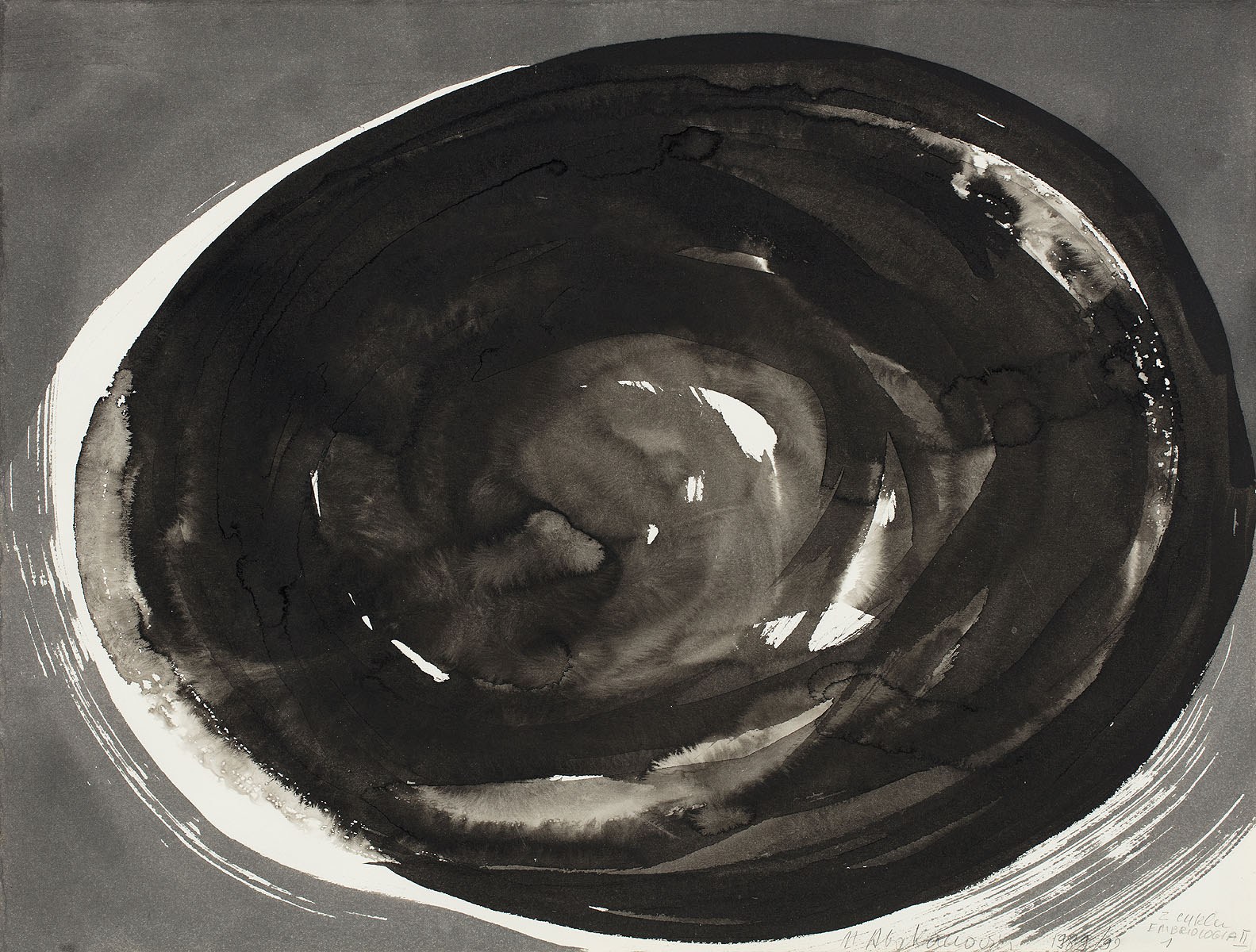
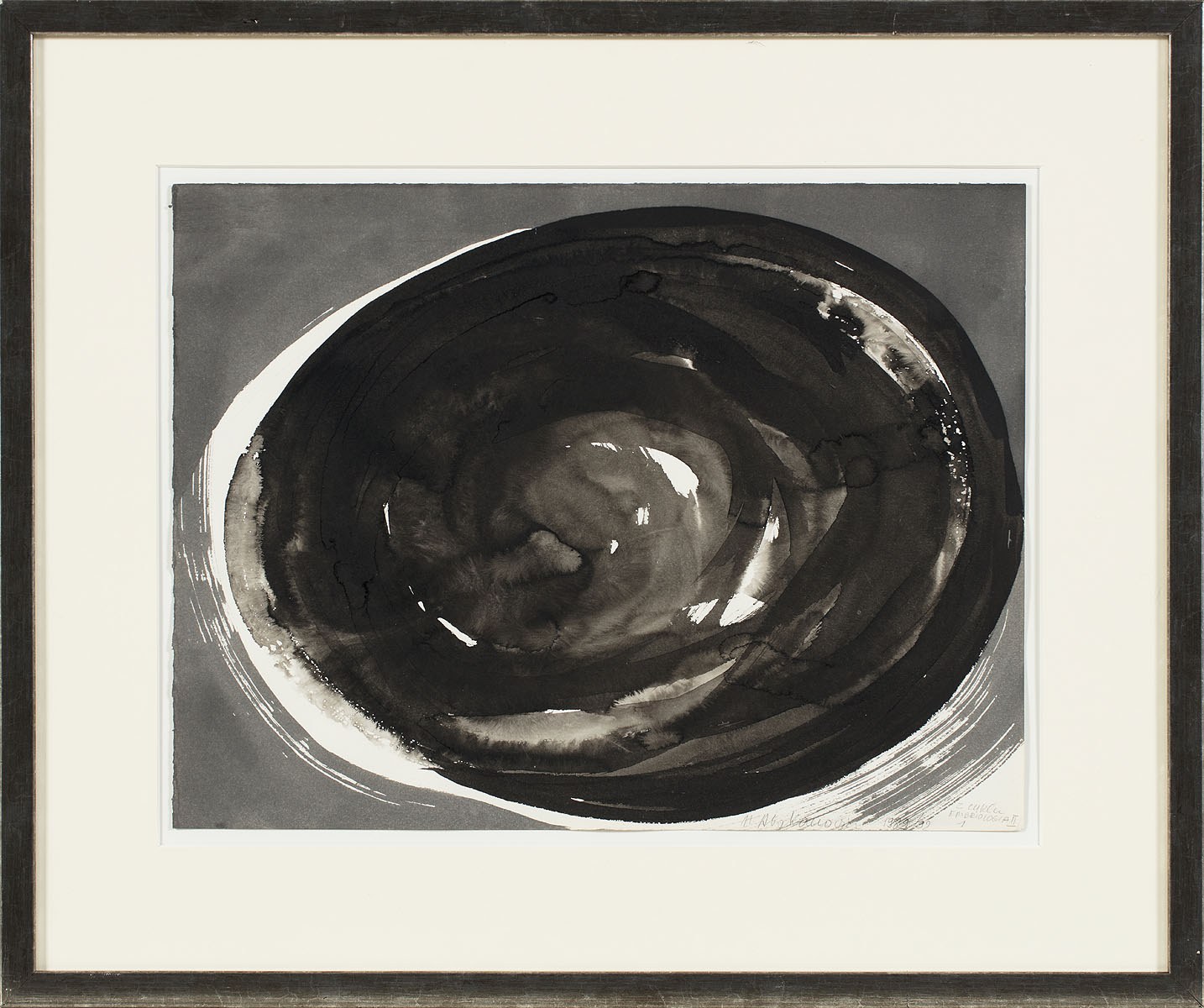
Today Abakanovich's painting exists rather on the margins of her entire oeuvre, dominated by spatial forms. It was, however, directly related to her. The artist's paintings often constituted a project, a concept for later sculptural realizations. They depicted bodies, faces or their fragments - eyes and ears - usually in the form of abstract spirals and circles. The offered work, belonging to a series of these monochromatic projects, refers to the famous "Embryology" - a series initiated in 1980, in which Abakanovich revisited the theme of protecting the human body. Encompassing as many as six hundred spatial objects, the series depicted bulging, jute-filled shells. Years later, the artist recalled how, as a child, she experienced a fear of the fragility of existence and lurking disaster: "Crouching by the pond, I watched the tadpoles. Huge, about to transform̨ into frogs. (...) Through the thin membranę covering their distended abdomens, one could clearly see the tanglę of gut coils. Sluggish with the process of transformation, they were motionless. They provoked one to reach theḿ. Pulled ashore with a stick, touched carelessly their bloated bellies burst. The contents flowed out of the interior with a spilling disorder of bruises. After a while, flies were manning it. I sat with a beating heart, shocked by what had happened̨. The destruction of the soft life and the boundless mystery of the contents of the 'soft'." The presented drawing is like a return to that experience. Free and synthetic, it appeals to our imagination, bringing to mind a cocoon or a cell membrane. Something may exist inside - hidden, hidden from the cruel world - but is it safe?