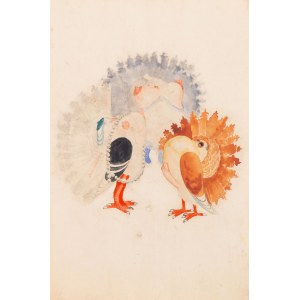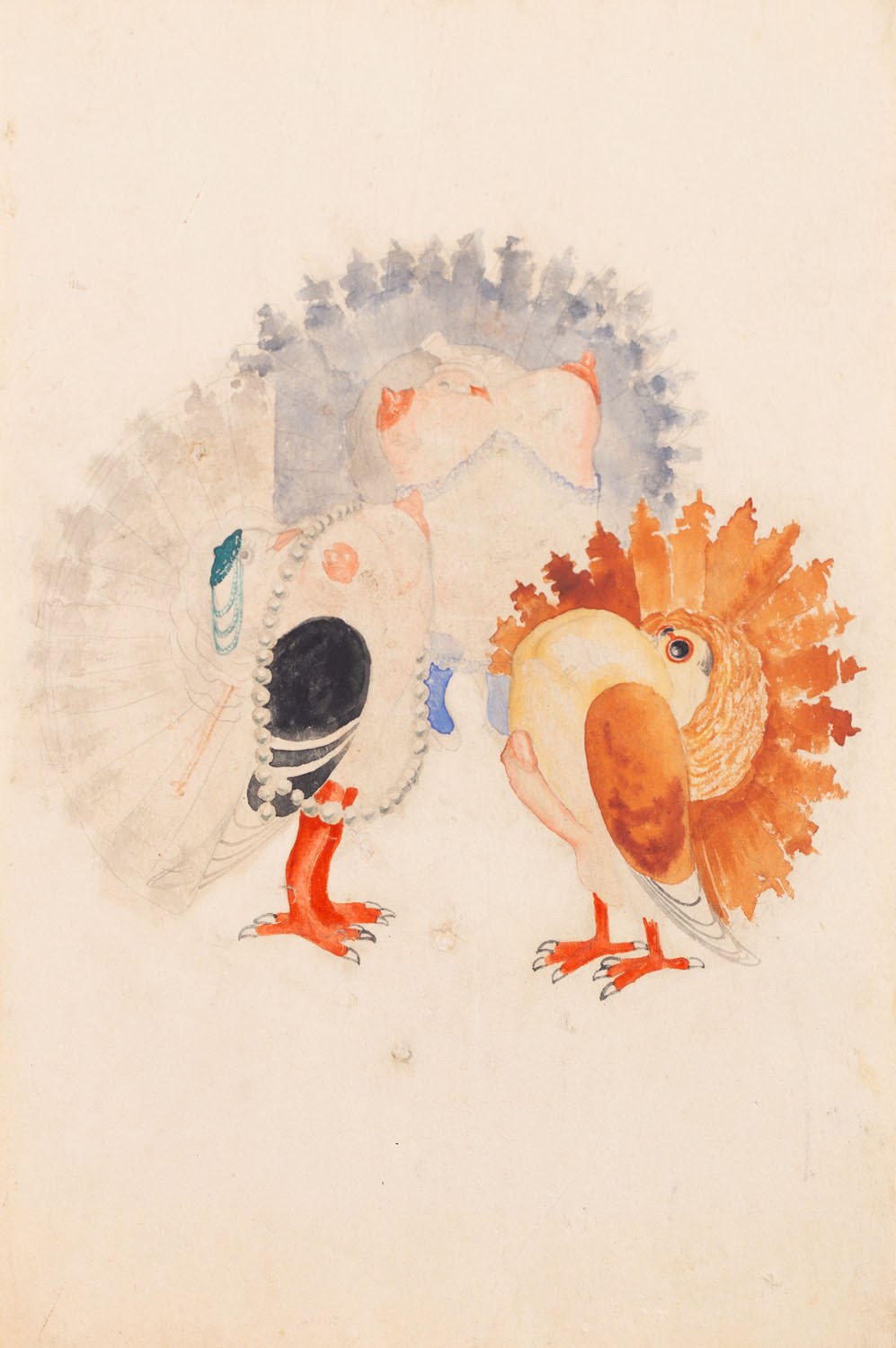
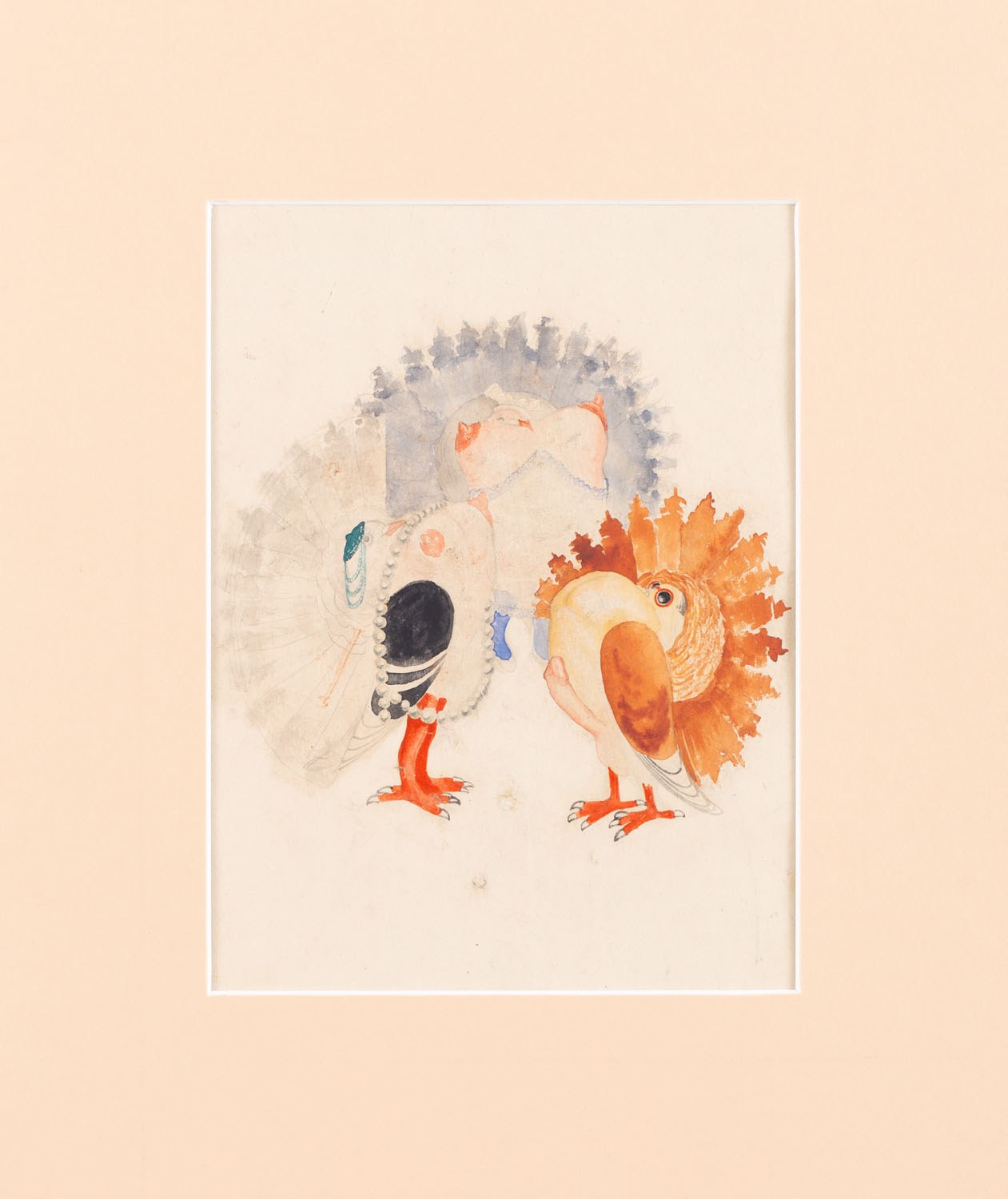
Dimensions: 23 x 15,2 cm
Origin
collection of the artist's heirs
private collection, Poland
Biography
He was born into a wealthy family, in the Massandra manor located in the Crimea. In his early childhood and youth, he and his parents often changed their place of residence. He stayed in Grodno and Yalta, and received his education at the Real School in Vilna. From 1911 he lived in St. Petersburg. A year later, the family had already moved to Kharkiv, where the first important period in the life of the future artist began. Until 1915, he attended Professor Burakov's Real School. Then, until 1918, he studied at the Kharkiv School of Fine Arts. Even then he was strongly inspired by the achievements of the Russian avant-garde. In addition to painting, he was mainly involved in sculpture and scenographic decoration of local theaters. In 1917 he joined the ranks of a group promoting the ideas of cubofuturism called the "Union of Seven."
The consolidation of Soviet power and their expansion forced the young Cybis to flee. On September 6, 1919, he fled Kharkiv and reached Istanbul via Theodosia. At that time, another period in his career began. In the former Constantinople he established close contacts with other Russian immigrants associated with the avant-garde currents. He lived in poverty and struggled to support himself. He earned money mainly as a painter of signs for cafes and theaters. He also specialized in making ceramic pipes. The first drawing works known today also come from this time. Cybis, due to the scarcity of materials, often worked on both sides of the paper. He painted mainly nudes and anatomical studies, as well as scenes from the underworld of the metropolis - views from brothels and inferior pubs.
Since July 20, 1923, the artist is already listed in Warsaw. At first he lives on Plac Trzech Krzyży. At that time, he works in the ceramic workshop of Andrzej Wojnacki and Kazimierz Czechowski on Czerniakowska Street, most likely making painting decorations. Since September, he attends lectures at the Warsaw School of Fine Arts as a free student. He studies painting in the studio of Tadeusz Pruszkowski and printmaking with Władysław Skoczylas. In 1924, he participates for the first time in an open-air workshop in Kazimierz Dolny on the Vistula River. The year 1925 becomes a turning point in Cybis' private and professional life. He marries Maria Tym. The young couple live in the span of the Poniatowski Bridge, where the painter's father works. Thanks to a scholarship, Cybis travels to Paris, where he sees the World Exhibition of Decorative Arts. He takes part in another open-air workshop in Kazimierz Dolny, and upon his return, together with other colleagues, led by his artistic guru, Pruszkowski, he establishes the "Brotherhood of St. Luke" - one of the most important art groups of interwar Poland. In winter, at the turn of 1925 and 1926, he stays at his friend Jan Stokowski's Sobota estate. He is strongly inspired by the folklore of the Lowicz region, which is reflected in his compositions depicting peasants and Lowicz women in colorful folk costumes. In 1927, he begins construction of the Mlociny Outpost, where his home would be located, as well as a studio that would bring together other artists. Already around the mid-1920s, he begins to be inspired by the trend of German Neue Sachlichkeit (New Objectivity). Under its influence, he creates compositions of an oneiric nature - figures of mannequins or landscapes with withered trees. In 1928, Cybis paints "The Bearded One."
In 1930, together with his wife and friend, also a painter, Jan Zamoyski, he goes on a long journey. The route of this journey leads through Vienna and continental Italy to Sicily. However, it ends in North Africa, where the travelers visit Tunis and Tripoli. Many sketches and drawings are created during the trip. On the other hand, after returning to Warsaw, a whole series of oil paintings. The artist then begins experimenting with texture. He introduces three-dimensional elements into his compositions. In 1936, the iconic "Primavera" is created. In the 1930s, the artist leans more and more towards monumental painting. In 1939, he leaves for the United States to decorate the Polish Pavilion being prepared for the World Exhibition there. The outbreak of World War II traps the couple overseas. Cybis and his wife remain in the States forever. In 1942, in Trenton, New Jersey, they open the Cordey China Inc. factory and the Cybis Porcelain Art experimental studio operating there, where they make ceramics. The business brings the Cybises considerable income and fame. The factory itself, meanwhile, is still in operation long after the couple's death.