


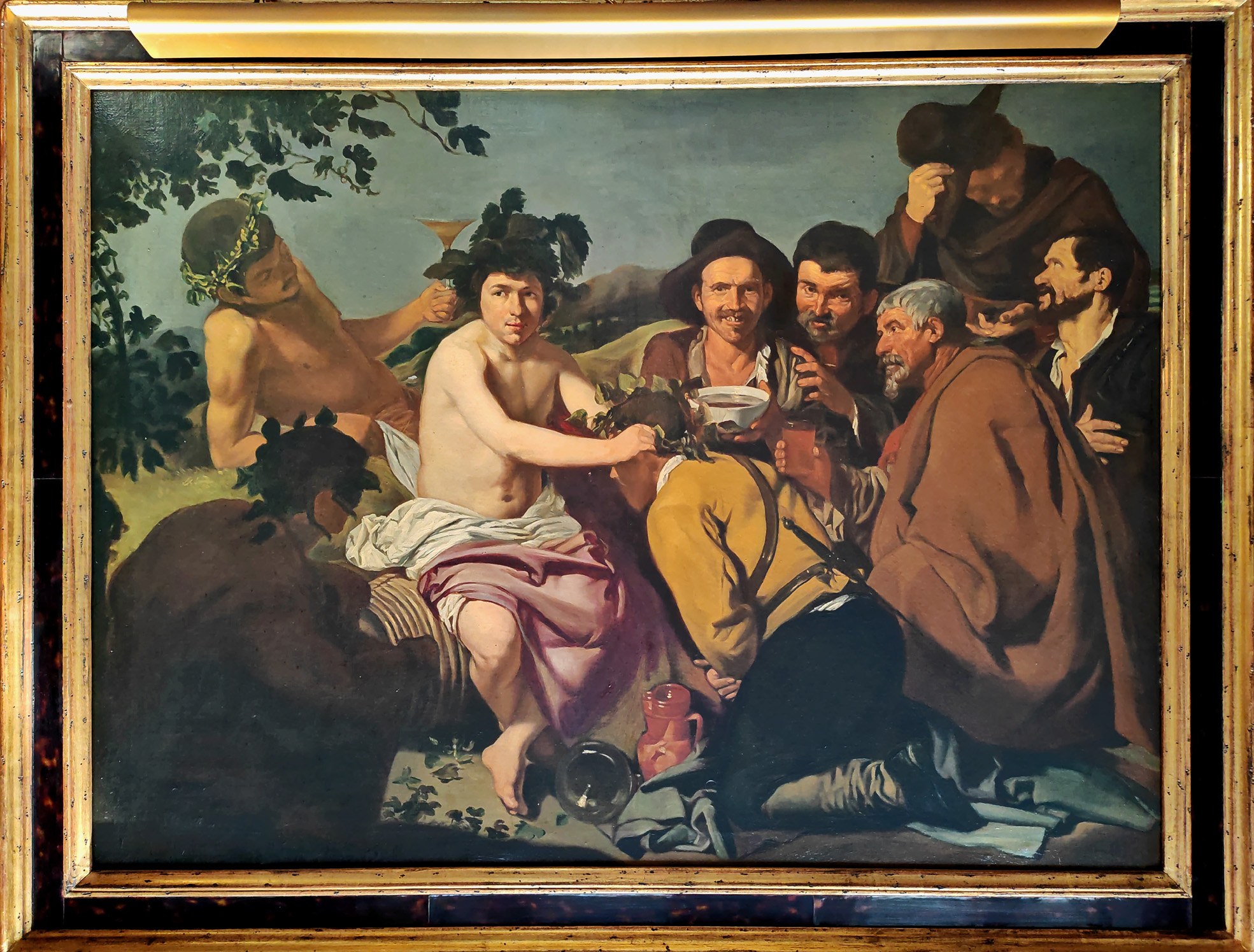
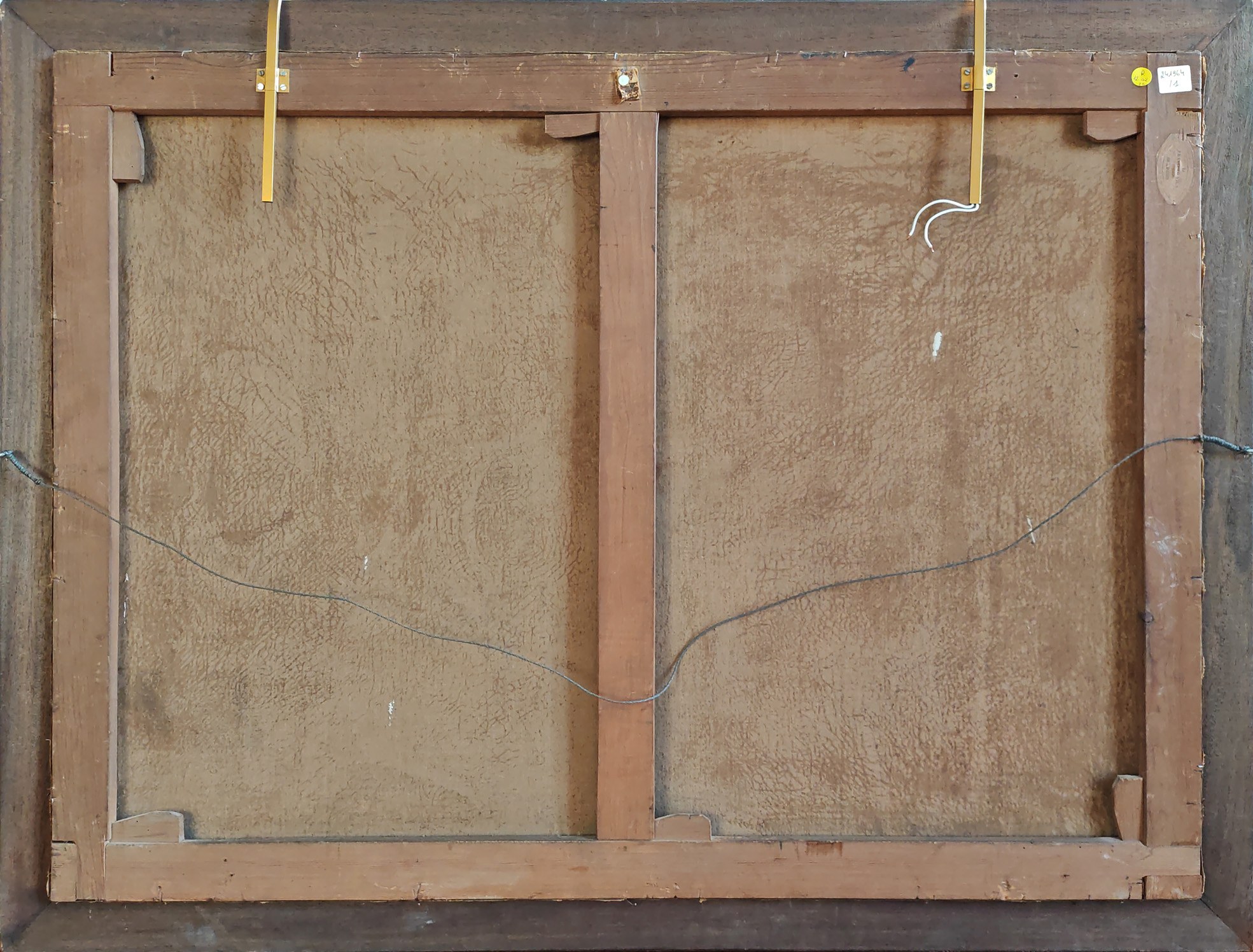
Triumph of Bacchus (Los Borrachos / The Triumph of Bacchus)
Technique: oil on canvas
Dimensions: 81 × 111 cm, 97 x 127 cm (with frame)
Provenance: private collection, France.
The top light of the painting is bolted to the frame.
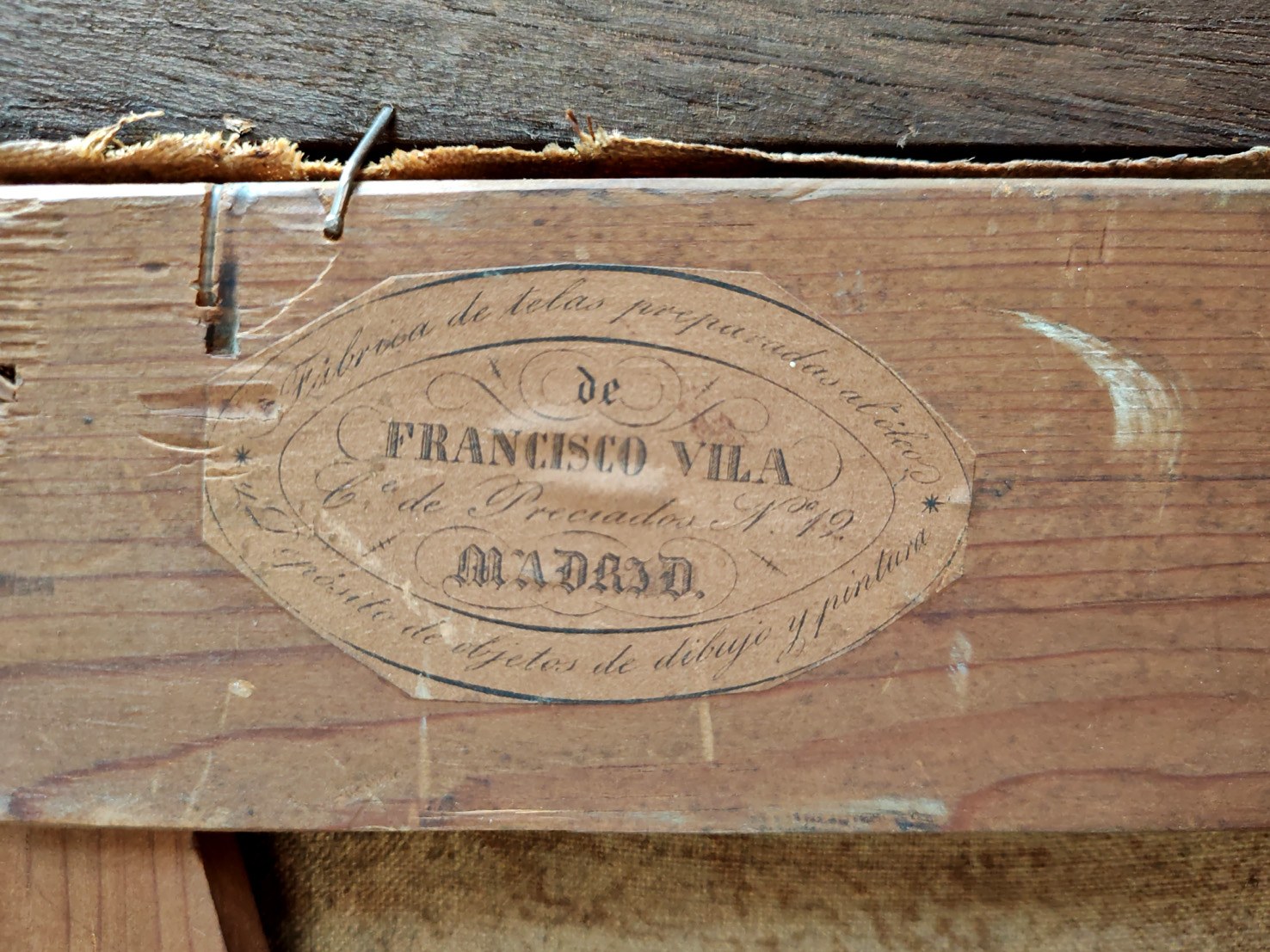
Label: Fábrica de telas preparadas para pintores... FRANCISCO VILA, C. de Preciados nº 19, Madrid, ... y objetos de dibujo y pintura
"Factory/point of sale of canvases for painters and articles for drawing and painting, Francisco Vila, 19 Preciados Street, Madrid."
This is a typical sticker of a sub-image and frame supplier used in Spain in the late 19th century.
Description:
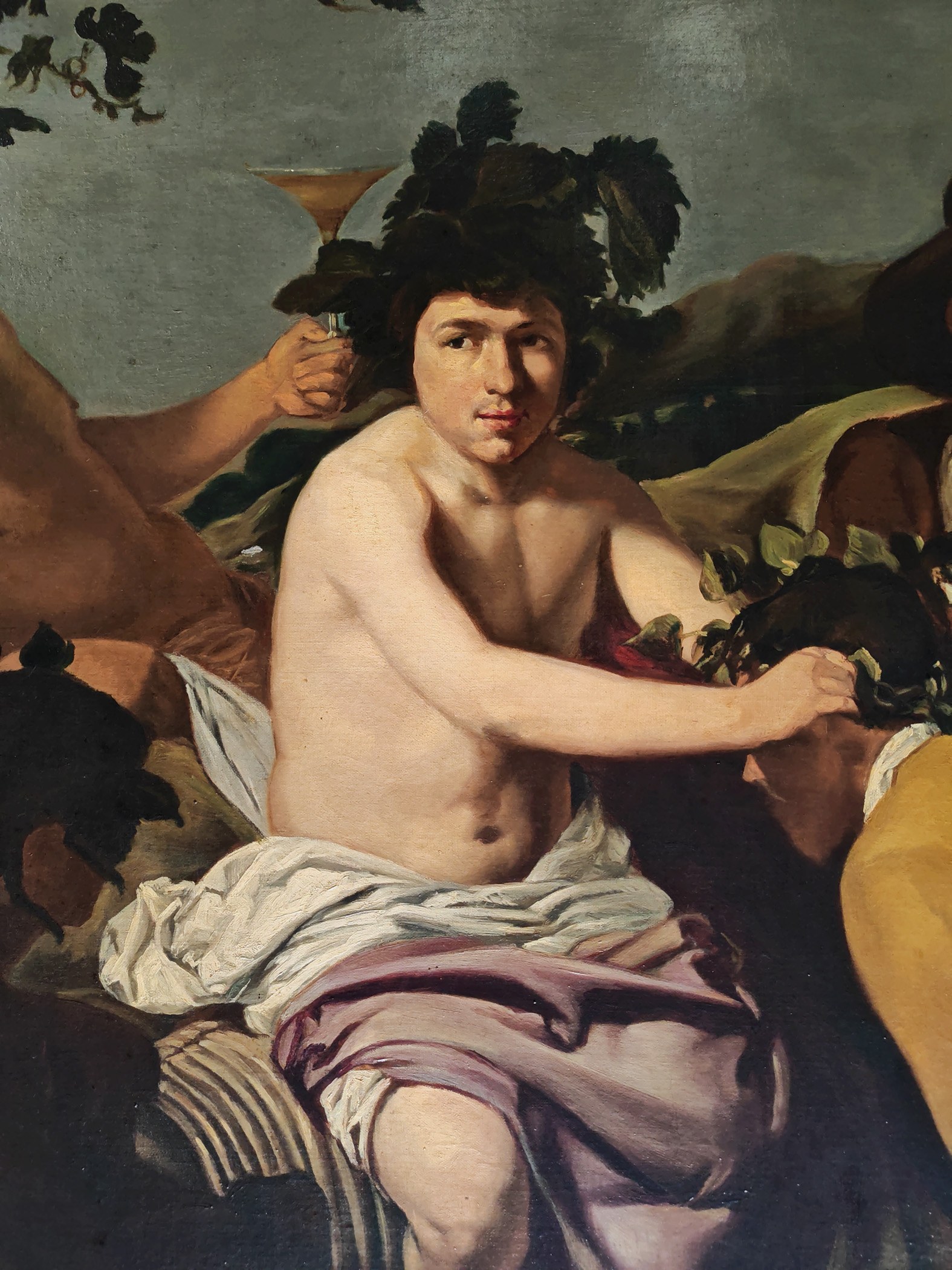
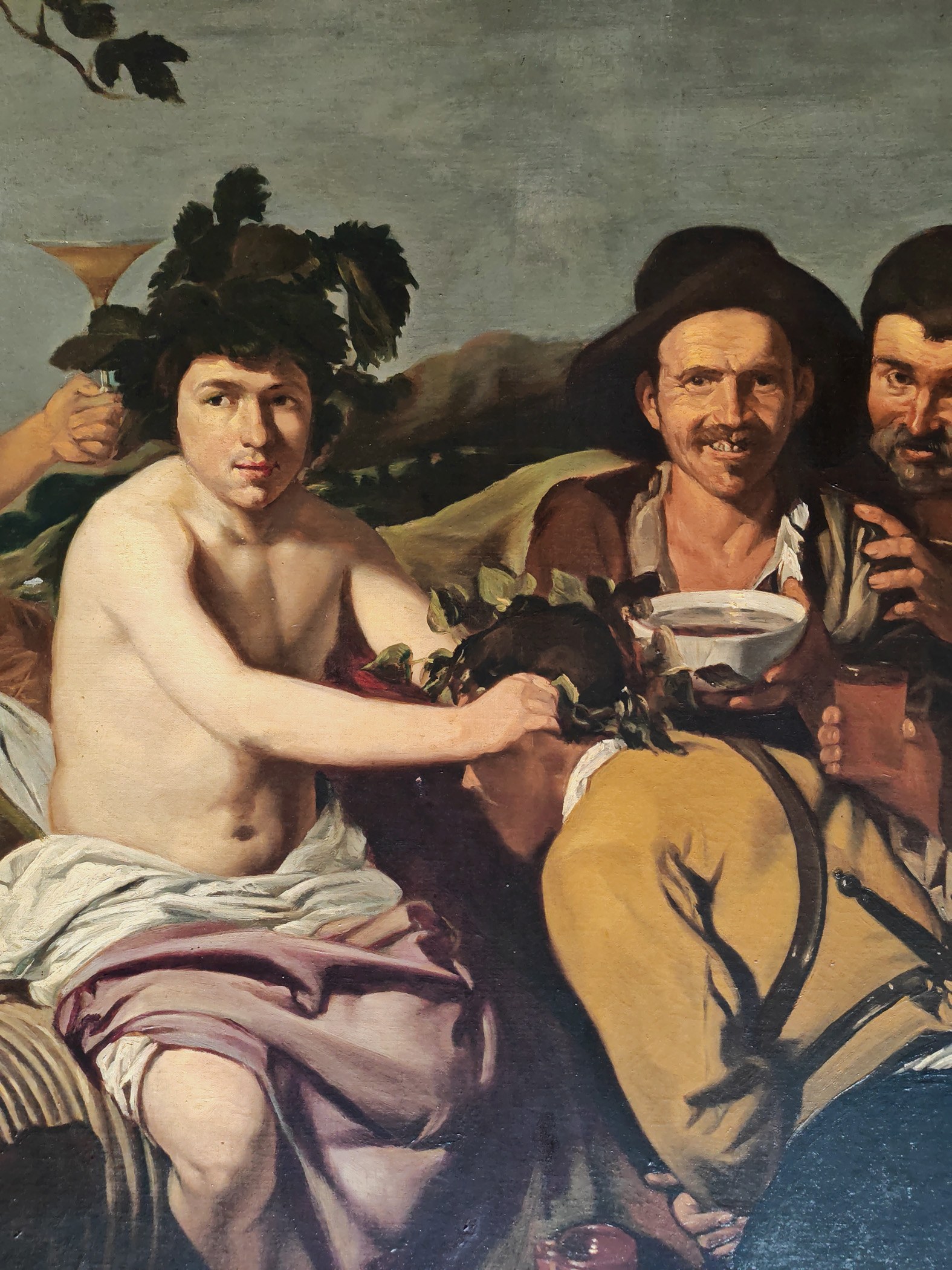
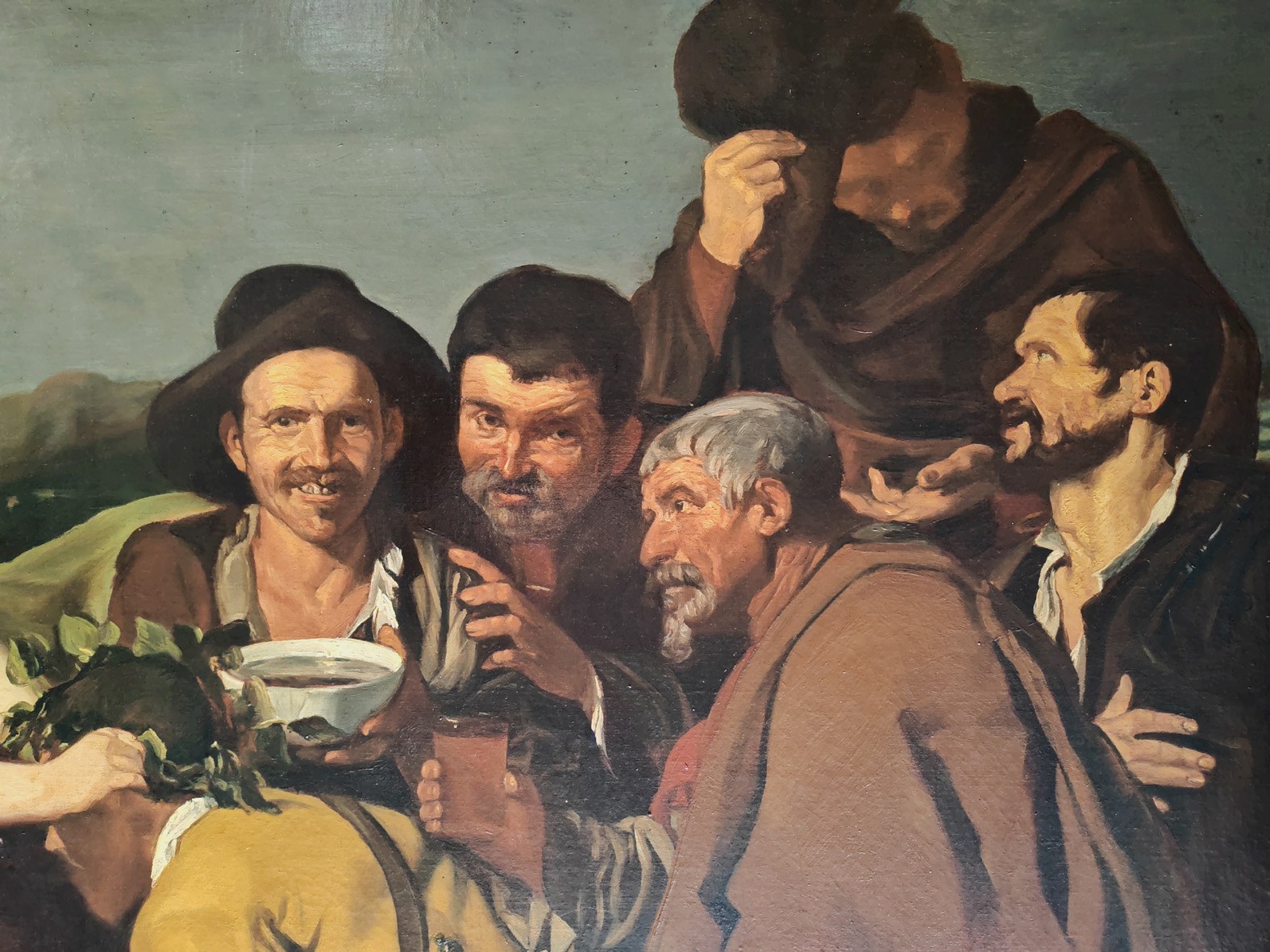
High-quality copy of Dieg Velázquez 's famous composition depicting Bacchus surrounded by a group of villagers. The central, youthful figure of the god wearing a grapevine wreath crowns a kneeling man, and the scene - set against a vast landscape - combines a mythological theme with a realistic observation of human types. Maintained in a warm brown-olive range and with clear chiaroscuro modeling, the work faithfully captures the figure arrangement, mood and light drama of the original.
The original, painted by Diego Velázquez in 1628-1629, is in the Museo del Prado, Madrid (oil on canvas, 165 × 225 cm), where it is listed under the title El triunfo de Baco (also known as Los borrachos).
Diego Rodríguez de Silva y Velázquez (1599, Seville - 1660, Madrid) - the most prominent painter of the Spanish Baroque, court artist of King Philip IV. A pupil of Francisco Pacheco, he spent his early years in Seville, creating naturalistic bodegones (kitchen scenes) influenced by Caravaggionism. From 1623 he was active in Madrid as a court portraitist and author of historical compositions; he traveled twice to Italy (1629-31, 1649-51), studying Renaissance and Baroque art. Masterpieces: "Las Meninas," "The Surrender of Breda ," "Venus with Mirror," "The Triumph of Bacchus." Revered for his extraordinary freedom of brush, psychological truth of his portraits and masterful play of light.










