


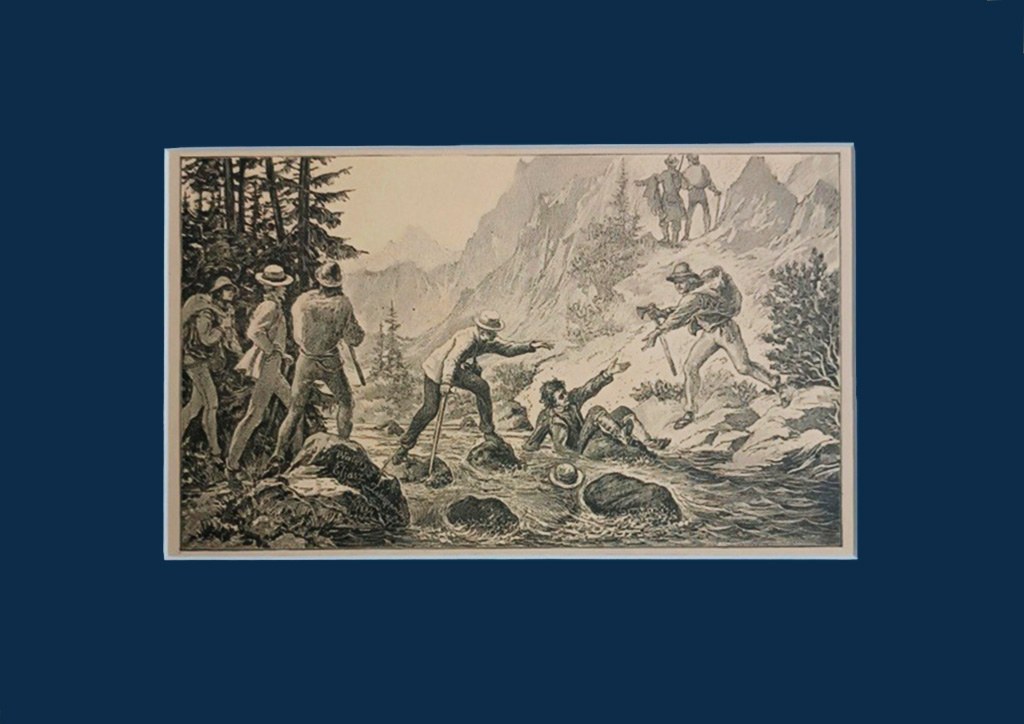
woodcut, paper, 12 x 21 cm in light passe - partout (23 x 32 cm), the print comes from a portfolio published by Krakow artists in 1884 to help flood victims in Galicia;
Jan Kanty Walery Eljasz-Radzikowski, used the name Walery (born September 13, 1840 in Cracow, died March 23, 1905 there) - Polish painter and photographer, popularizer of the Tatra Mountains and Zakopane, co-founder of the Tatra Society, author of Tatra guides, member of the correspondent of the Society of the Polish National Museum in Rapperswil.
The family used the nickname "Eljasz" instead of the surname Radzikowski, which was adopted by Walery's great-grandfather and Bar confederate Wojciech Radzikowski to avoid political persecution after the fall of the uprising[4]. Walery did not return to the Radzikowski surname until two generations later, but used it along with the nickname "Eljasz," as did his son.
He painted mainly historical paintings, landscapes of the Tatra Mountains, also views of the sights of Krakow, portraits, paintings and murals of religious subjects. During his studies, he and his classmates (including Alexander Kotsis) undertook plein-air excursions, during which he painted sketches, landscapes and landscapes. He created not only on canvas, but also on natural ground, such as the painting of Our Lady of Skala on a limestone wall in the Mnikowska Valley. During expeditions to the Tatra Mountains, he recorded mountain views and customs of highlanders in drawings and paintings.
In 1890, he began photographing the Tatra Mountains, local architecture, the traditions of the locals and their costumes. These served him as an aid to his paintings and drawings, and were also published in magazines, albums and in postcard form. He was not a pioneer of Tatra photography (the first pictures were taken in the late 1850s. Walery Rzewuski and Meletius Dutkiewicz), but he contributed to its popularization.
In 1858 Radzikowski began a project to reconstruct the history of clothing in Poland and neighboring countries. The materials he collected in 1858-1904 entitled Ubiory in Poland, Materials for the History of Clothing X-XVIII are in the National Museum in Cracow. Based on them he developed his drawings, historical paintings, as well as books on clothing and uniforms of the Polish army. His drawings were published in many books on history and ethnography.










最近浏览过的
登录以查看拍品列表
收藏
登录以查看拍品列表