


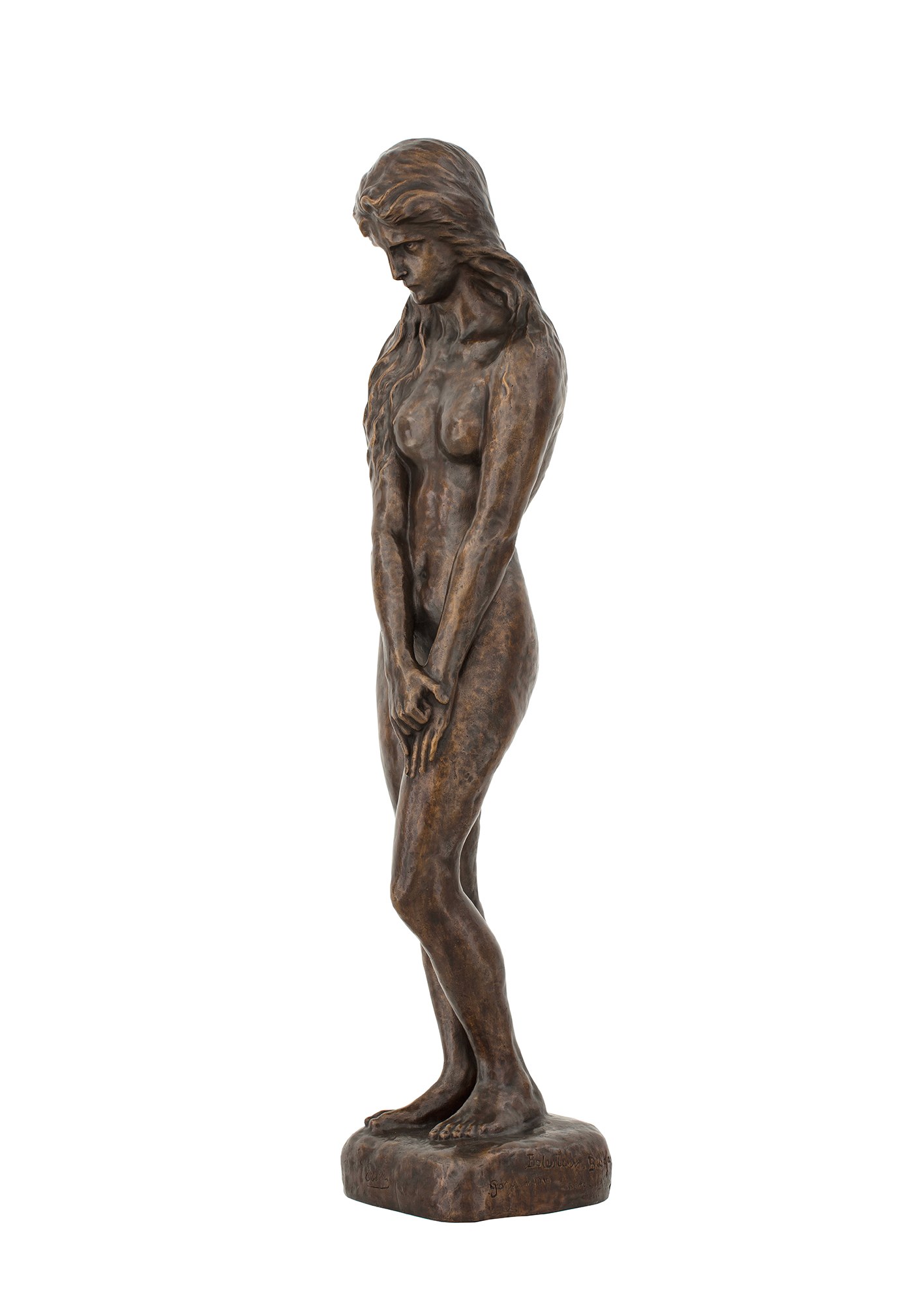

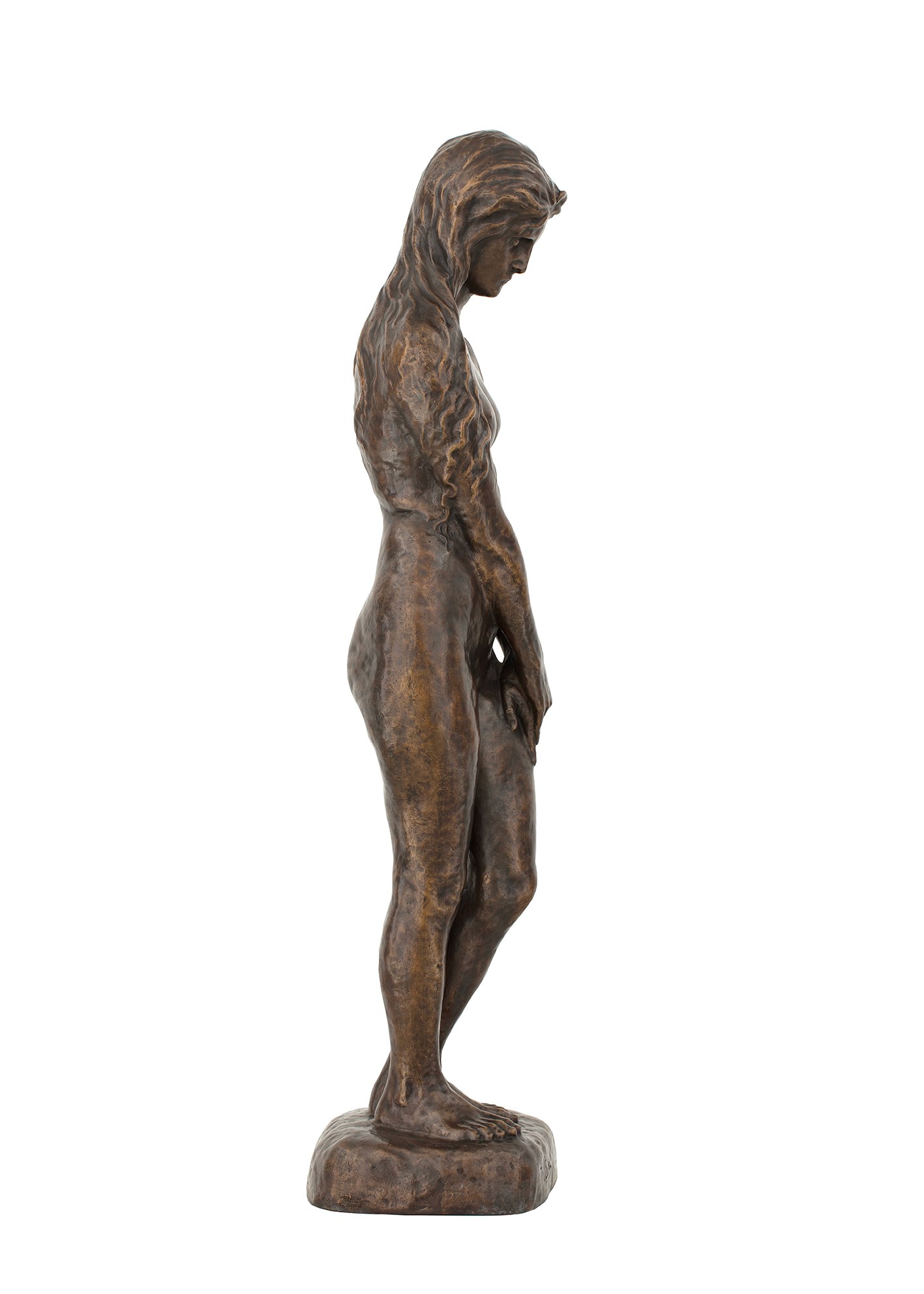


Dimensions: height 115 cm, ed. 4/8
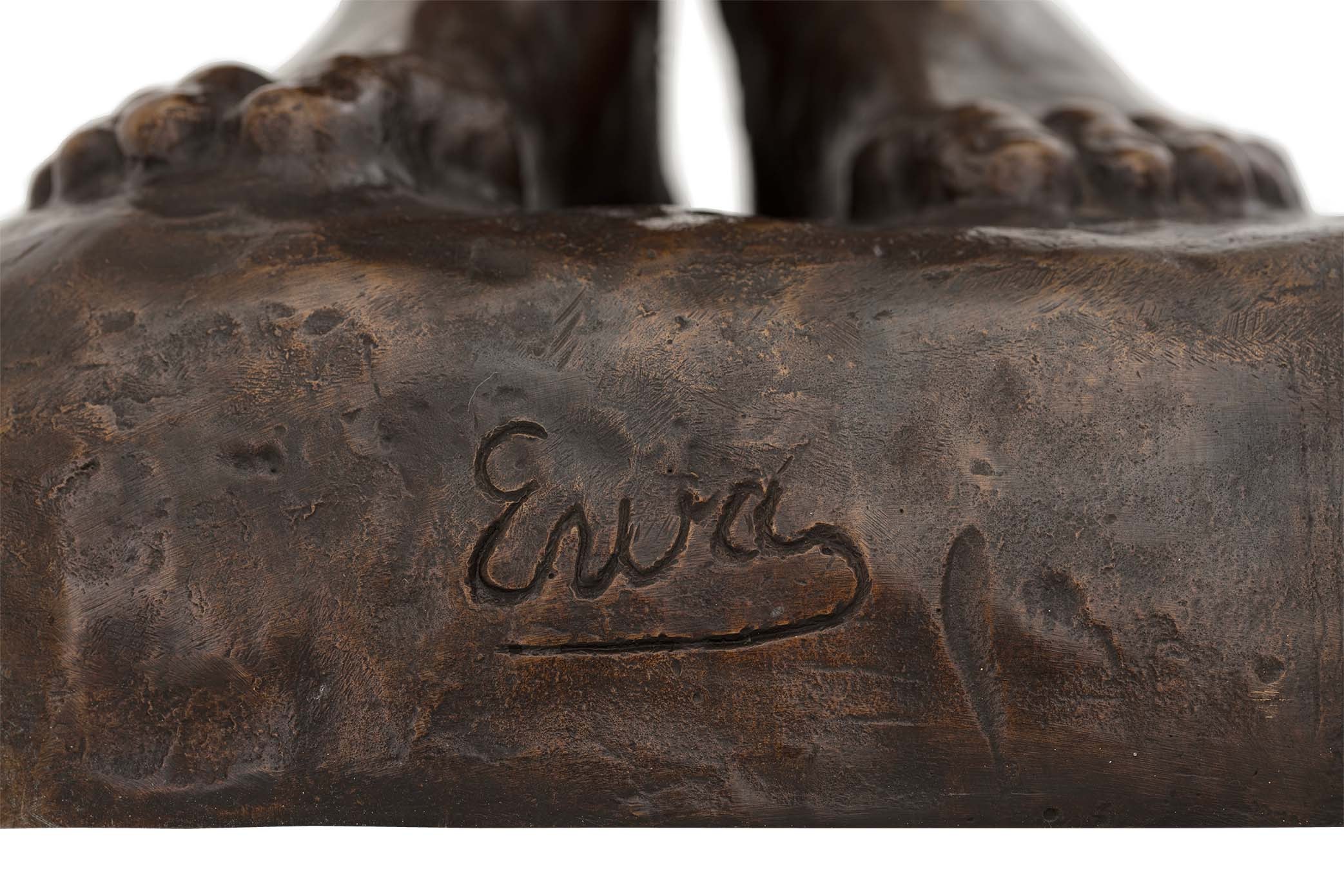
Signing: signed at bottom right: Bolesław Biegas / Paris r. 1910 / March 19... [illegible] left: foundry stamp: T. ROSS and 4/8; and on front: Ewa ed. 4/8
Provenance
Warsaw, private collection
Exhibited
Paris, Trianon de Bagatelle, Boleslas Biegas. Sculptures-peintures, May-August 1992 (different piece). Paris, Théâtre Femina, Exposition Biegas, 24.06-5.07. 1912 (different piece).
Reproduced
Deryng X. Boleslaw Biegas, published by the Polish Historical and Literary Society/Polish Library in Paris, Paris 2011, p. 185, p. 276, p. 277 (another piece). Boleslas Biegas. Sculptures-peintures [exhibition catalog], published by Trianon de Bagatelle -Paris, Paris 1992, item 24, p. 97.
Literature
Deryng X. Boleslaw Biegas, published by the Polish Historical and Literary Society/Polish Library in Paris, Paris, 2011. Bielawski B, The sculptural works of Boleslaw Biegas up to 1914, in Sztuka ok 1900, Warsaw 1969, p. 261. Boleslas Biegas. Sculptures-peintures [exhibition catalog], published by Trianon de Bagatelle -Paris, Paris 1992, item 6, p. 320.
With the beginning of the new century, Bolesław Biegas was already a well-recognized figure on the Paris art scene. An independent talent, rife with legends and scandals, he aroused keen interest among collectors and critics. Around 1910, a clear turn towards full sculpture becomes evident in the artist's sculptural work. At the same time, he becomes increasingly fascinated by the subject of the nude, and the sex of the figures he depicts becomes clearly defined. At this time, two corresponding compositions with Old Testament themes are created - "Adam" and "Eve".
The bronze cast presented here shows the biblical first woman in a humble, almost shrunken pose. Slightly bent over, with her hands clasped in front of her, she directs her gaze uncertainly upward. Painted on her face are despondency and fear - emotions resulting from her disobedience to God and consumption of the forbidden fruit. The haptic figure, modeled from all sides, betrays minor deformities and subtle imbalances of proportion. However, these minor imperfections are compensated for by the symbolic meaning and strong expression of the work. Eve's body seems tense, and her face reveals an inner drama - testifying to Biegas' exceptional sensitivity and talent.










