


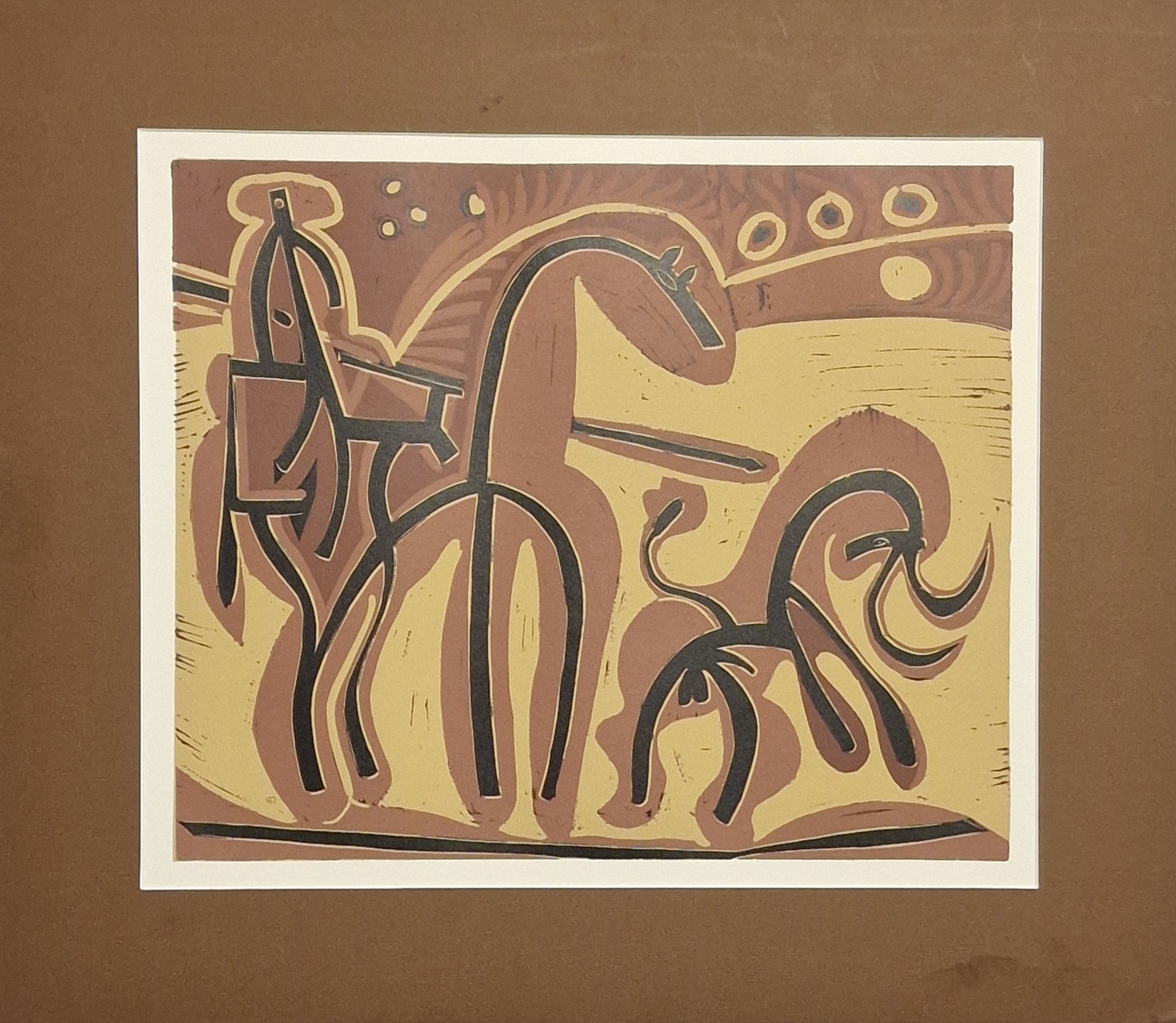
Original linocut on satin paper, with visible traces of the plate impression, 27 x 23 cm, created and approved by Picasso for “Picasso Linogravures,” published in an edition of 50 pieces. Created and approved by Picasso for “Picasso Linogravures,” published in an edition of 50 pieces. Linocut plates created by Picasso in collaboration with Galerie Louise Leiris; printed by Hilgardo Arnera in Vallauris. Publisher: Edition Cercle D’Art Paris.
References:
Ref. No.: Bloch 909
“Tauromachia” (Bullfighting) is one of the key themes in Pablo Picasso’s work, and his exploration of this subject through the linocut technique in the 1960s—and particularly in 1963—is especially significant. Picasso’s linocuts from this period, often featuring bullfighting themes, are among the most dynamic and innovative prints in his body of work. The linocut medium allowed the artist to employ bold, flat swaths of color and strong contrasts that emphasize the intensity of the events in the arena.
Picasso revolutionized the linocut technique by developing the “reduction” method (also known as the single-block technique). This method involves using a single block of linoleum, which is gradually carved and printed in successive colors. This allowed him to achieve rich colors and textures, and most importantly, once the work was completed, no further prints could be made, which enhanced the uniqueness of the edition.
Although Picasso’s famous aquatint series titled “La Tauromaquia” was created in 1959 (as illustrations for a bullfighting textbook), the theme of bullfighting was a constant obsession for the artist, and he returned to it in his linocuts as well, including in 1963.
The bullfighting scenes are full of movement, energy, and drama. Picasso reduces the figures to essential, synthetic forms, often resembling silhouettes or brushstrokes, which gives the scenes an almost archetypal character. For Picasso, the bull is a powerful symbol of nature, strength, and destruction (often symbolizing the Minotaur as well), while the bullfighter embodies art, control, and risk. For Picasso, the bullfight motif itself is a metaphor for life, death, passion, and creativity.
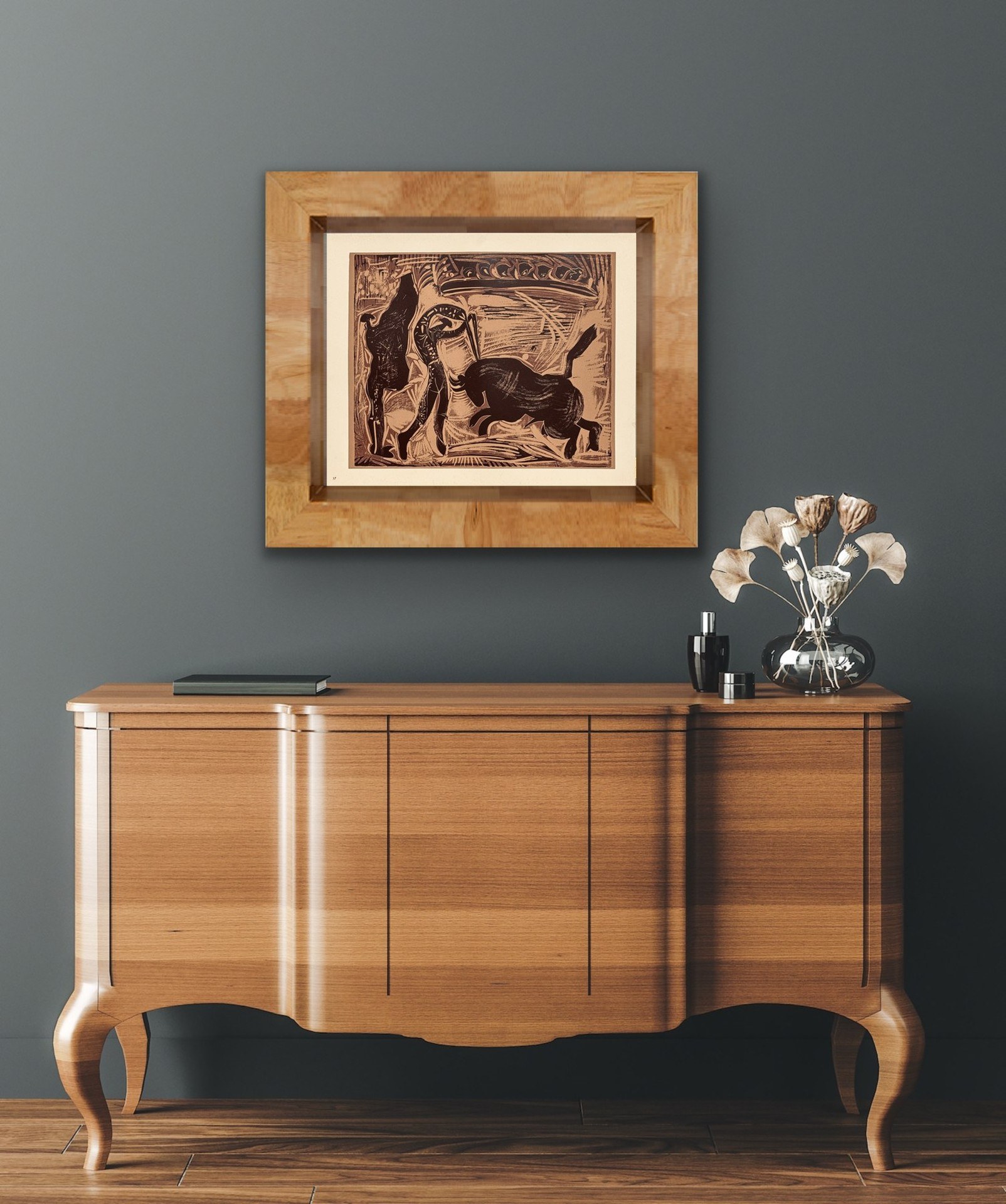
The frame shown in the renderings is for illustrative purposes only and does not constitute an offer for sale.










最近浏览过的
登录以查看拍品列表
收藏
登录以查看拍品列表