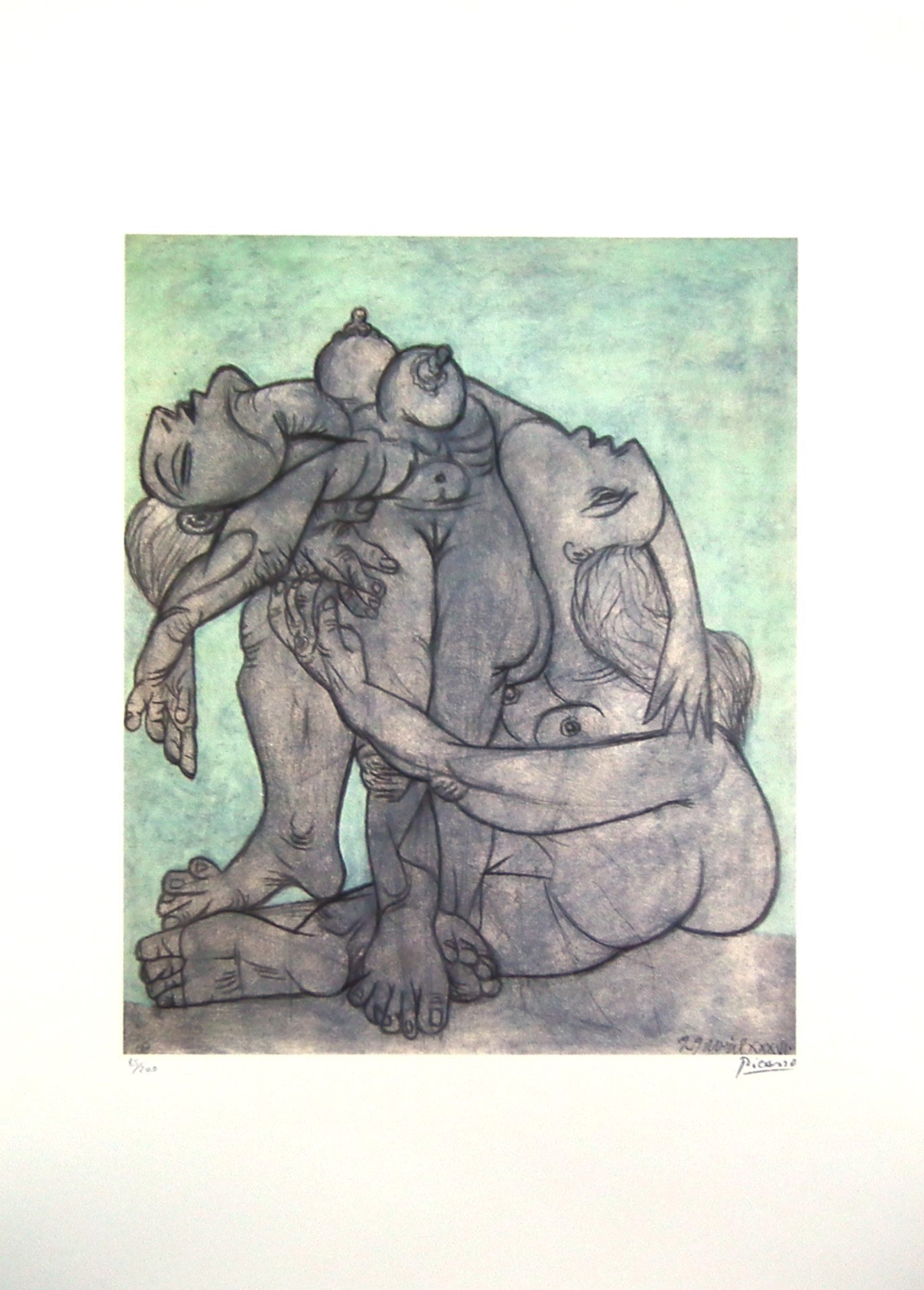
color lithograph, heavyweight lithographic paper; 45 x 36 cm (composition), 70 x 50 cm (sheet); signed on plate under composition p. d. "Picasso" and hand-numbered in pencil "85/200"; l.d. dry stamp of the certified publisher with the inscription "PICASSO"; on the back, color facsimile of Picasso's drawing of the so-called "head" with signature and information about the publisher - "Copyright Foundation Pablo Picasso" / amount of edition (200 pieces) / each piece numbered.
Pablo Picasso often painted nude women, and this subject was one of the central themes in his work. The female nude runs through many different periods of his career, from his early years, through his Cubist phase, to his later, more Expressionist and Surrealist works.
Pablo Picasso's painting "Nude Women" (also known as "Two Women") exemplifies his interest in the human form and the complexity of the body, characteristic of a period in which he experimented with form and content, often depicting nude women in a distorted and dramatic manner. His paintings from this period reflect his interest in the subconscious, eroticism and the complexity of human relationships. and various forms of abstraction.
The color scheme of the painting is kept in brown and beige tones, which gives the work a warm, earthy character. Such colors emphasize the physicality of the figures depicted, and also add a certain austerity to the painting. The two women are shown in a complicated, entangled position, which may symbolize both intimacy and tension between them.
Picasso painted nude women not only as aesthetic objects, but also as a medium for exploring emotions, relationships and psychology. The women in his paintings often symbolize various aspects of life, from love and desire to conflict and suffering. His approach to this subject has been innovative and evolved over time, making it one of the most fascinating elements of his work.