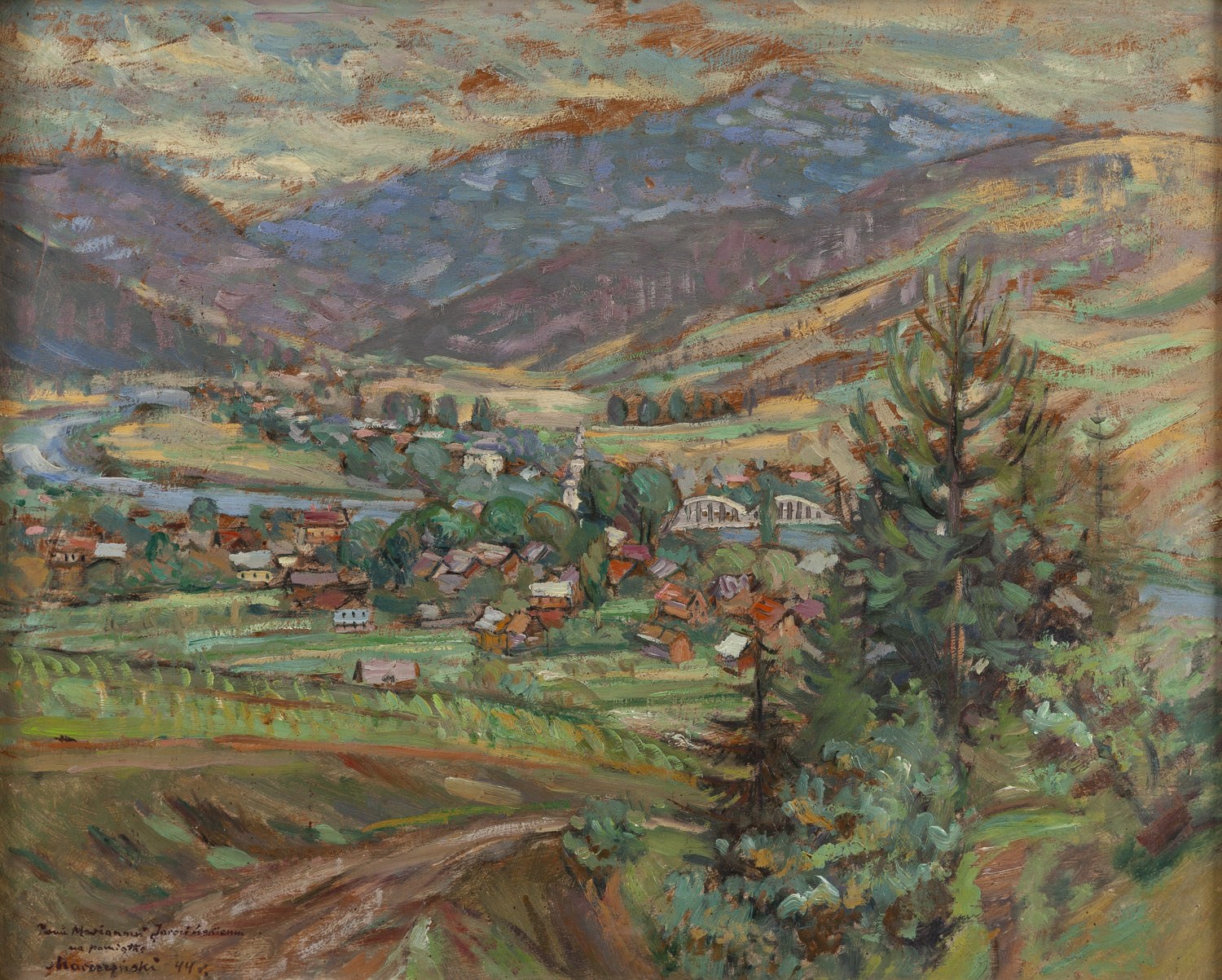
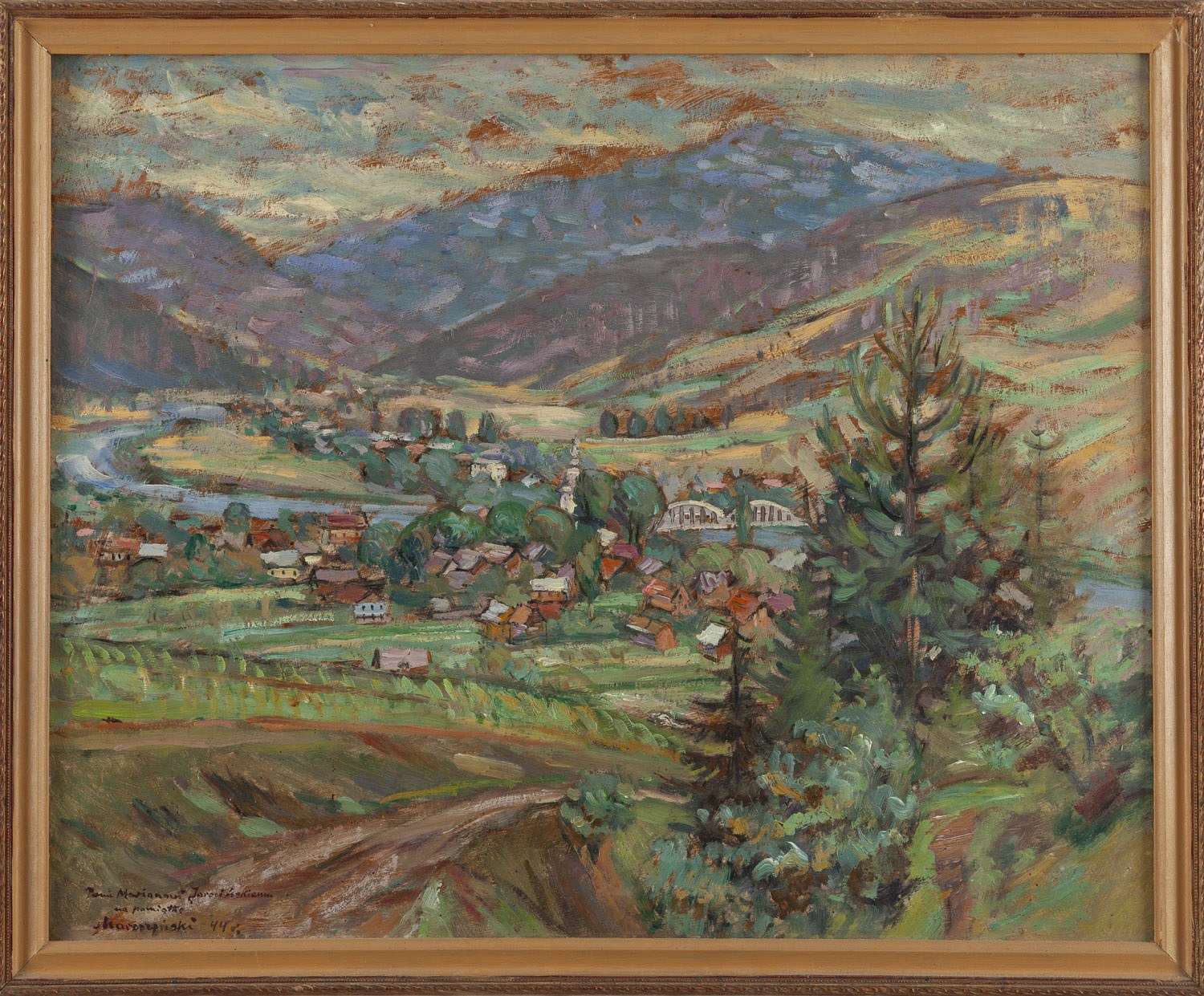
Dimensions: 53 x 65 cm
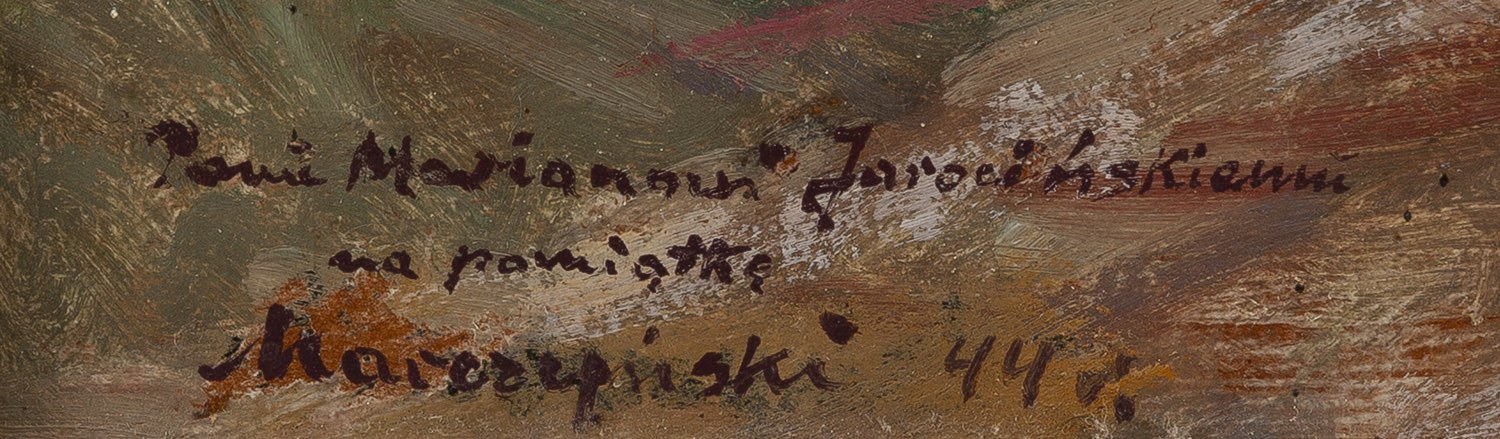
signed, dated, and inscribed on the lower left: 'To Mr. Marian Jarociński | as a memento | Marczyński 44r.'
Provenance
A gift from the artist to the family of the current owners
Biography
From 1929 to 1936, he studied at the Academy of Fine Arts in Kraków. In the 1930s, he became associated with the Kraków Group and also participated in its reactivation in 1957. His involvement in the Association’s work was at times marked by sharp conflict with T. Kantor and his inner circle. It seems that Adam Marczyński—alongside M. Jarema—was the Group’s most outstanding painter. From 1945 until his retirement, he worked at the Academy of Fine Arts, where he led the painting studio. He became a professor there in 1950. In addition to painting, he practiced drawing, printmaking (monotypes), and set design. He is the author of highly regarded church polychromes (Nowy Wiśnicz, Tarnów Cathedral, Ratułów, Brzesko, and Sokołów Małopolski). He created book illustrations for *Niebieskie kartki* by A. Rudnicki, *Porwanie w Tiutiurlistanie* by W. Żukrowski, *Pamiętniki* by Pasek, "Niespokojne godziny" by I. Jurgielewiczowa, and others. He is recognized as one of the most important representatives of the Polish avant-garde. Marczyński’s early works show the influence of Cubism and Colorism. After the war, he created lyrical compositions inspired by the art of Paul Klee and Joan Miró. The next phase of his career took place in the 1960s—at that time, the artist joined the “painting of matter” movement, creating collages from broken boards, partially burned slats, sheets of veneer, pieces of cardboard, and rusted sheet metal. In the 1970s, he created compositions using small panels with hinged, movable walls.