


52.5 x 50.8 cm - oil, cardboard
Signed p.d.: JS [tied monogram].
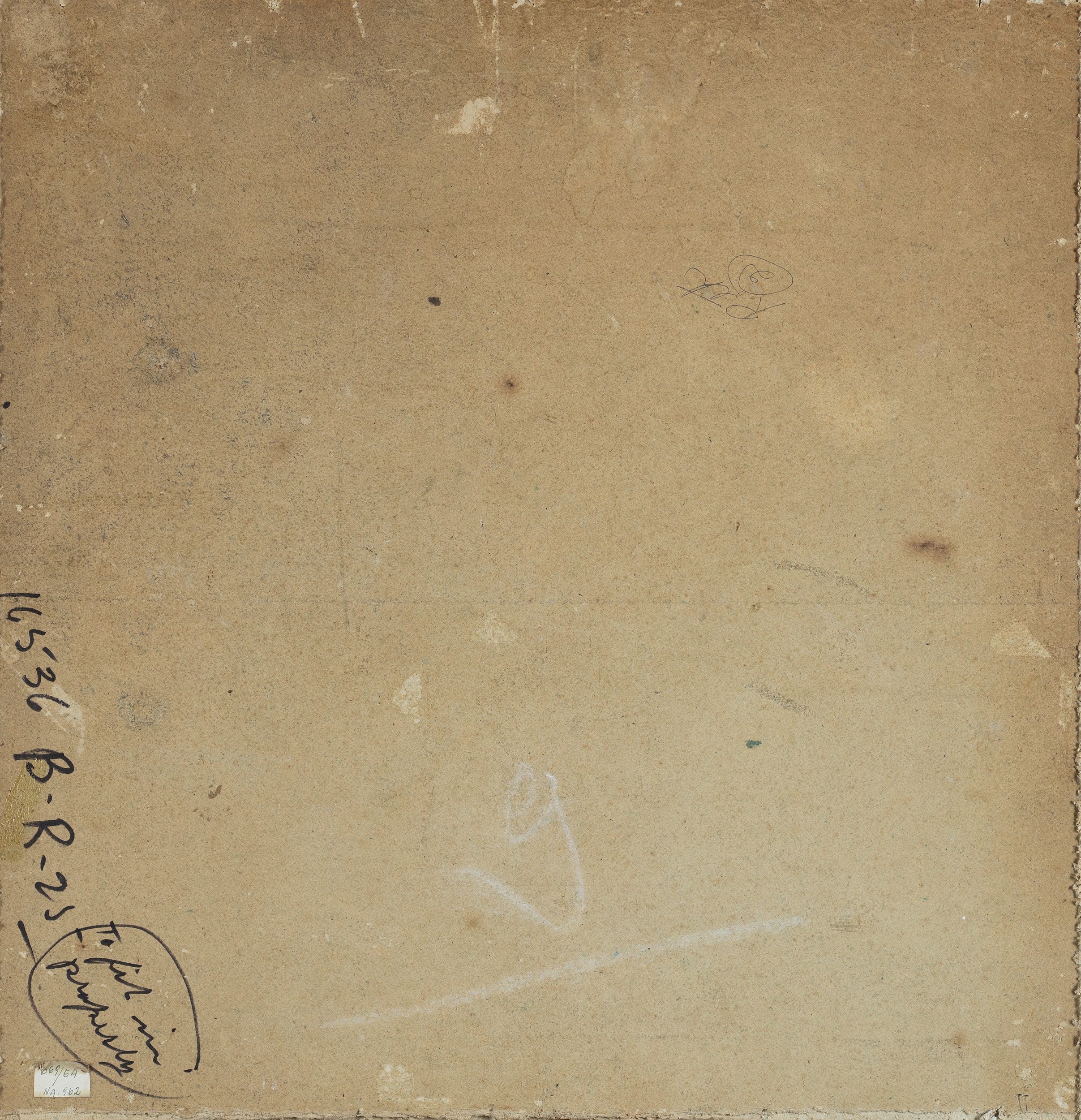
On the back left along the edge (black marker): 16536 B-R-25 To fit in properly; below, small stick-on label with inscription (blue pen): 669/EA |NA. 662; top right an illegible pen inscription.
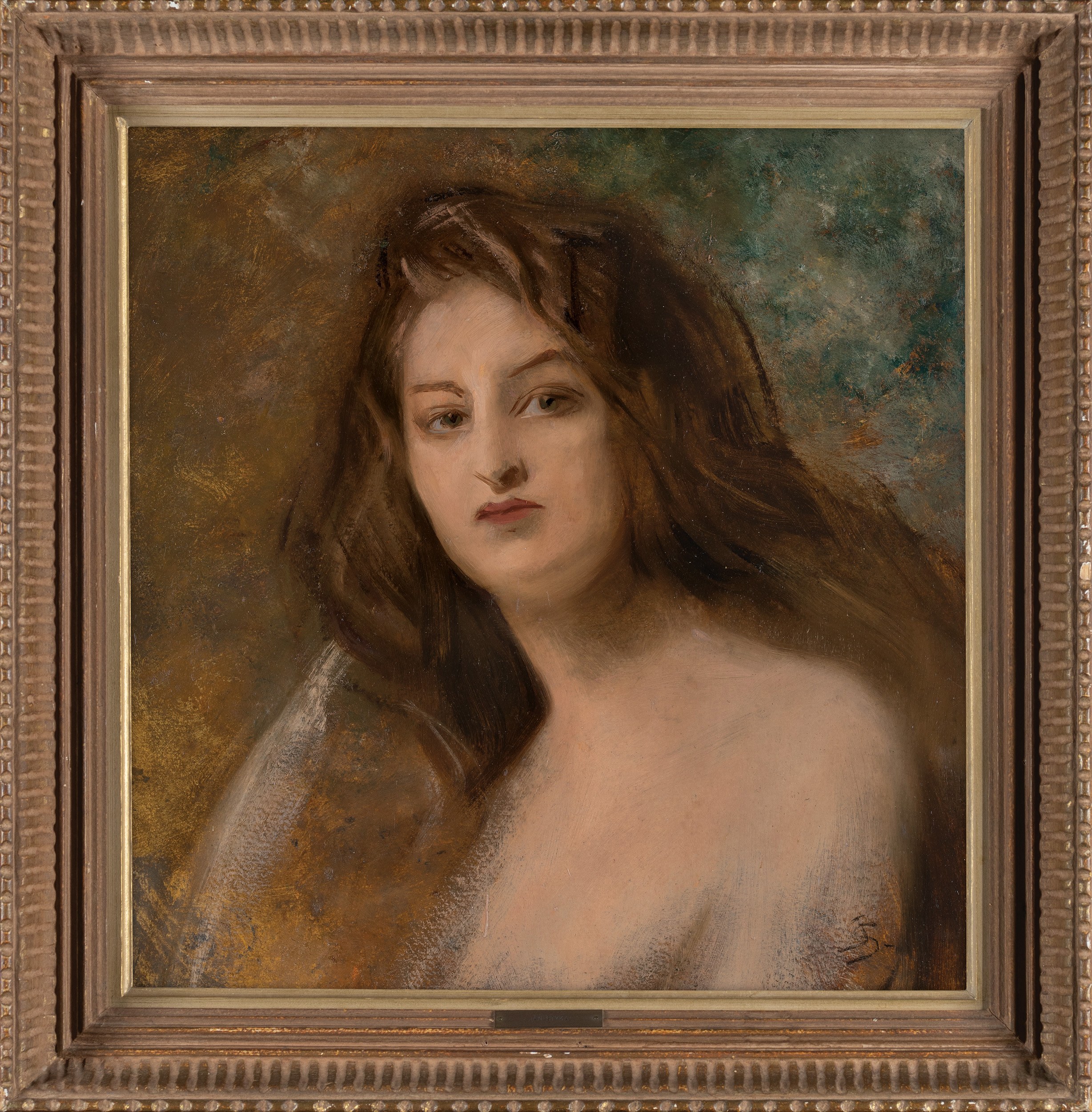
On the frame a small pink sticker with the inscription (black pen): ID 54118; above, a sticker of the auction house.
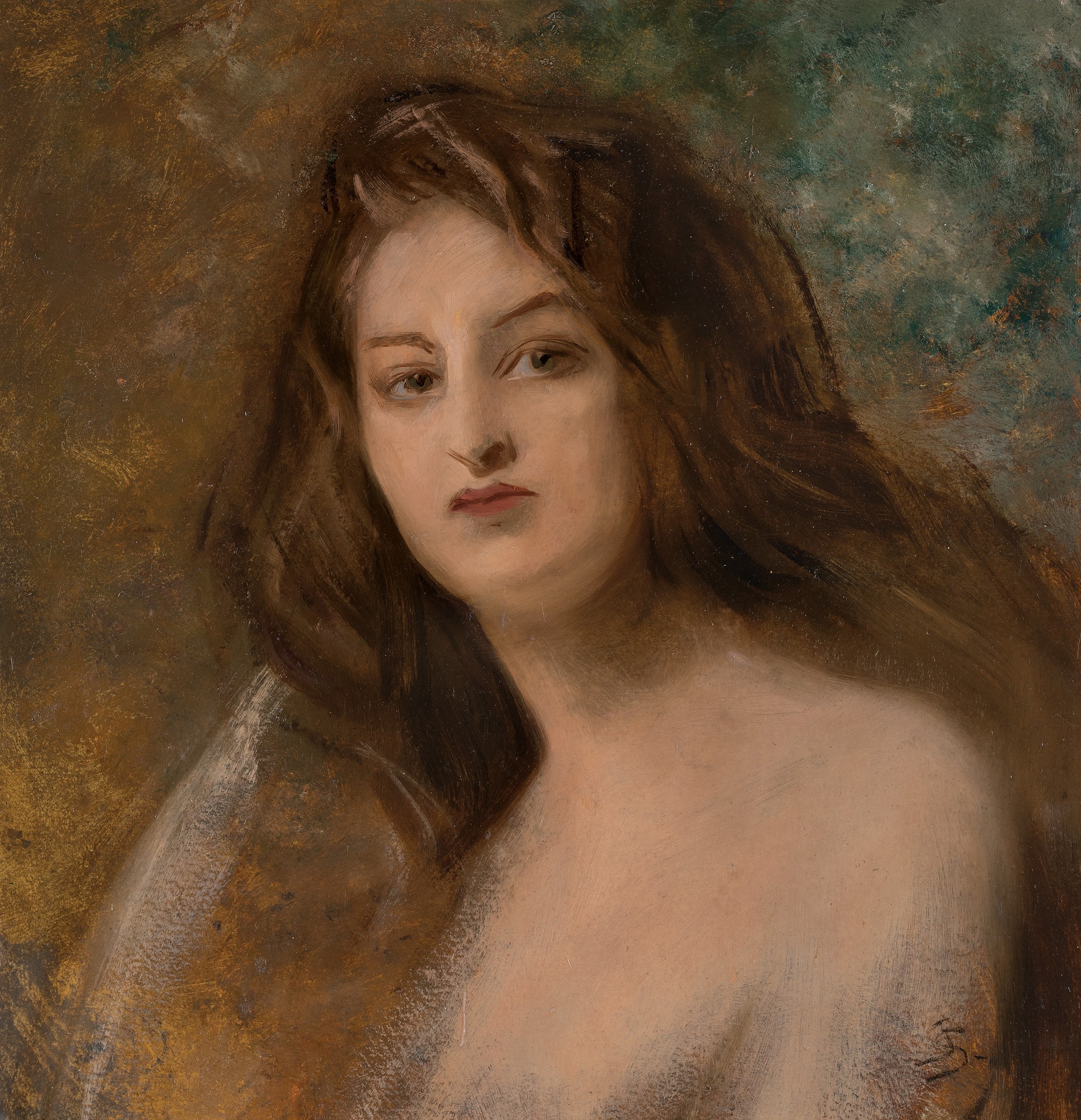
The monogram JS is a form of signing that Styka usually used for smaller formats and works made on cardboard or panels. Such works are more intimate in nature - they were often created for private commissions and salon collections. In the presented, intimate portrait, we find the artist's typical handling of the brush: a vibrant, impressionistic background in tones of green and umber builds a vibrant aura, subtly contrasting with the model's pale, velvet-modeled complexion. The soft light emphasizes the sensuality of the gaze, while maintaining the delicacy and psychological restraint of the representation.
Jan Styka's women's portraits in this scale, painted on cardboard, appear on the market relatively less frequently than large canvases - which is precisely why they are sought after as an example of this more private, intimate facet of the artist's work. They fit perfectly into the atmosphere of the late 19th and early 20th centuries, combining academic precision with elements of emerging modernism. Styka was primarily a salon painter, meaning that his models and clients often came from the upper classes. Their portraits were characterized by elegance, attention to the details of costumes and jewelry, and careful rendering of the texture of fabrics and the alabaster skin of the models.
The portrait on display is part of a series of images of femme fatale - painted by Styka in the early 20th century, and popular in the art of Young Poland and Modernism. The women are depicted as sensual, full of enigma, sometimes with melancholy or absent facial expressions. Styka often used vivid color contrasts to emphasize the model's beauty, for example, combining lush, wavy hair with angelically pale skin and accentuating sensual lips.
The tradition of painting sensual and elegant female portraits was continued with great success by Jan's son, Tadeusz Styka (1889-1954), who became famous for his portraits of Hollywood stars and European ladies.
Jan Styka (Lviv 1858 - Rome 1925) - popular painter of historical and battle scenes, author of allegorical and religious paintings, portraitist, father of painters Tadeusz and Adam Styka. He studied at the Academy of Fine Arts in Vienna, then in Rome, and from 1882-1885 with Jan Matejko at the School of Fine Arts in Cracow. After his studies, he spent several years in Paris and later lived in Lviv. In 1895 he traveled to Palestine. After 1900 he lived permanently in Paris, from where he traveled to the United States, Italy and Greece. A participant in many exhibitions, including the Paris Salons and the World Exhibition in St. Louis (1904), he enjoyed considerable popularity and even fame. He was a member of the Academy of St. Luke in Rome. He was also the originator and co-author of famous panoramas - Panorama of the Battle of Raclawice (1892-1894; exhibited permanently in Wroclaw today; together with W. Kossak and others), Golgotha (1896; now in Los Angeles), Panorama of Transylvania (1897; cut into parts, only fragments remain), and Martyrdom of Christians in Nero's Circus (1899; canvas lost during World War I). He was involved in illustration, including preparing illustrations for a luxury edition of Quo vadis? Sienkiewicz.













最近浏览过的
登录以查看拍品列表
收藏
登录以查看拍品列表