


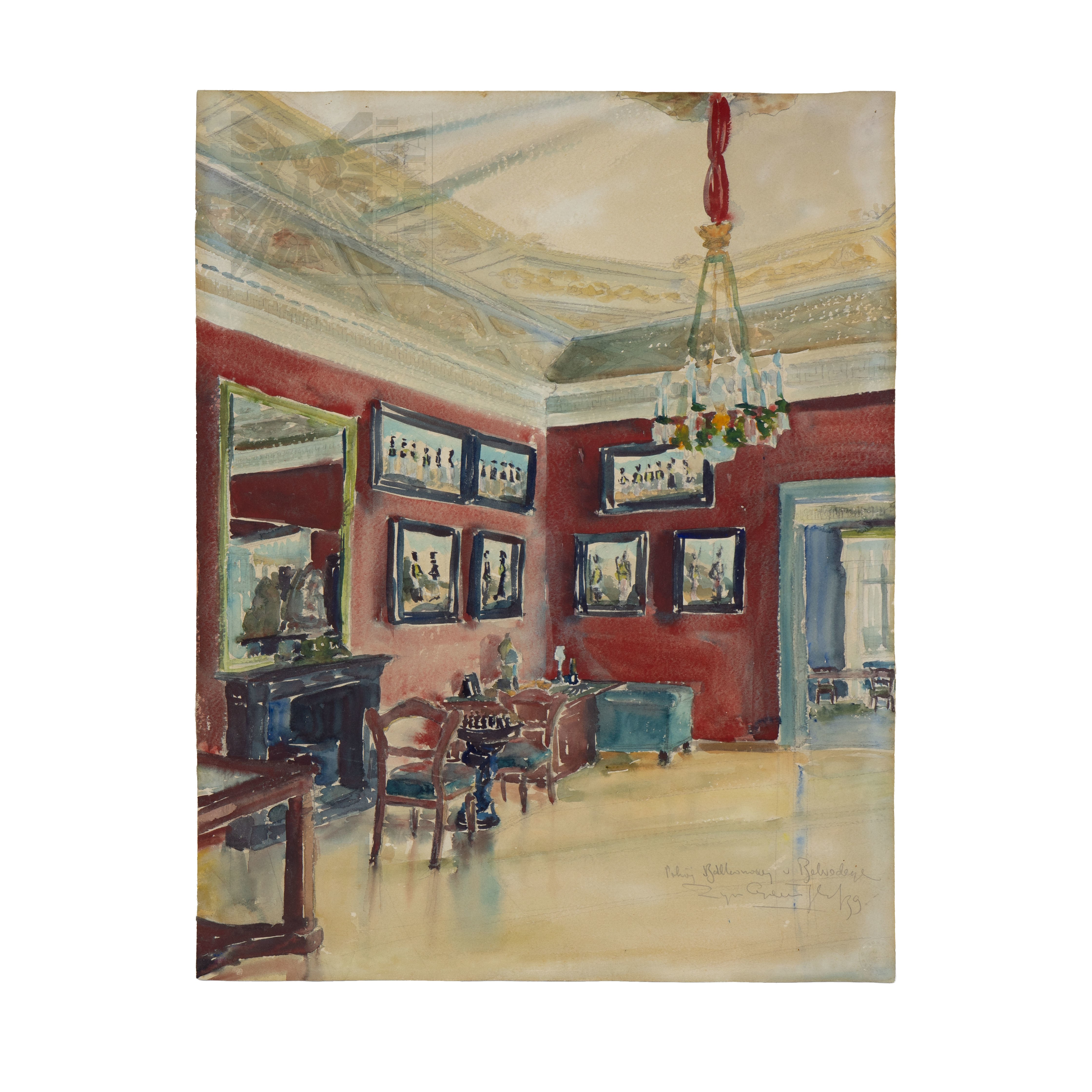
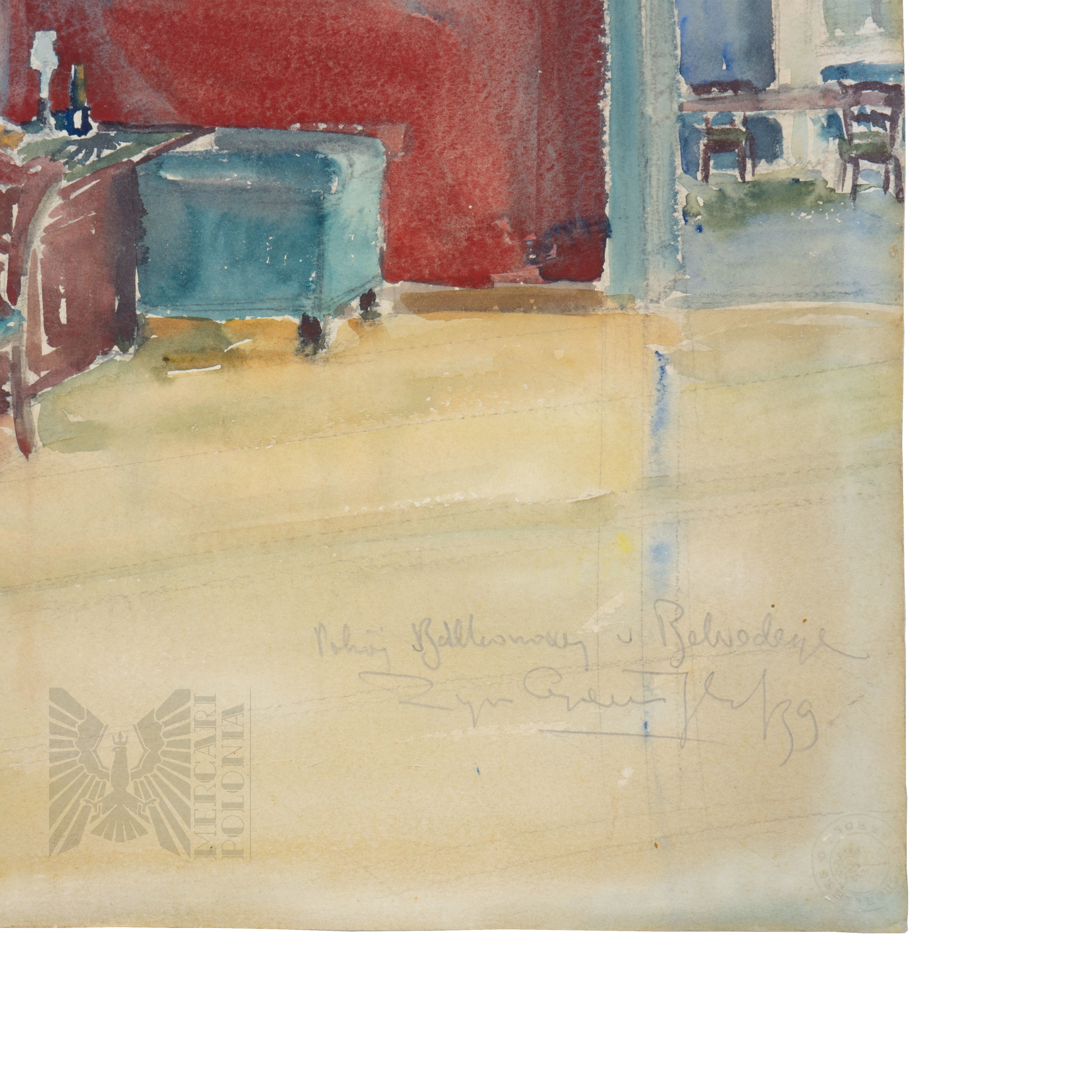
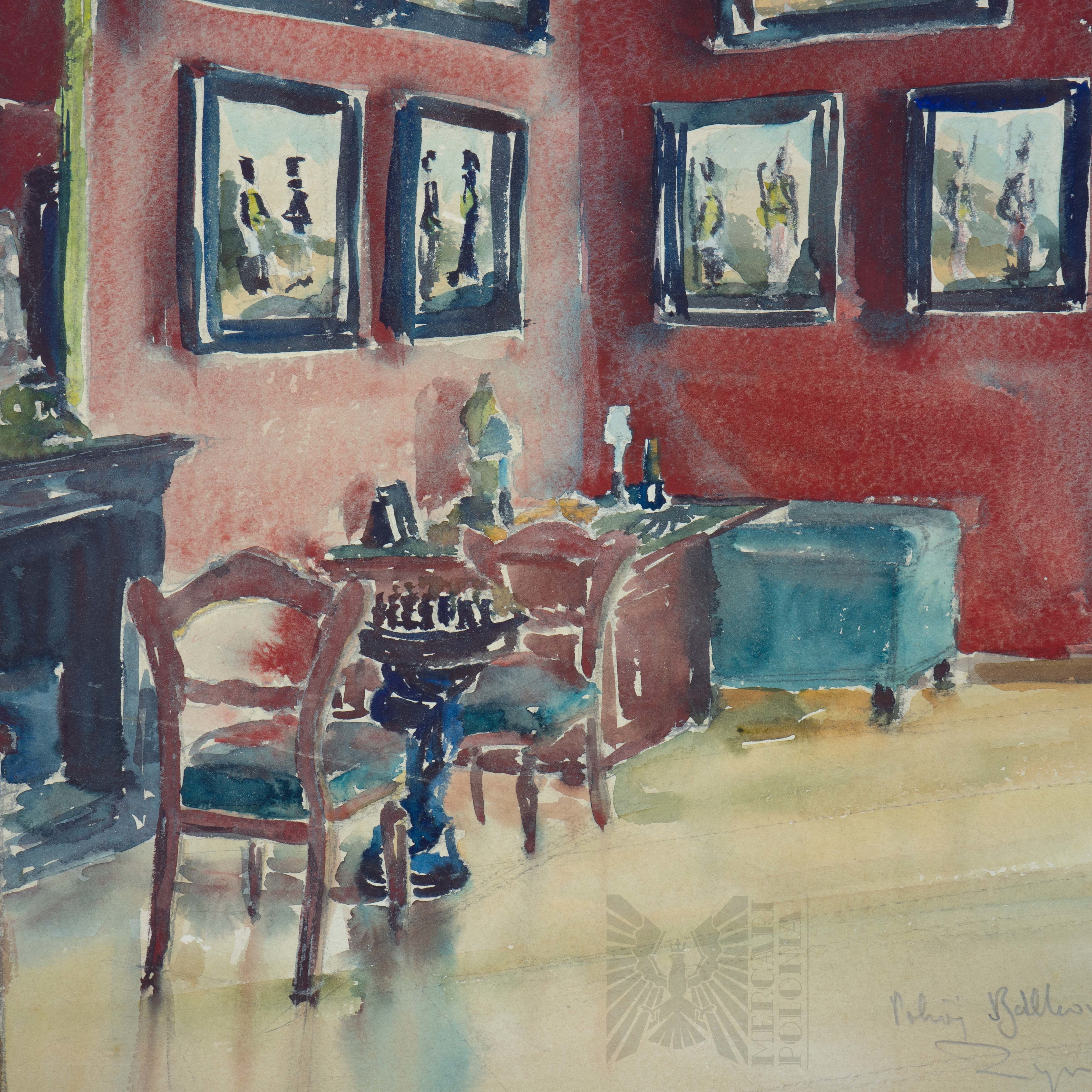
"Interior of the Belvedere"
Watercolor on cotton paper, dry seal of Parole Schoeller
Dimensions: 66 × 49 cm
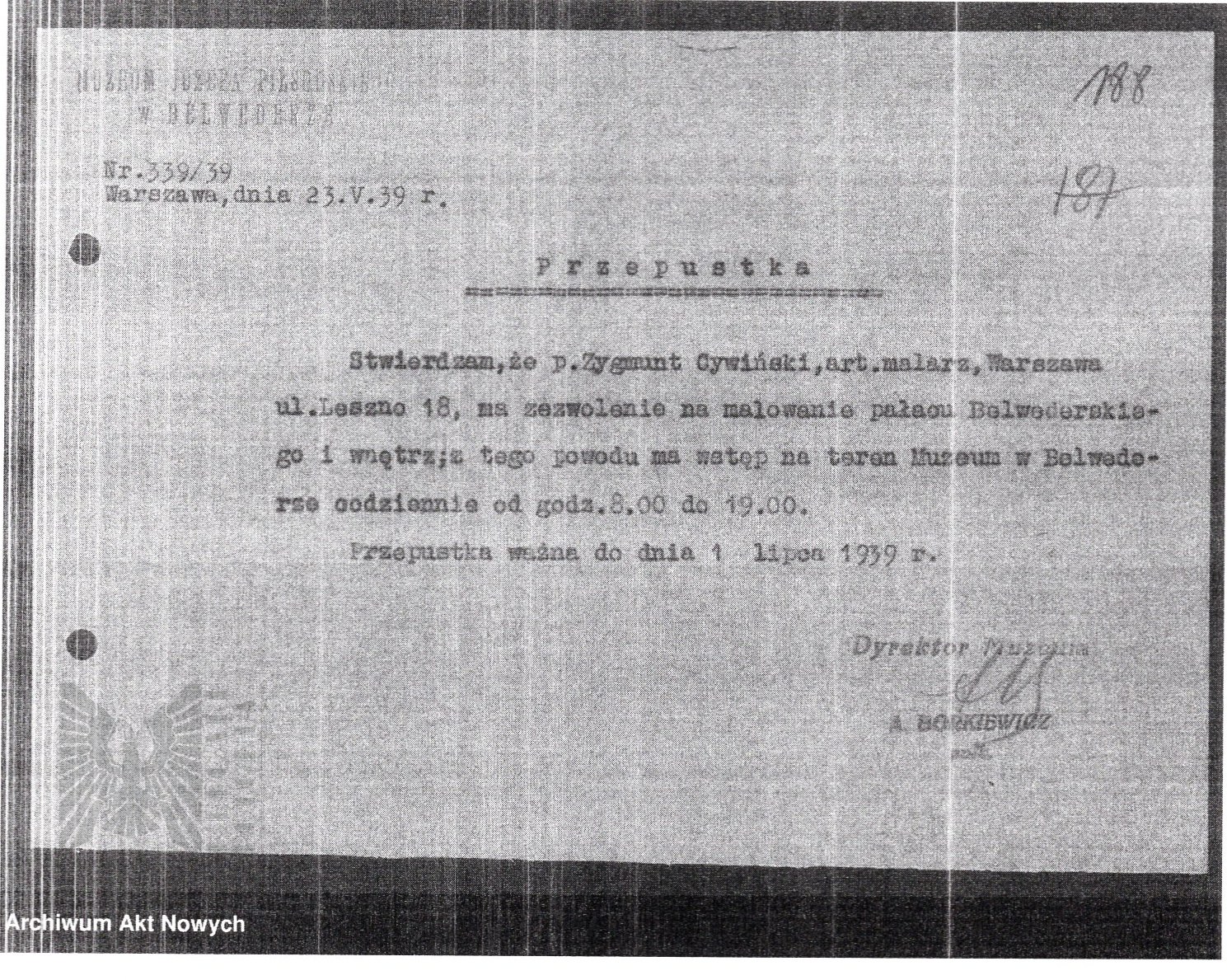
Provenance: 1939, document confirming permission to paint the interior of the Belvedere (Archive of New Files, Warsaw)
An exceptional watercolor by Zygmunt Cywiński, one of the most interesting Polish painters of the interwar period, depicting the interior of one of the representative halls of the Belvedere Palace in Warsaw, executed in 1939 - just before the outbreak of World War II.
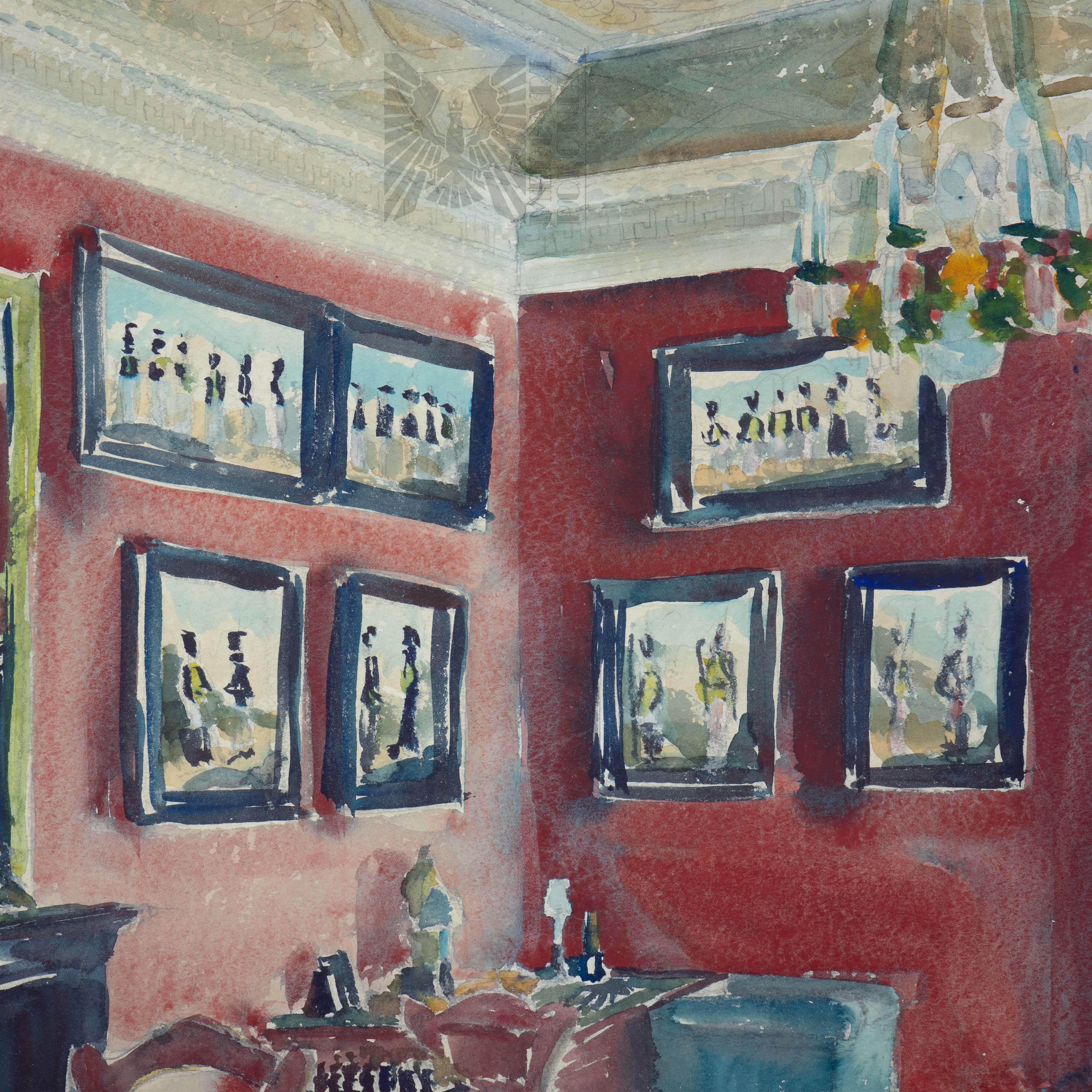
The work depicts the red salon of the Belvedere, where the walls show paintings depicting soldiers of the Kingdom of Poland, commissioned by Prince Konstanty and executed by Jozefat Lukaszewicz (1789-1873). The watercolor exudes tranquility and distinguished elegance - the artist has rendered the luminosity of the interior, the shine of the polished furniture, the play of light on the parquet floor and the richness of the architectural details with extraordinary precision and sensitivity.
The scene, maintained in soft, realistic color tones, is not only a work of high artistic value, but also a unique iconographic document, showing the appearance of the Belvedere's interiors in the last months before the wartime destruction of many of Warsaw's monuments.
Provenance:
Attached to the work is a unique document dated May 23, 1939, issued by the Directorate of the Belvedere Museum, confirming permission for Zygmunt Cywinski to "paint the Belvedere Palace and interiors" and allowing him to enter the Belvedere from 8:00 a.m. to 7:00 p.m. This document, now in the Archives of New Records, is priceless confirmation of the authenticity and historical context of the work.
The watercolor Interior of the Belvedere is not only a work of high artistic value, but also an important iconographic record of Polish cultural and architectural history. Cywiński, known for his subtle technique and mastery of light handling, managed to capture the atmosphere of a symbolic place - the seat of Polish authorities and the residence of Marshal Józef Piłsudski.
Cywiński's works, extremely rare on the art market due to his untimely death in 1939, are today a valuable testimony to the Polish art of the interwar period.
-------------------
Zygmunt Cywiński (April 11, 1902, Łódź - September 13, 1939, Gdynia Redłowo) - Polish painter, cultural activist, defender of Gdynia in 1939. He studied from 1924 to 1931 at the School of Fine Arts in Warsaw. His professors included Miłosz Kotarbiński and Felicjan Szczęsny Kowarski. While still a student, he became interested in the development of Gdynia - he adhered to the view that Gdynia should become the cultural center of Northern Pomerania. He actively worked for this idea, actively organizing Gdynia's cultural life: he belonged to the Group of Gdynia Artists, co-founded the Professional Union of Polish Artists in Gdynia, and from 1935 organized, together with Marian Szyszko-Bohusz, the so-called "Thursday Evenings," which included lectures and art exhibitions. He also had individual exhibitions in Gdynia (for example, in 1938 at "Café Baltic") and exhibited his watercolors. In August 1939, before the outbreak of World War II, he was mobilized and took part in the defense of Gdynia after the German aggression. He was a second lieutenant in reserve and commander of a guard platoon at the Redlow barracks, in the 2nd Marine Rifle Regiment. He fell while covering the withdrawal of Polish troops to Kepa Oksywska.
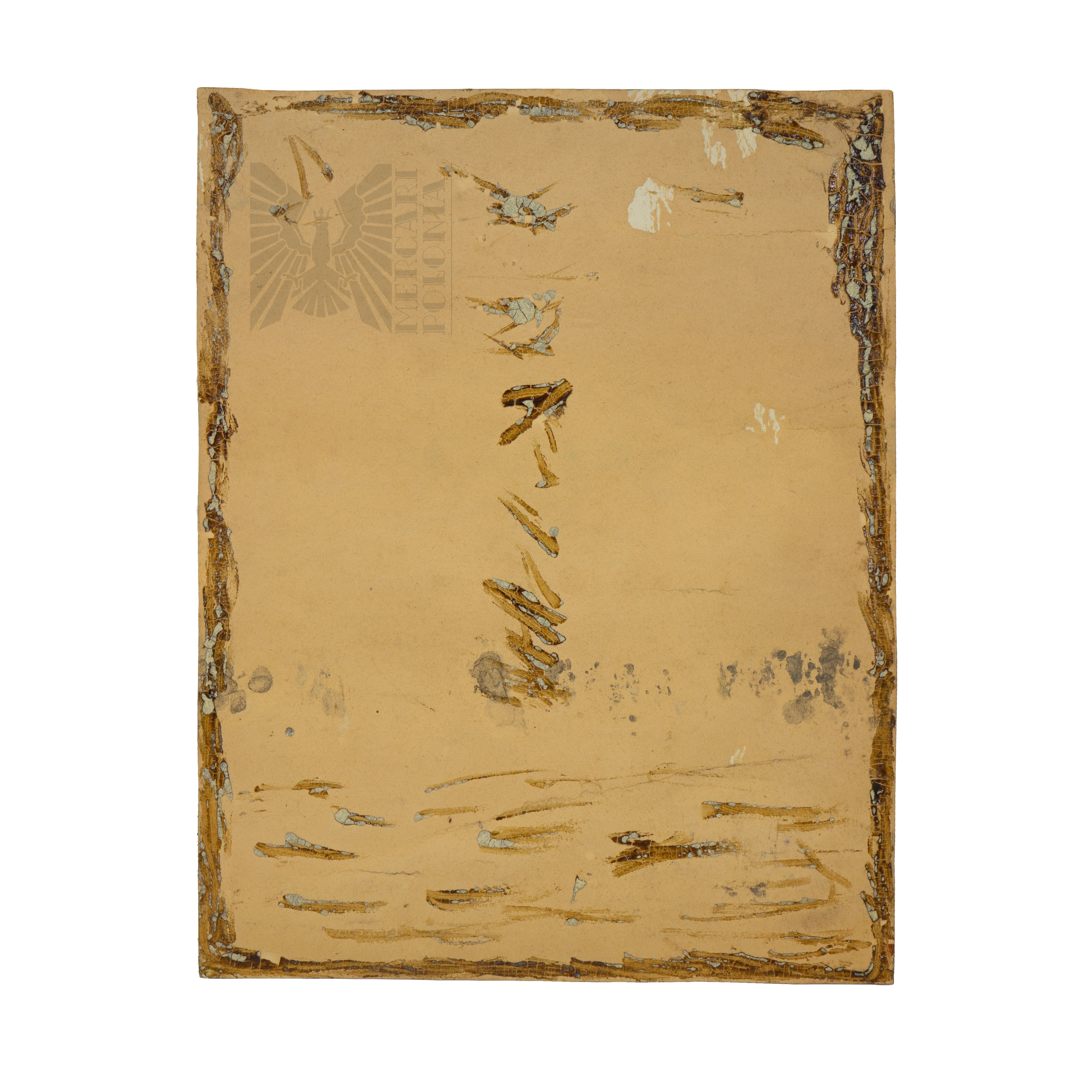
Condition as in the photos.











最近浏览过的
登录以查看拍品列表
收藏
登录以查看拍品列表