


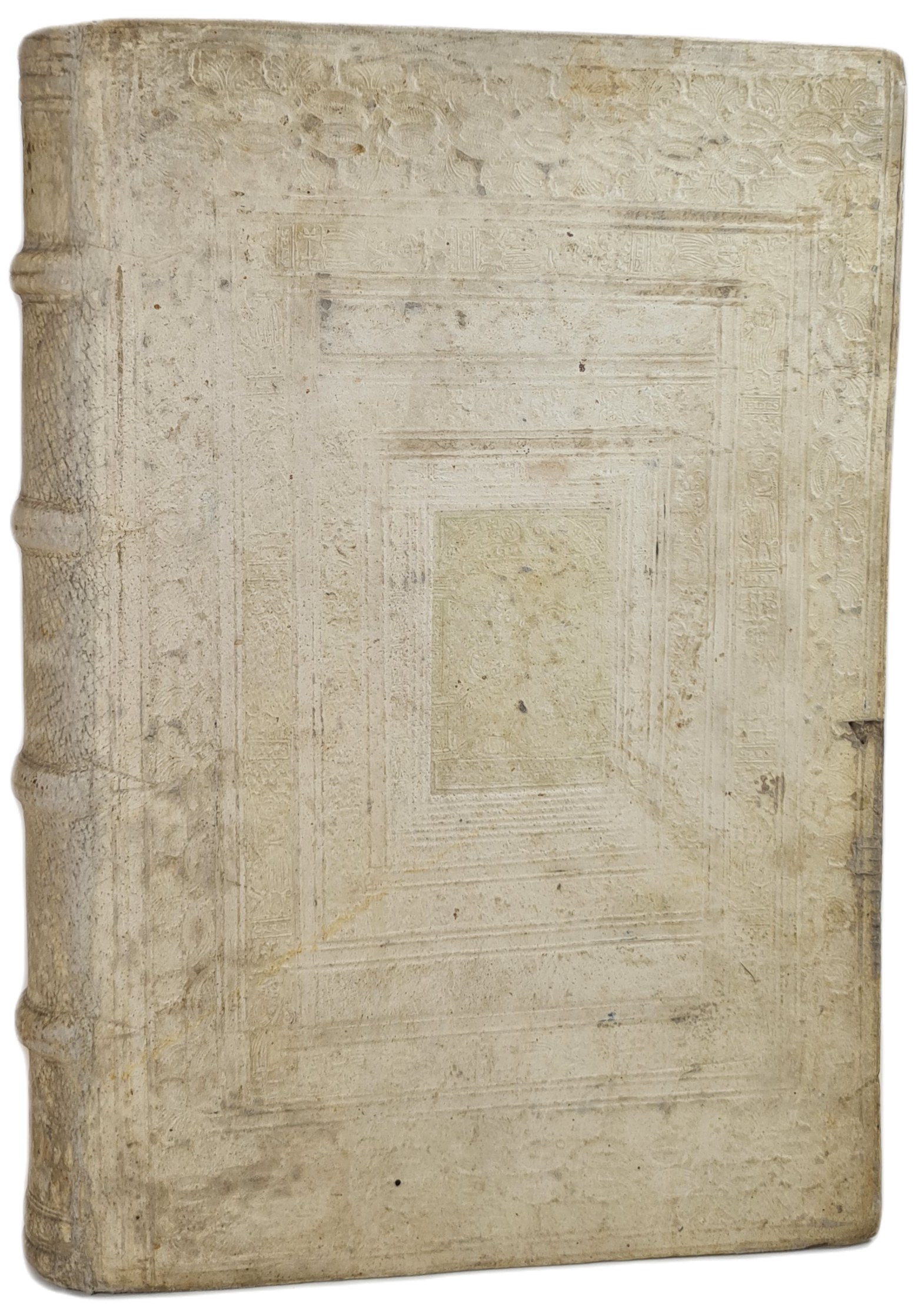
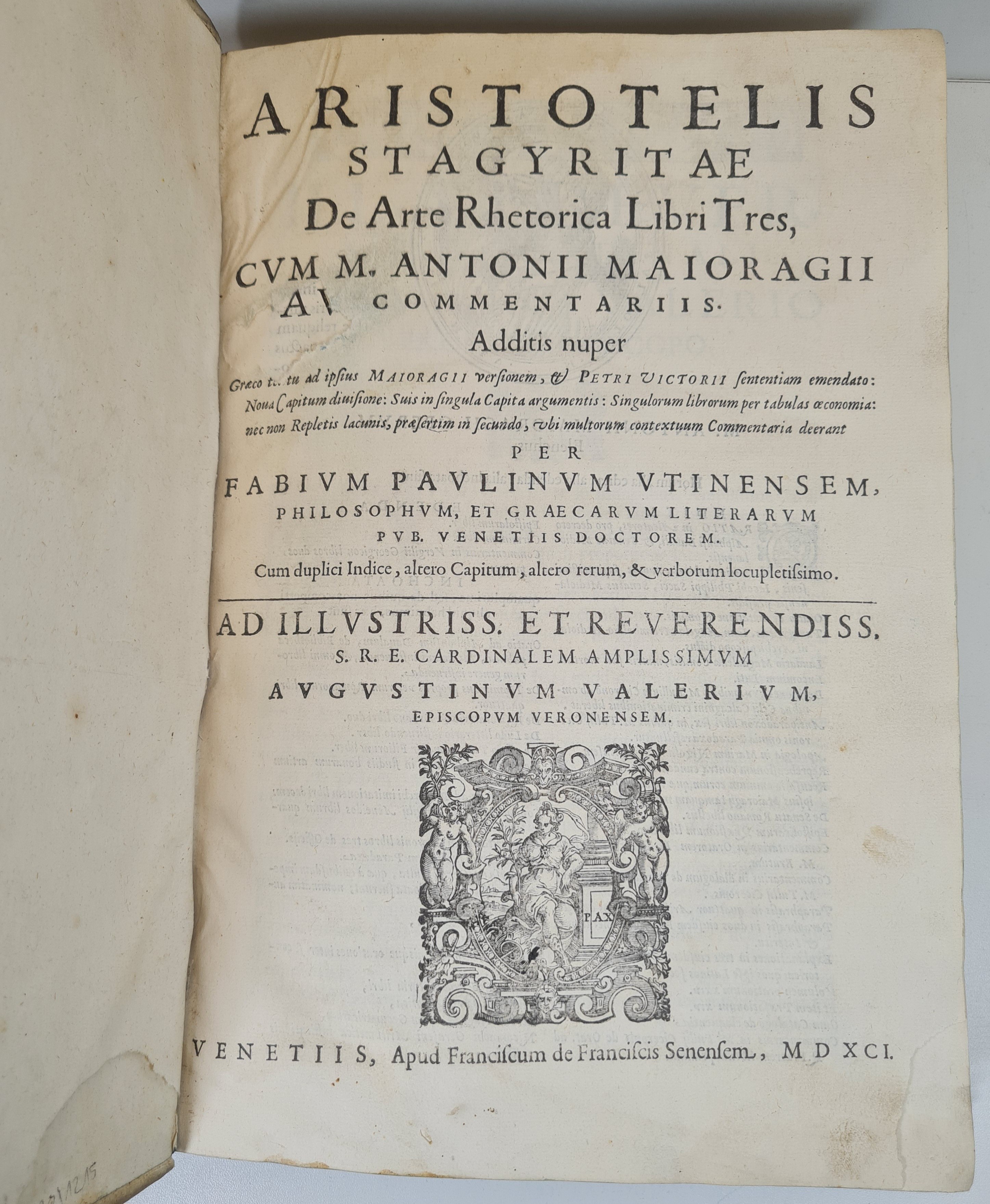
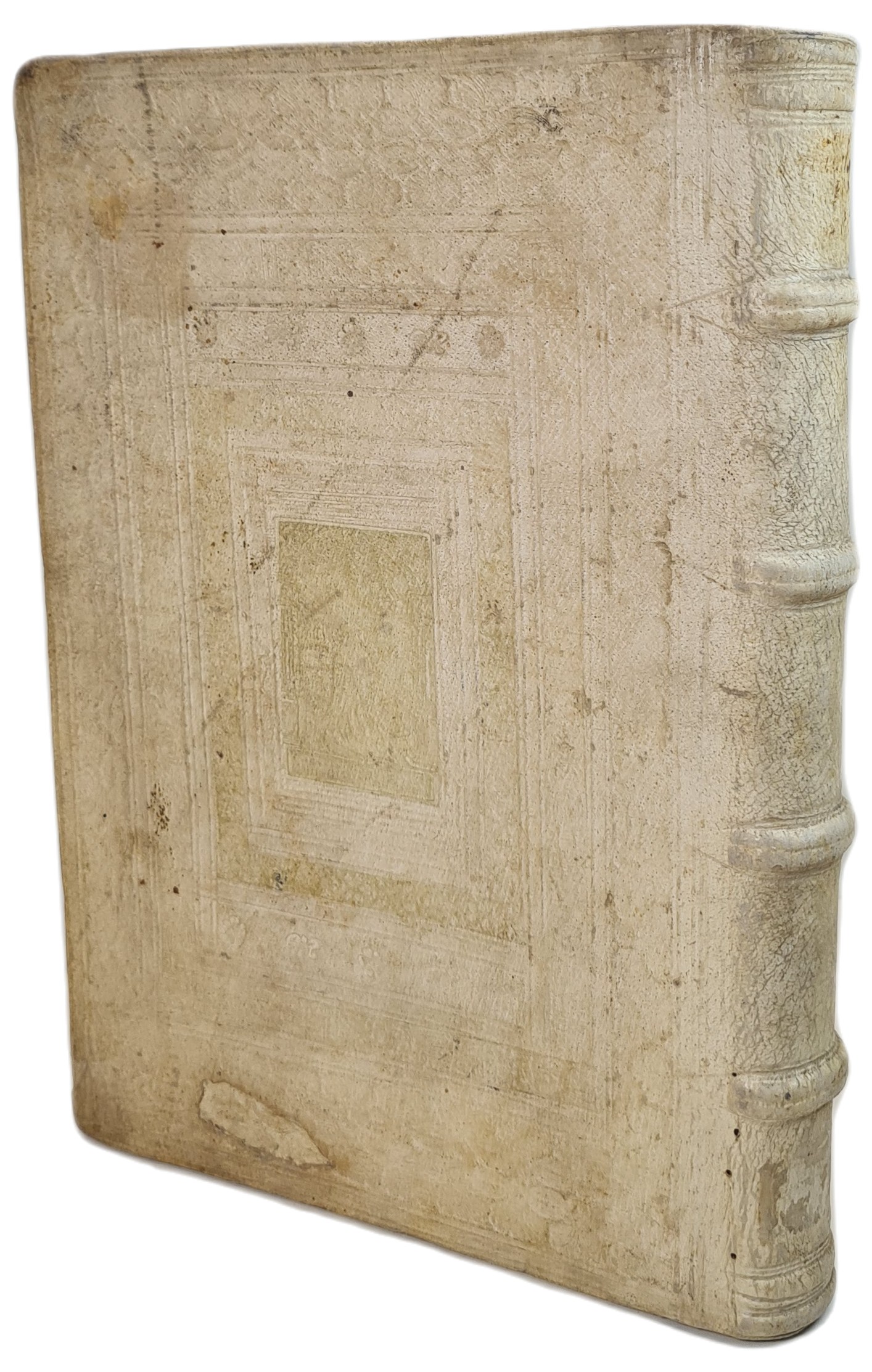
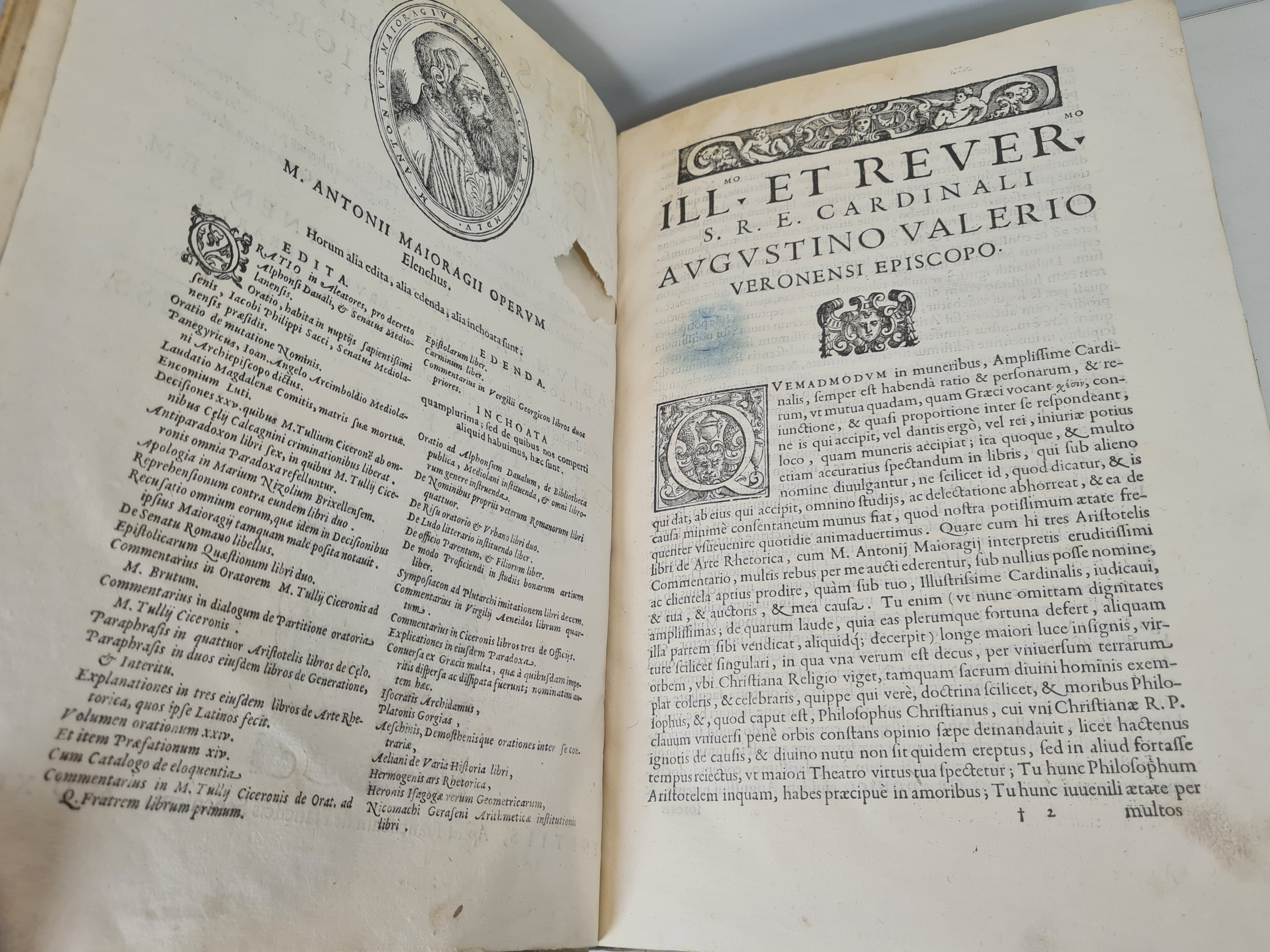
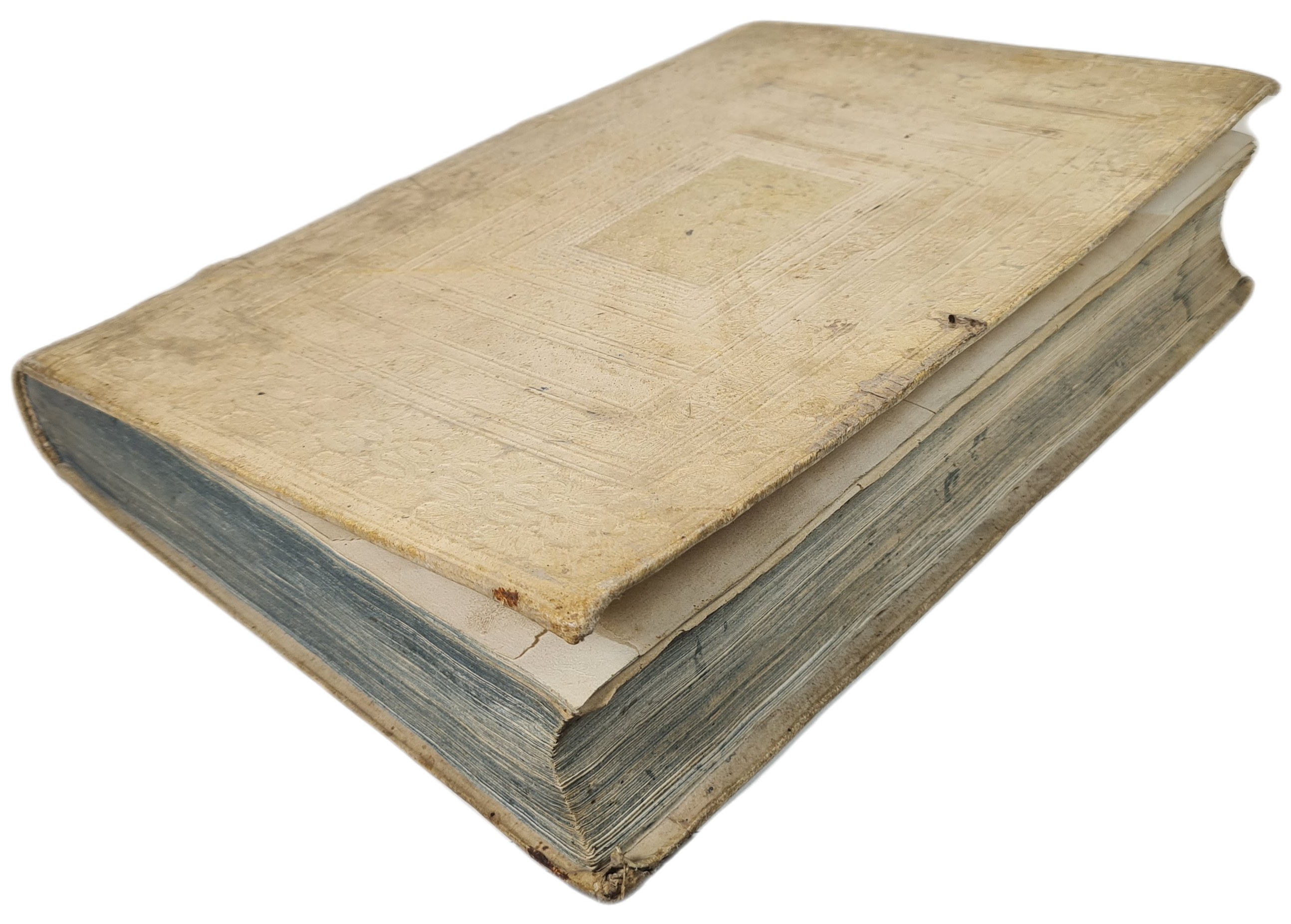
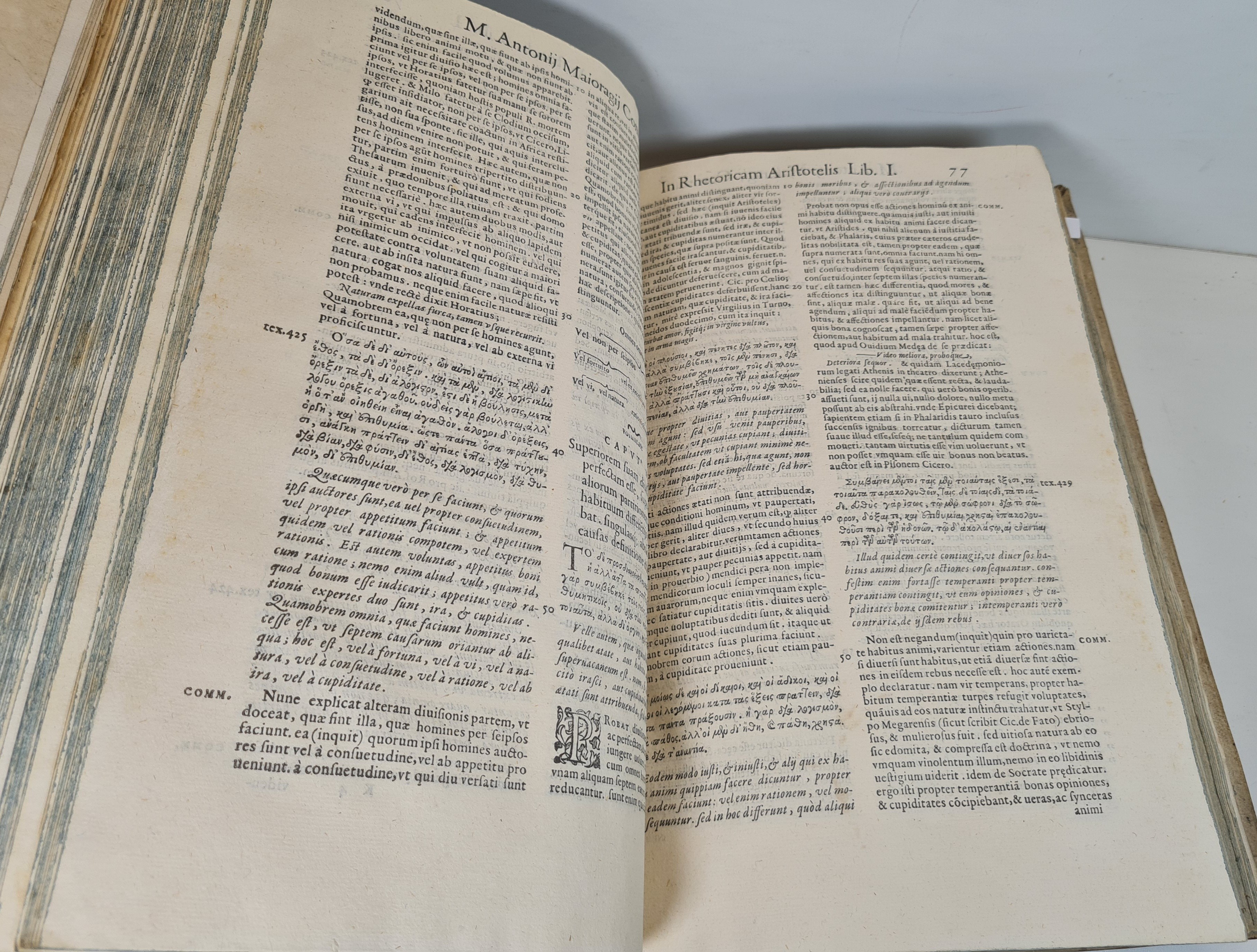
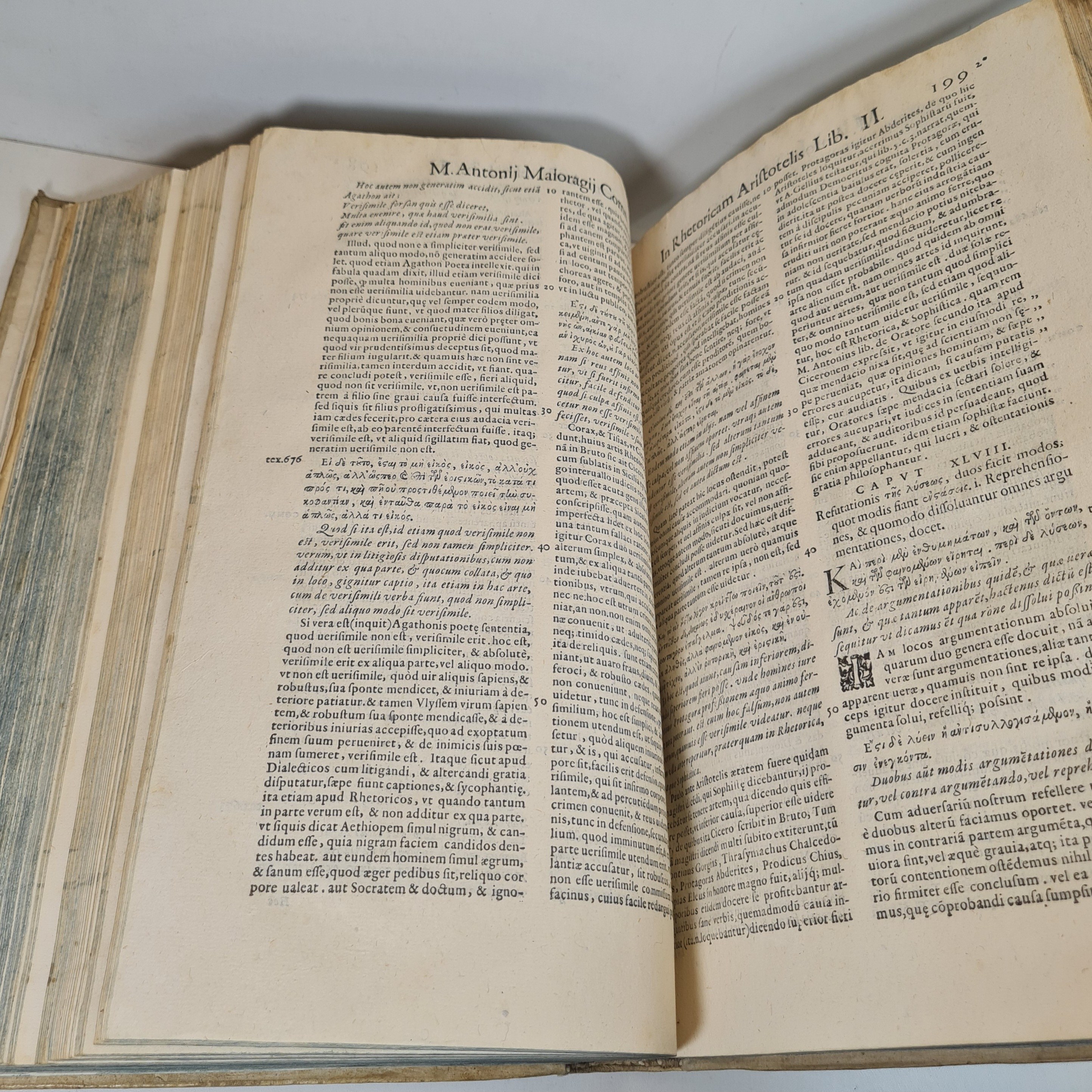
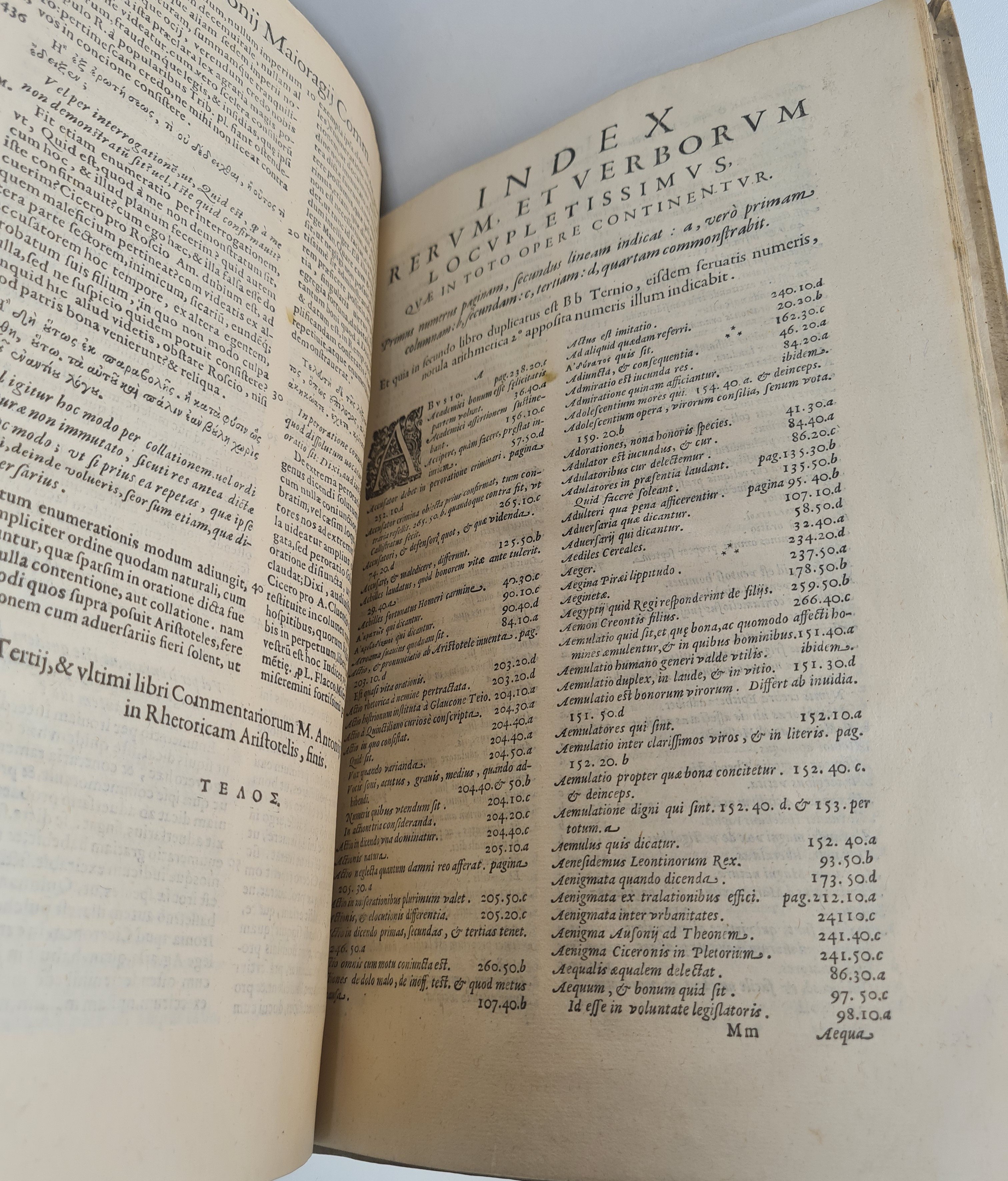
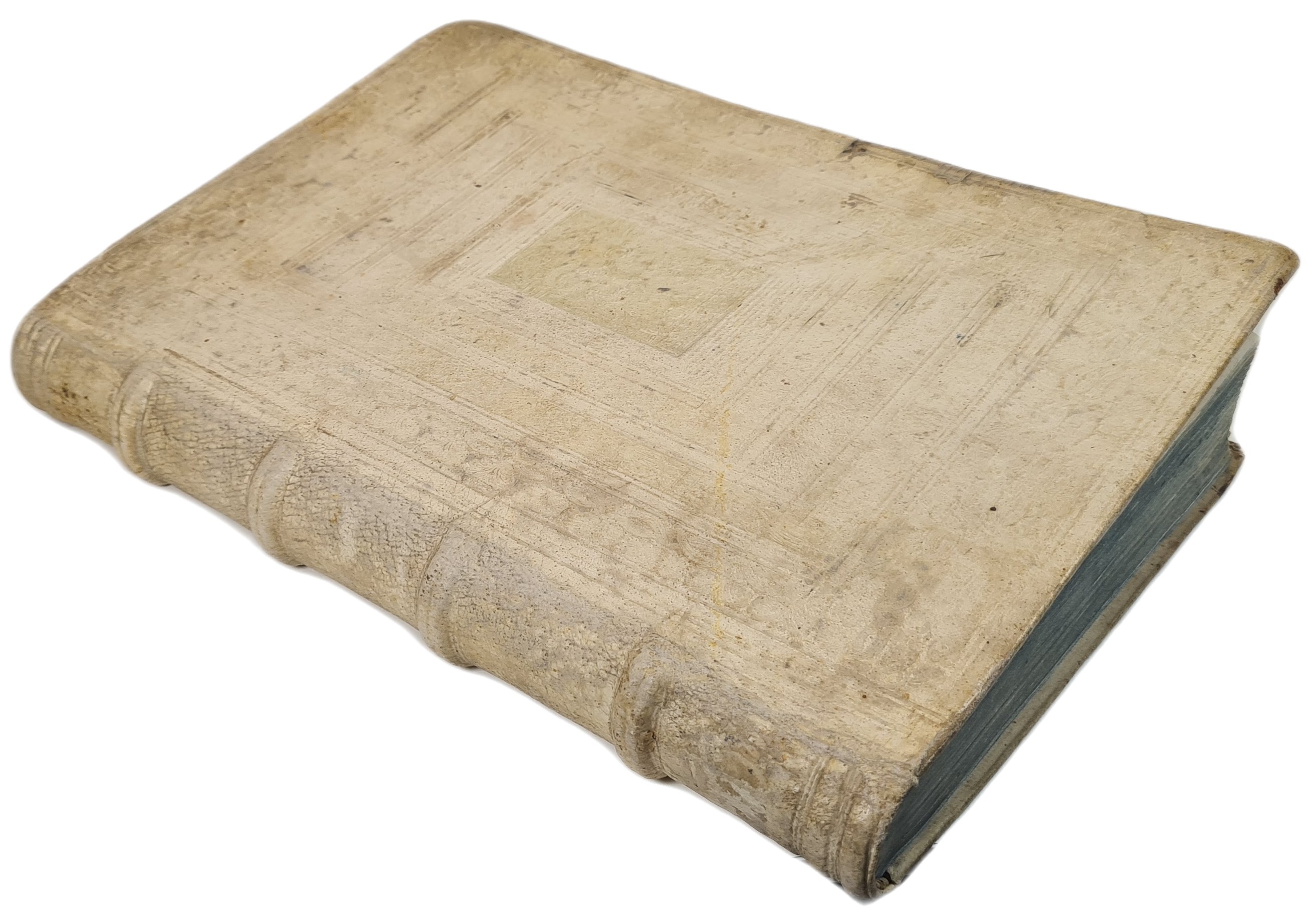
Aristotle of Stagira, *Three Bookson the Art of Rhetoric*, with commentaries by Marcus Antonius Maioragius. With the Greek text recently added to Maioragius’s version, and Peter Victor’s commentary revised ... by Fabius Paulinus of Utina, ... With a double index, one of chapters, the other of subjects and terms, most comprehensive.
(Aristotle of Stagira, “De arte rhetorica,” Book Three, with commentaries by Marcus Antonius Majoragus. With a newly added Greek text corresponding to Majoragus’s version and corrections by Peter Victor… by Fabius Paulinus of Vitiensem… With a double index: one of chapters, the other of subjects and the most numerous of words).
Publisher: Apud Franciscum de Franciscis Senensem, 1591. Dimensions: 33.2x24cm. 271 pages + INDEX. Contemporary leather binding in very good condition.
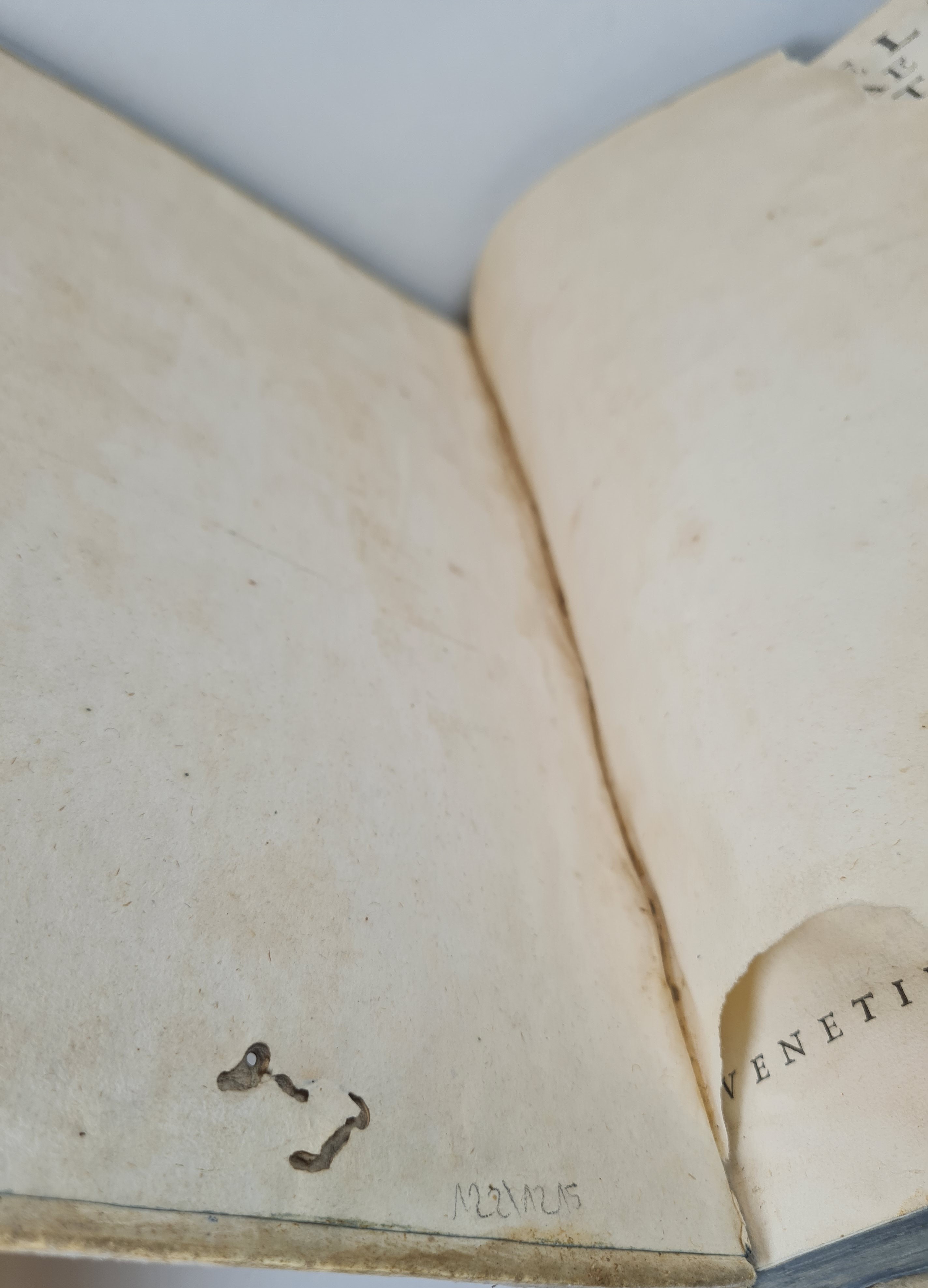
Losses on the front flyleaf and title page (without damage to the text). Stains, insect damage.
Wikipedia: Aristotle (Ancient Greek: Ἀριστοτέλης, Aristotelēs, b. 384 BCE in Stagira, d. 322 BCE in Chalcis) – philosopher, one of the three most famous philosophers of ancient Greece, alongside Socrates and Plato. He is also known as the Stagirite (from his place of birth) or simply the Philosopher (in medieval and modern texts). Aristotle included rhetoric among the practical sciences.
Rhetoric aims at a specific goal, and effectiveness is its most important aspect. It is also closely linked to logic, i.e., the arguments used must be logical. The speaker’s social status and ethos are important. The type of speech should be adapted to the listener (the listener’s age and gender). Book III of Rhetoric addresses issues of composition, clarity, correctness, sincerity, and appropriateness. The philosopher is convinced that if the speaker respects the audience, the speaker’s authority will grow.









