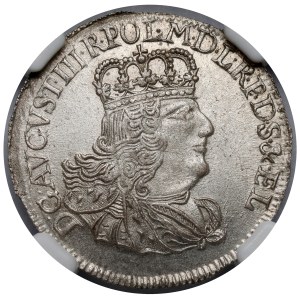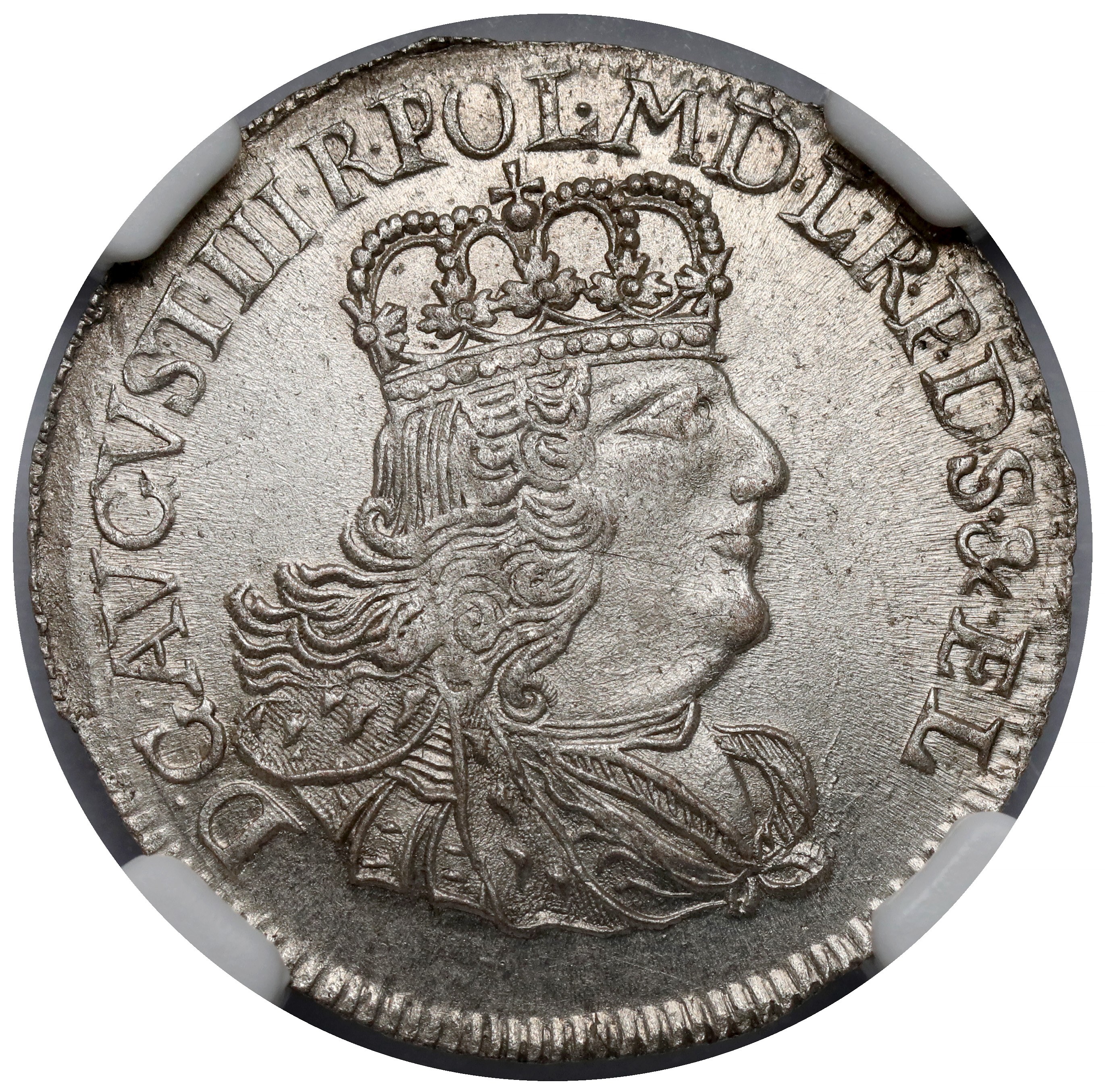
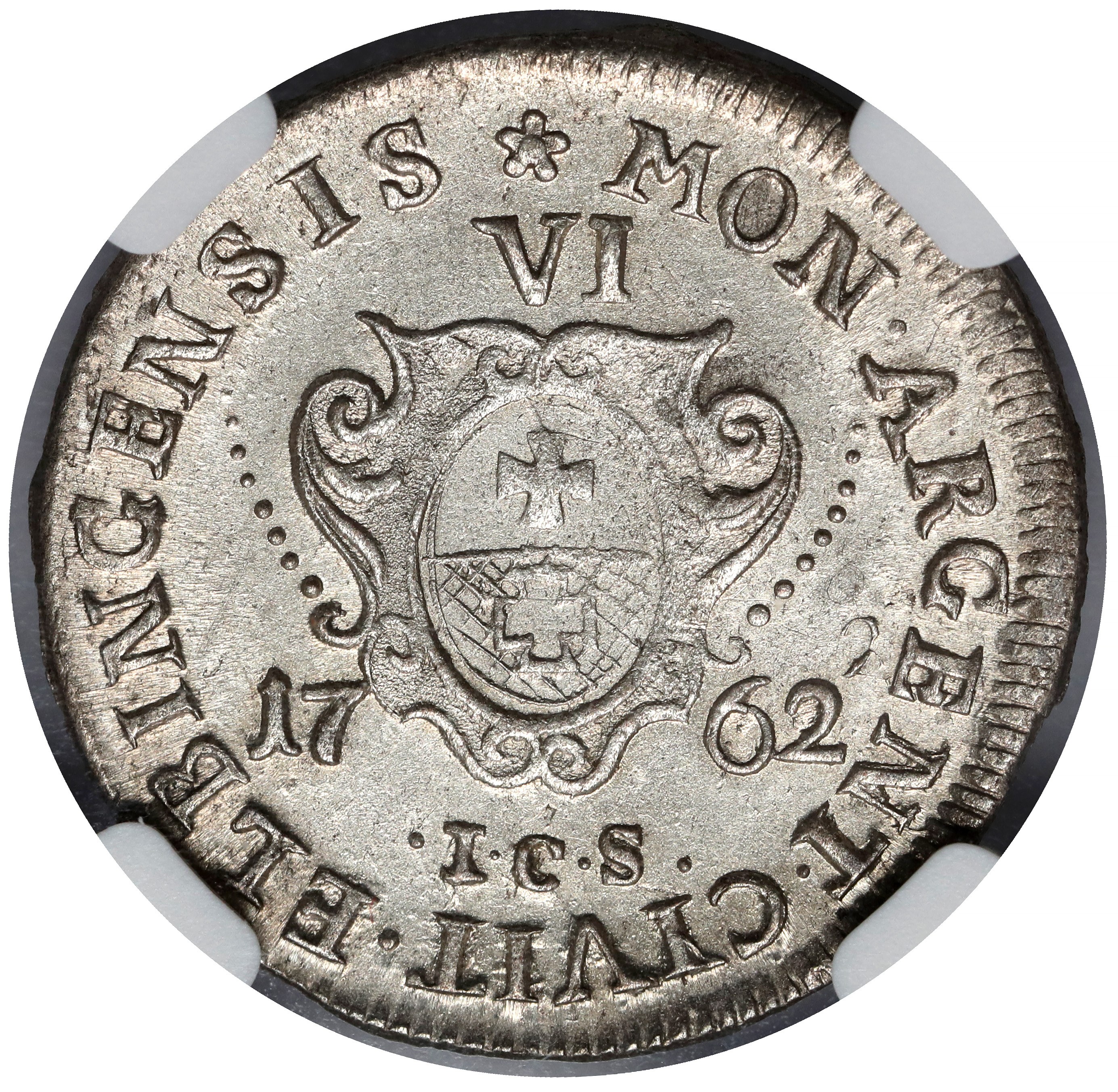
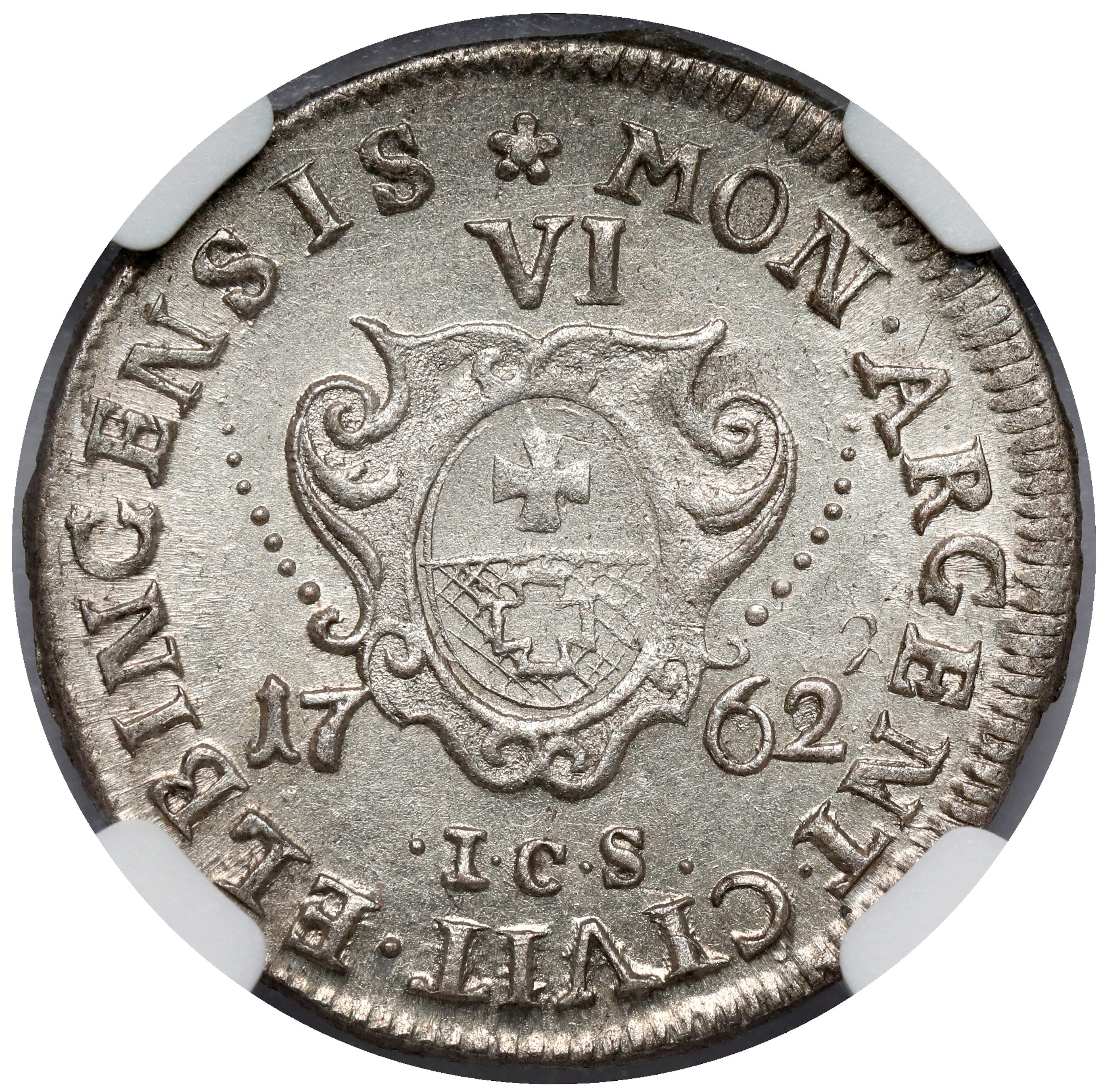
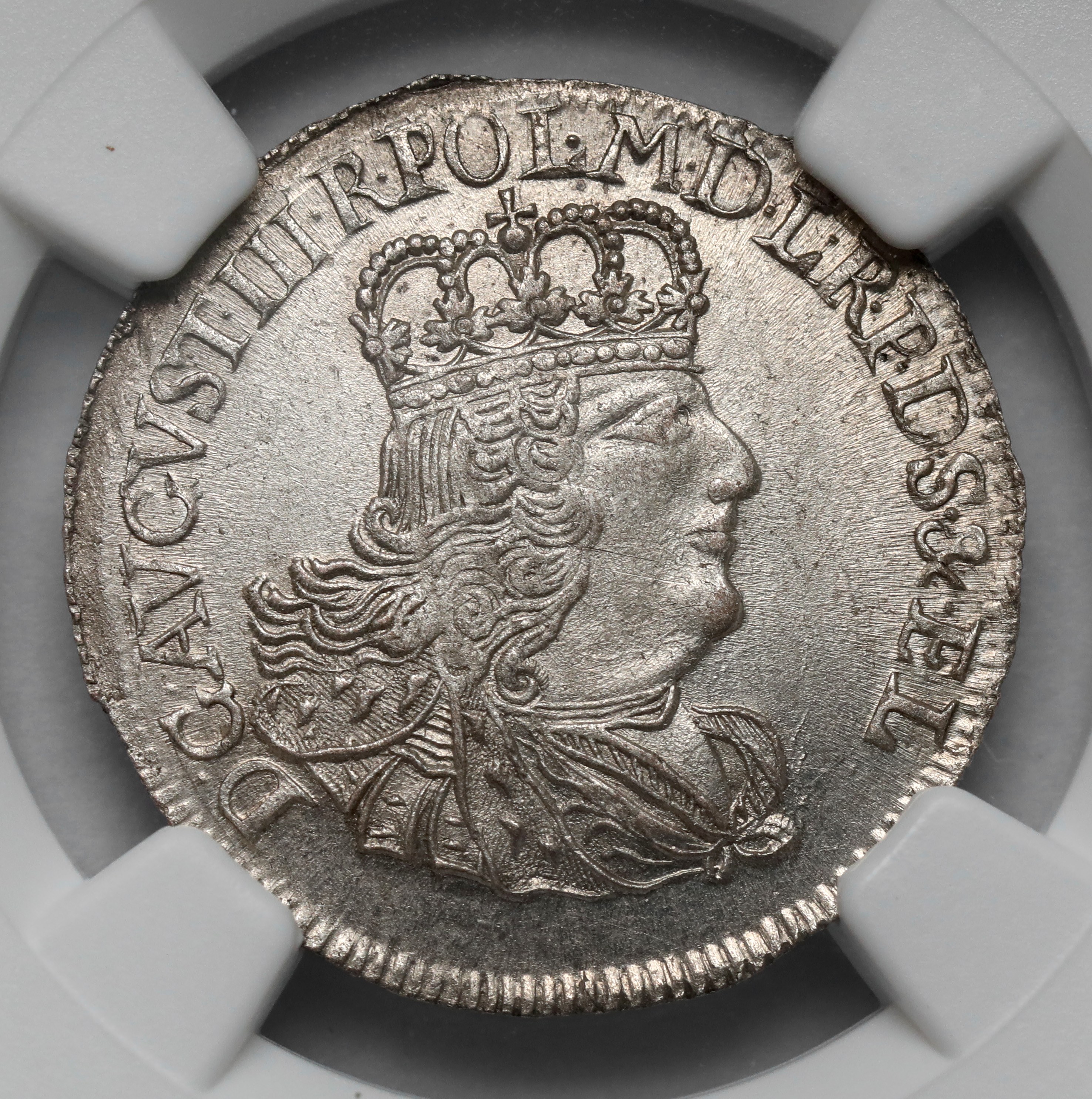
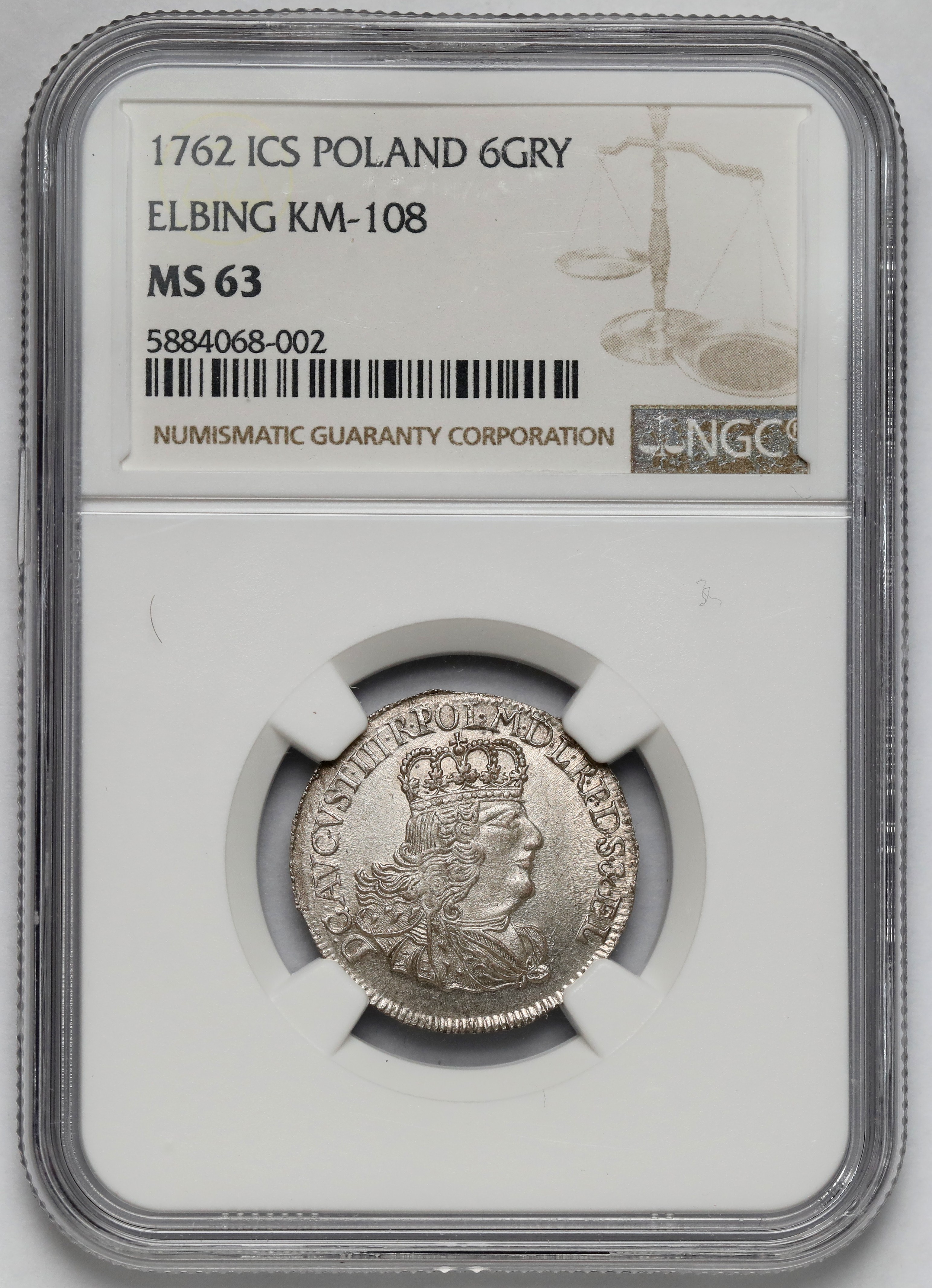

A beautifully preserved coin, highly sought after by numismatists—the first issue of the Elbląg six-groschen coins from the reign of King Augustus III.
The 1762 Elbląg six-groschen coins can pose a significant challenge for collectors, comparable to the 1580 Olkusz three-groschen coins of King Stefan Batory. These coins are rare, highly prized, and, at the same time, diverse in terms of variations. This is confirmed by our archive, in which, out of 11 six-groschen coins of the type featuring a shield adorned with labrum, as many as 9 different obverse dies were found—differing in the style of the monarch’s portrait or its placement. This particular die appeared only once, and it was on this piece from our 7th auction.
A beautiful specimen. With mint luster. Its beauty has been recognized with the highest grade in the NGC grading system (the so-called “Top Pop”).
One of only two with an MS63 grade in existence. This one is better struck, as the other (Marciniak 7/242) is a coin with off-center striking.
In its more than 250 years of operation, the Elbląg Mint struck six-grosz coins for only four years! The first time was during the reign of Sigismund I the Old (1535–1536), and it took over 200 years for the next six-grosz coins to be issued. These coins were issued during the final years of Augustus III of Saxony’s reign. This was the city’s response to the flood of undervalued, counterfeit Prussian coins in Poland. By decision of the City Council in 1760, the mint resumed operations. At first, it struck only szelągi, expanding to higher denominations in subsequent years.
The first six-groschen coins were struck in 1762, and their issuance ended just one year later, following the death of King Augustus III. In 1763, coins intended for circulation were minted, bearing the initials of Justyn Karol Schröder, along with trial pieces bearing the initials of his successor (Fryderyk Ludwik Stieber).