he thaler from 1793, known as the “Targowica Thaler,” is among the most recognisable coins of the late 18th century. It was struck in reference to the dramatic events surrounding the overthrow of the Constitution of May 3rd and the Targowica Confederation.
An exceptional 1793 Targowica thaler in mint state preservation, with intense lustre. A historically significant coin distinguished by both its quality and aesthetics.
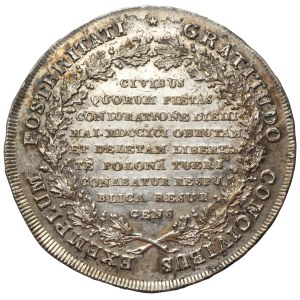
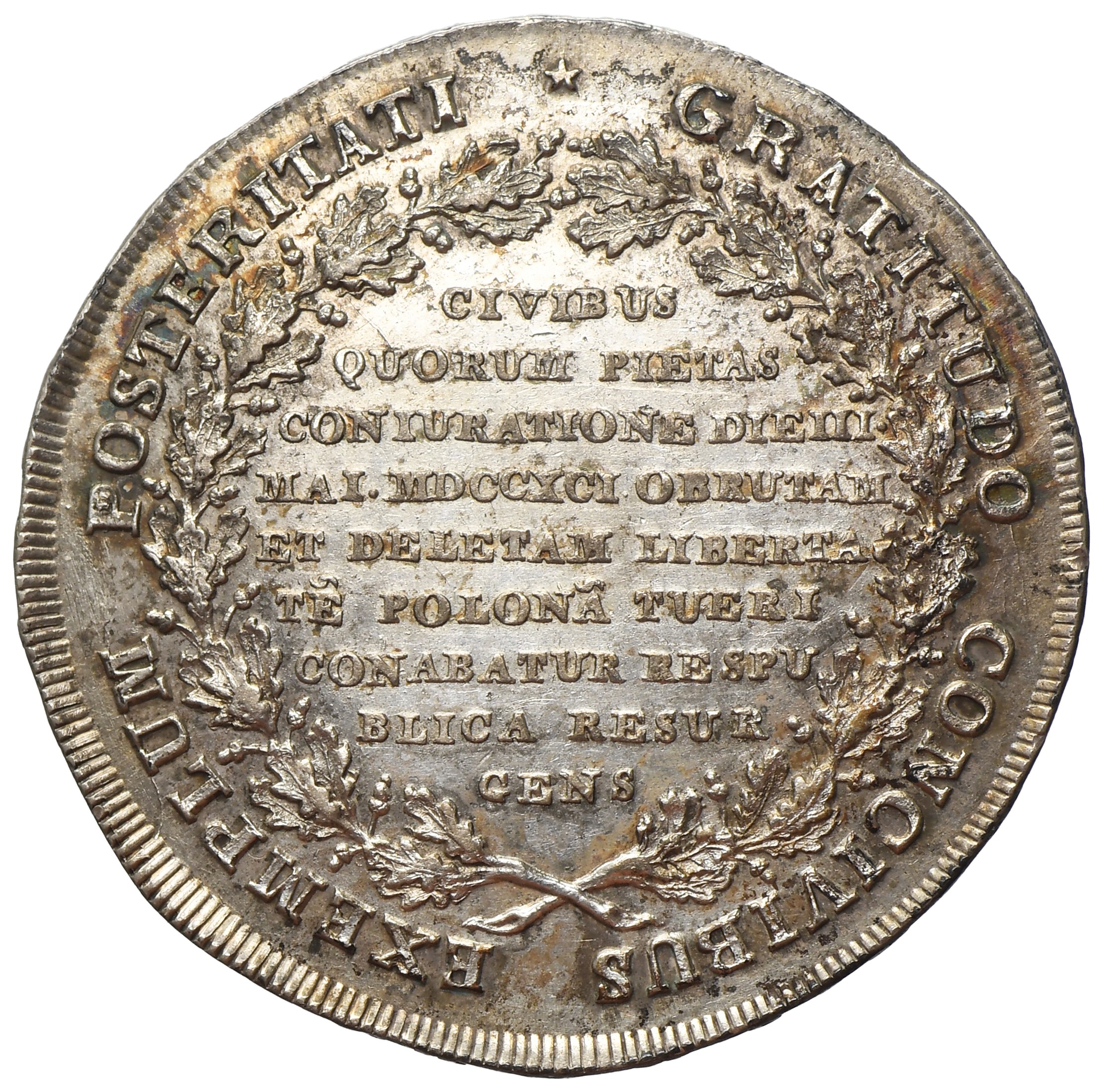
Obverse: within an oak wreath, a nine-line Latin inscription
CIVIBUS QUORUM PIETAS CONIURATIONE DIE III MAI MDCCXCI OBRUTAM ET DELETAM LIBERTATEM POLONAM TUERI CONABATUR RESPUBLICA RESURGENS
“To the citizens whose devotion, crushed by the conspiracy of May 3rd 1791, sought to defend Poland’s lost liberty and revive the Republic.”
Around the rim: GRATITUDO CONCIVIBUS EXEMPLUM POSTERITATI
“Gratitude to fellow citizens, an example for posterity.”
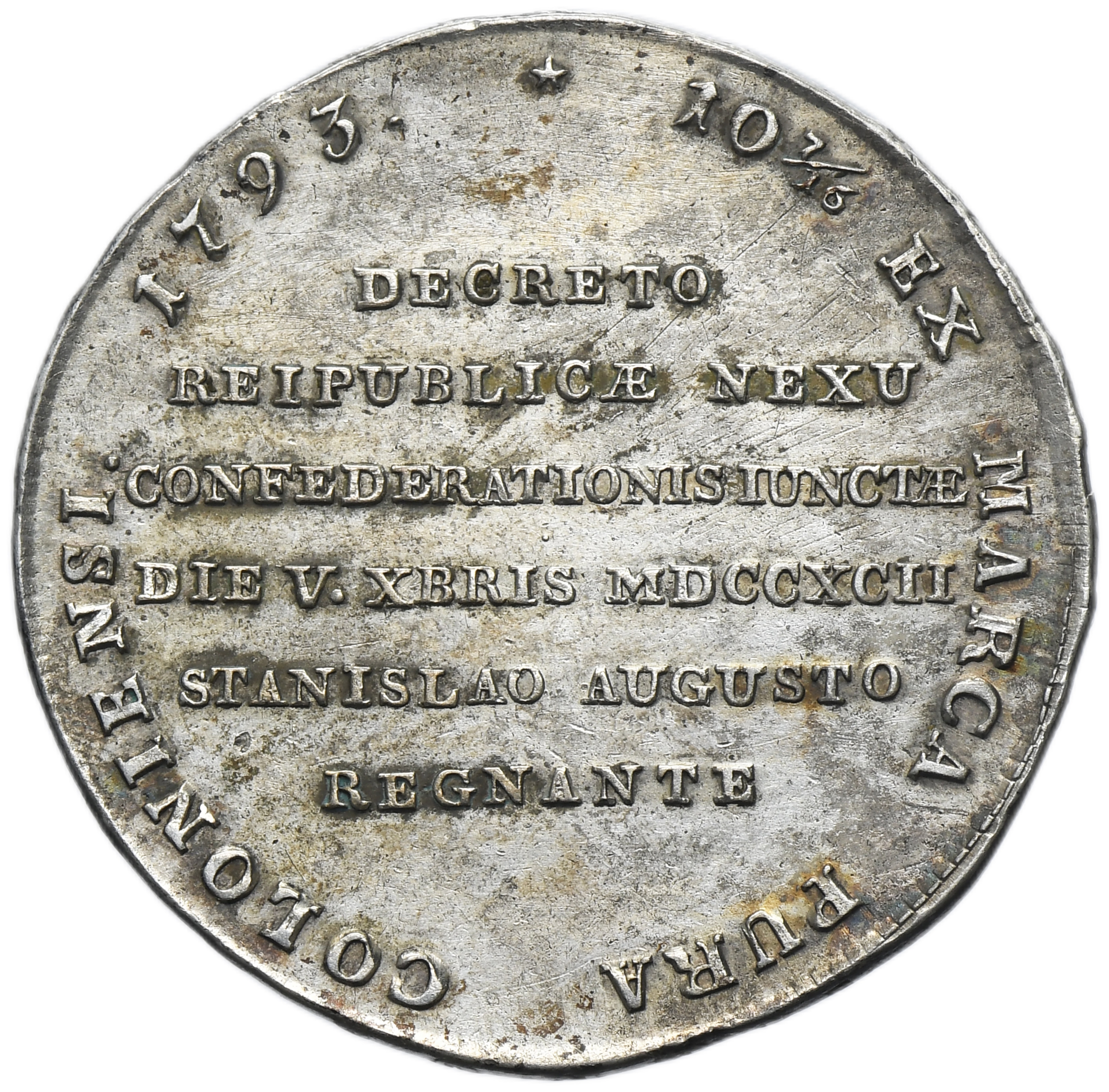
Reverse: a six-line inscription:
DECRETO REIPUBLICÆ NEXU CONFEDERATIONIS IUNCTÆ DIE V. XBRIS MDCCXCII STANISLAO AUGUSTO REGNANTE
“By decree of the Republic, united by the Confederation, on 5 December 1792, under the reign of Stanisław August.”
Below, the mint standard and date:
10 7/16 EX MARCA PURA COLONIENSI 1793 –
“10 and 7/16 pieces from one Cologne mark of pure silver, 1793.”
Diameter 41 mm, weight 27.47 g
During the first two years of Stanisław August’s reign, municipal mints operated in Gdańsk and Toruń (1765 and 1766). These cities were, however, forced to close them, as the king aimed to resolve the monetary chaos left by the Saxon period and introduce a new monetary system. Its basis was to be the Dutch ducat and the thaler struck from the Cologne mark of pure silver, at the rate of 10 pieces per mark. The reform was implemented in 1766. In circulation appeared beautiful and full-value coins: ducats, thalers, złotys, grosz pieces, their fractions and multiples. The fact that these were full-value coins caused them to be withdrawn from the market and melted down into Prussian coins of lower fineness. For this reason, the monetary system was adjusted twice, including changes to the mint standard (1787 and 1794). Under Stanisław August, two state mints were active: the Kraków and Warsaw mints.