


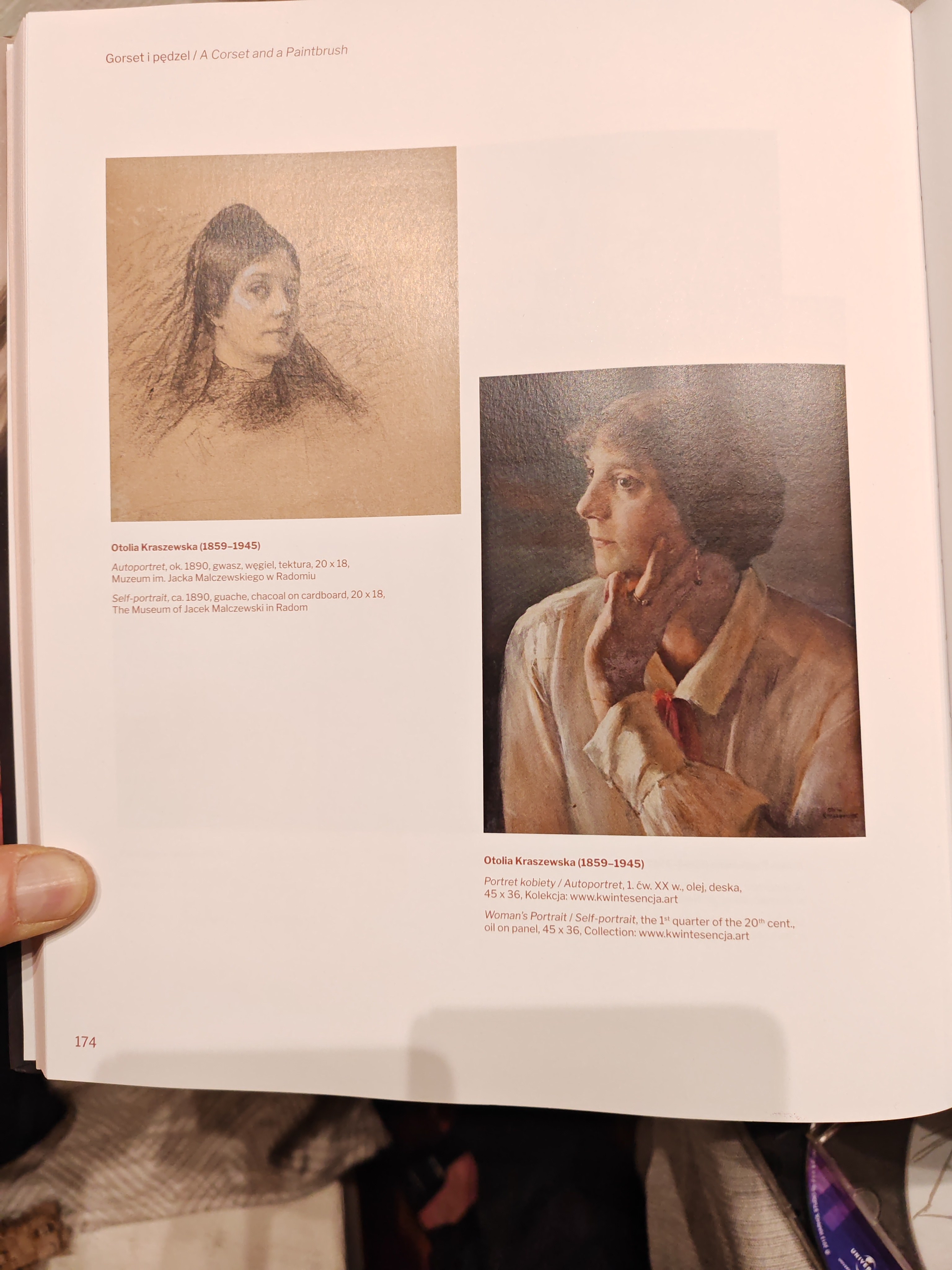
Otolia Kraszewska (1859-1945),
Portrait of a Woman / Self-Portrait, 1st quarter of the 20th century.
Oil on board.
Dimensions: 45 x 36 cm (+ binding)
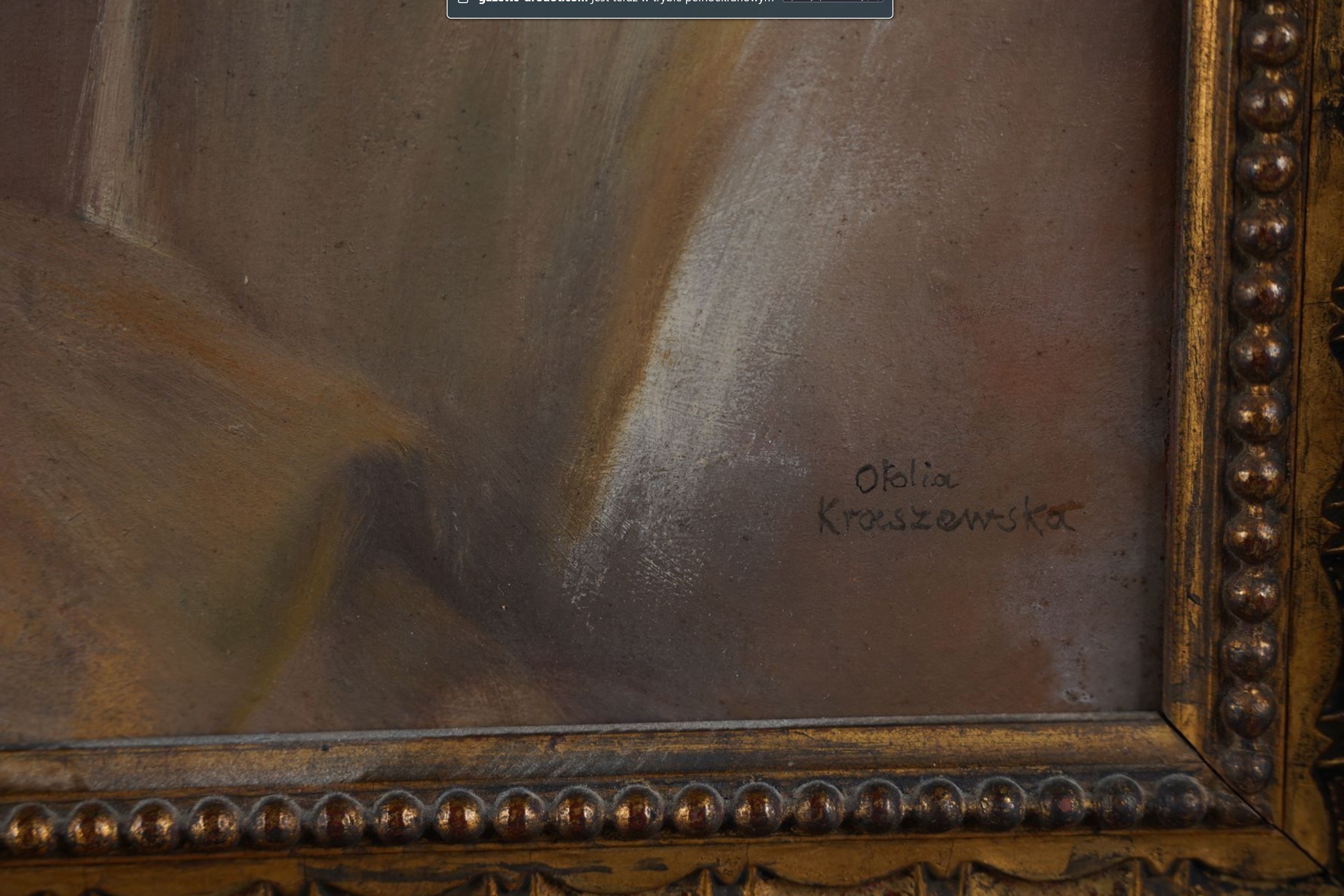
Signature p. d.: Otolia Kraszewska
Provenance:
- private collection
Exhibited:
- "What Baba to Brush! Polish women artists 1850-1950", National Museum in Lublin, Lublin Castle, 25.04-5.10.2025
Reproductions:
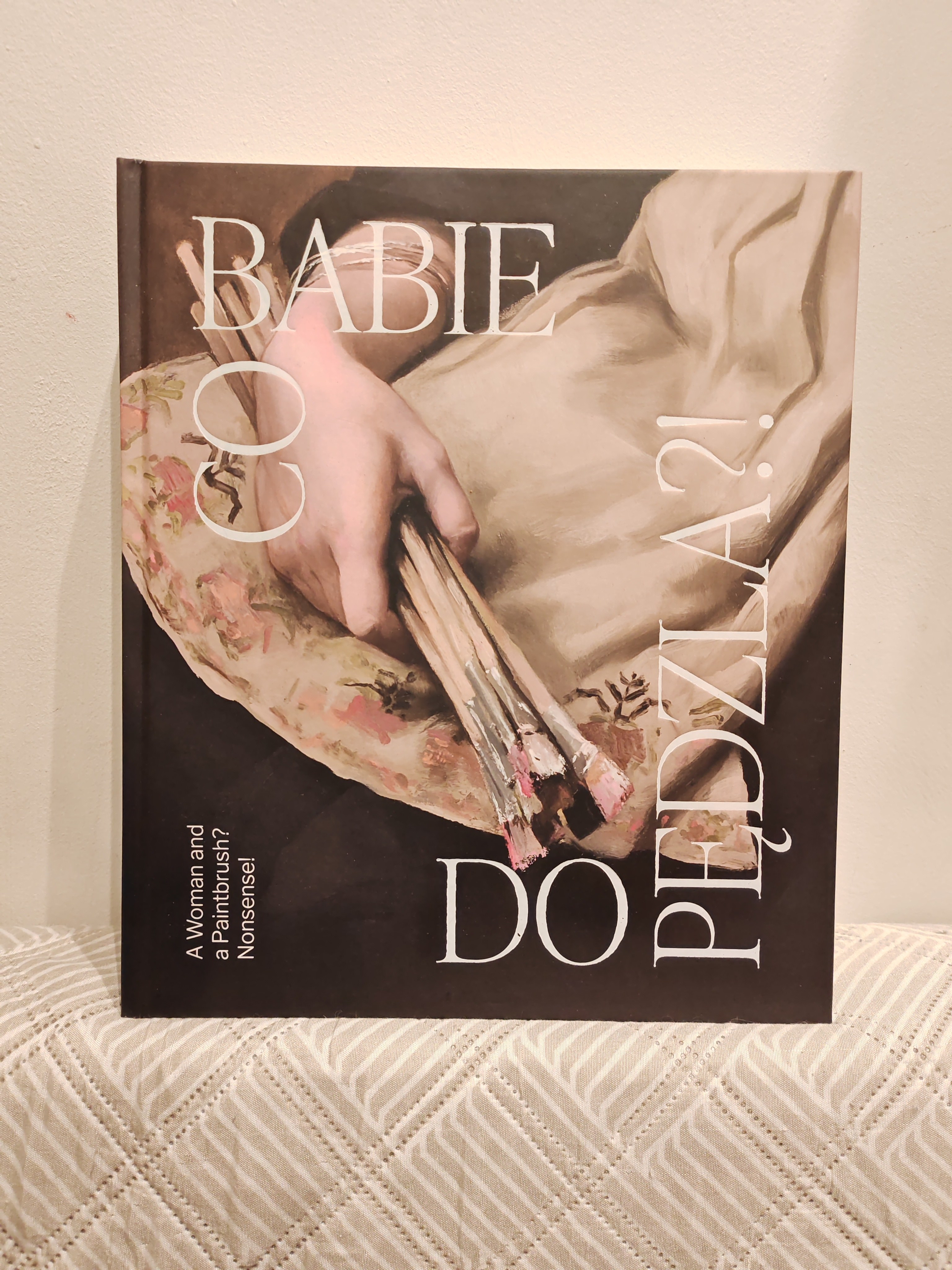
- exhibition catalog: "What Baba to Brush! Polish Women Artists 1850-1950 / 'A Woman and a Paintbrush? Nonsense! Polish Women Artists 1850-1950'", edited by Bożena Kasperowicz, National Museum in Lublin, Lublin 2025, p. 174 (color ill.).
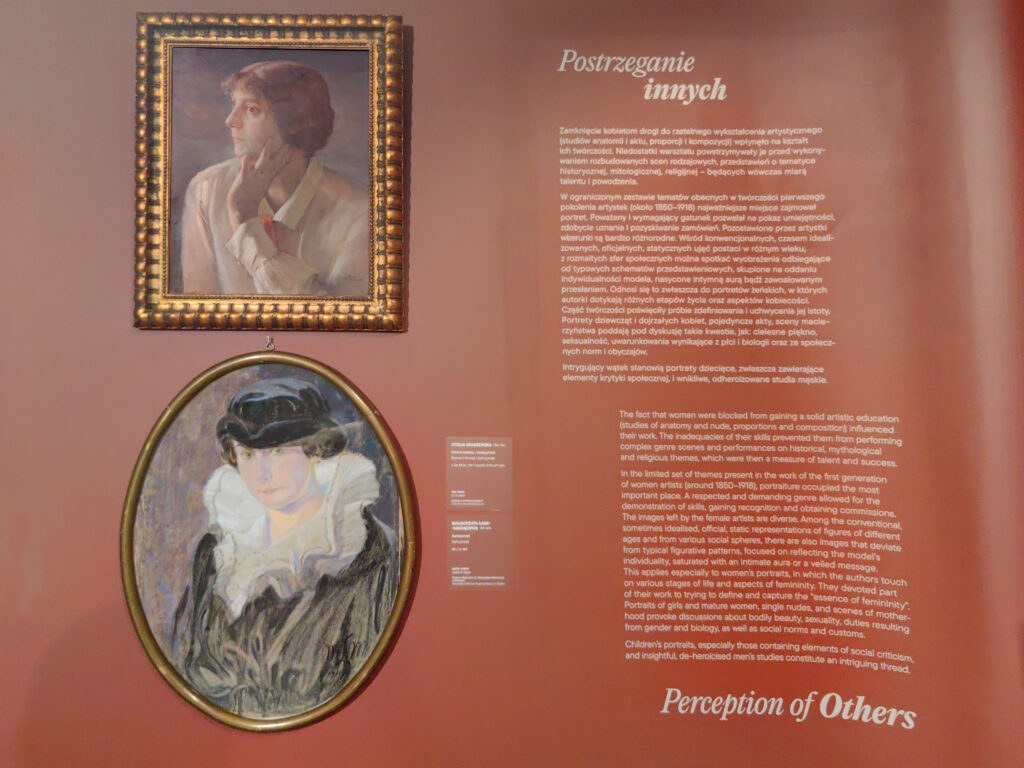
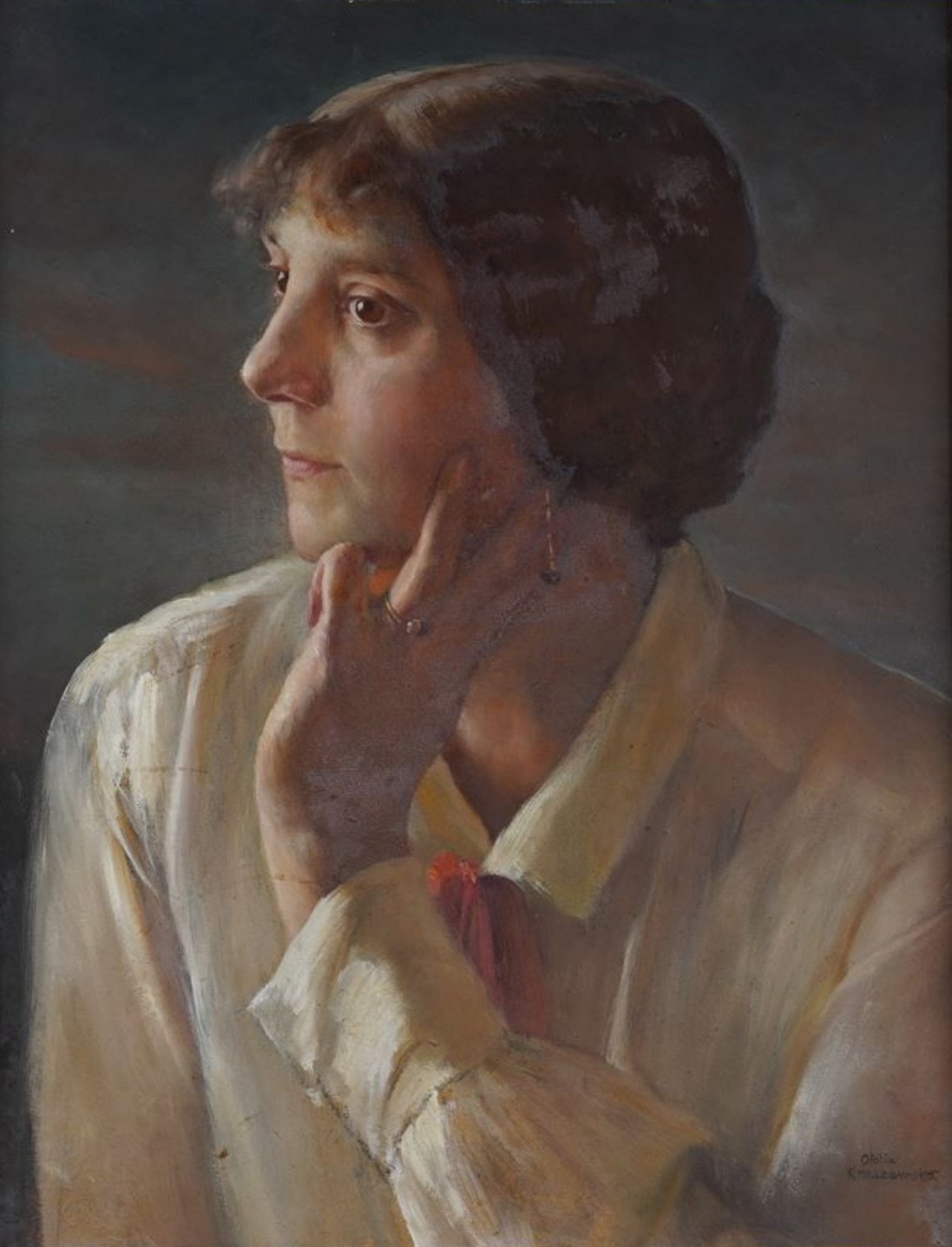
In the painting on display, Kraszewska depicted the model - most likely herself - in a half-figure view, with her head turned to the left, in a concentrated, thoughtful pose. A delicately modeled chiaroscuro face emerges from a dim, cool background, while a softly painted white blouse accented with a red bow creates a luminous frame for the face. The artist builds up the form with fine, soft brushstrokes, subtly combining a naturalistic rendering of the features with the slight idealization characteristic of sophisticated salon portraiture at the turn of the 20th century.
This portrait perfectly illustrates Kraszewska's stature as one of the most interesting Polish painters of the "Munich school." A pupil of Ivan Aivazovsky in St. Petersburg and Wladyslaw Czachorsky in Munich, she was active for years in the circle centered around Jozef Brandt, and as an illustrator she collaborated with "Jugend" and "Kunst für Alle" magazines, as well as Polish art journals.
Her work - which includes portraits, genre scenes and sophisticated floral compositions - is distinguished by subtle coloring, soft modeling and a psychological sense of the figure, of which this self-portrait, selected for a large, cross-sectional exhibition in Lublin devoted to Polish women artists 1850-1950, is an excellent example.
Otolia Kraszewska (1859-1945), a Polish painter of the "Munich school." From the late 1870s, she studied at the Academy of Fine Arts in St. Petersburg under Ivan Aivazovsky. In 1890, she went to Munich, where she studied with Franz Roubaud and Wladyslaw Czachórski.
Beginning in 1892, she exhibited paintings at international art exhibitions at Munich's Crystal Palace (Glaspalast), and also took part in exhibitions of the Munich Society of Fine Arts (Münchner Kunstverein), of which she was a member. She also sent her works to Poland, primarily to the TZSP in Warsaw and the TPSP in Cracow.
Researchers of Kraszewska's work have recorded about 100 of her works, 20% of which are known from reproductions or descriptions. They were exhibited and sold in Munich, Cologne, Berlin, Warsaw, Krakow and Lviv, and reproduced in numerous magazines. She also carried out private commissions of the aristocracy in Germany and at home. There is also an indication that she worked for the Romanian court.
The mainstream of the artist's work in painting, are genre scenes, flowers, where sentimental motifs prevail. In addition, the artist was involved in illustration and applied art - she painted fans and postcards.
Kraszewska learned from Aivazovsky realistic painting, which, through the use of sophisticated play of light and shadow, evokes the impression of materiality and depth of space. From Czachórski, in turn, she took over the motif of a woman shown in a naturalistic manner - exquisitely dressed, often sitting against a background of a detailed interior, proving that, like him, she was able to masterfully render fabrics, flowers and jewelry.










