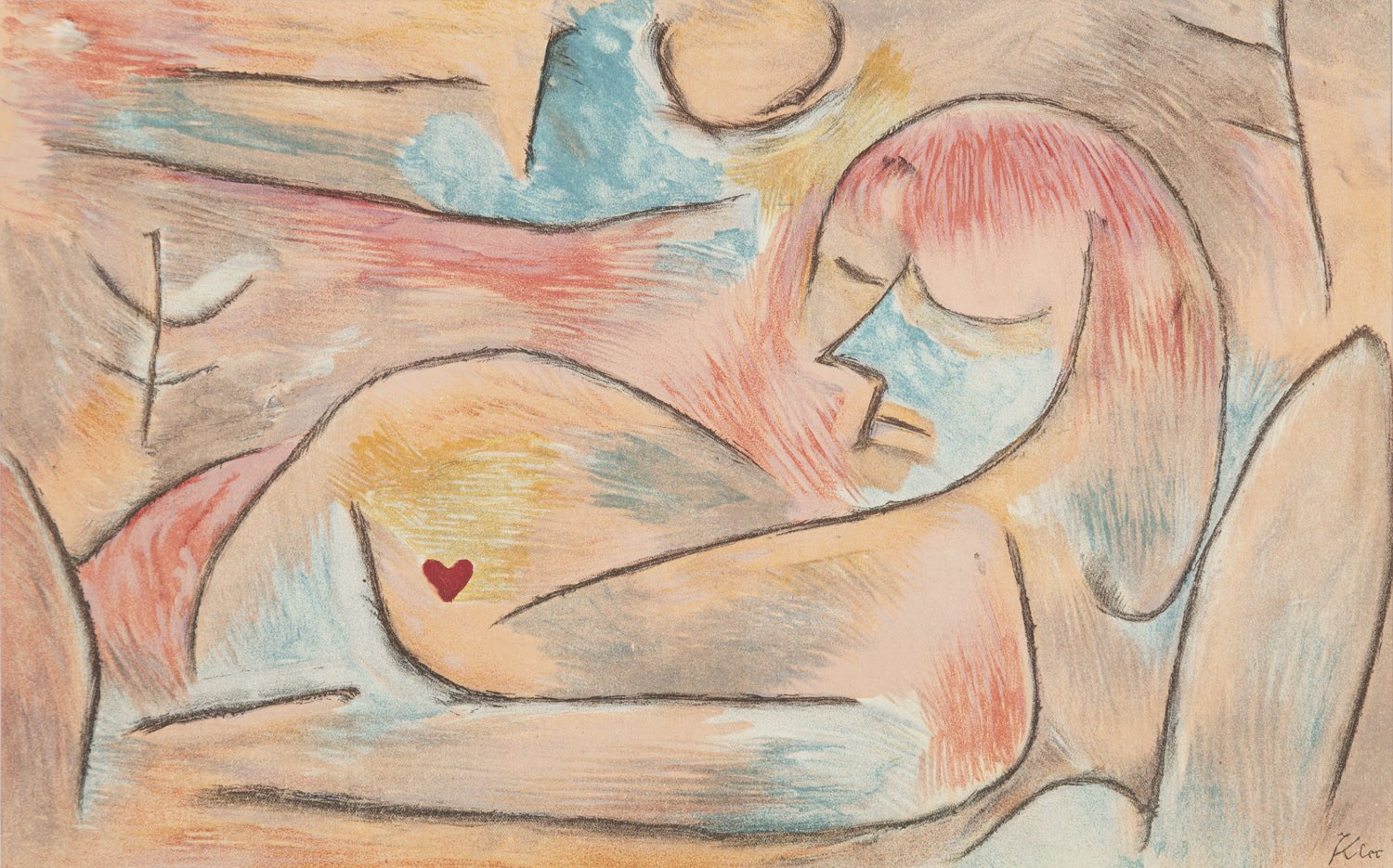
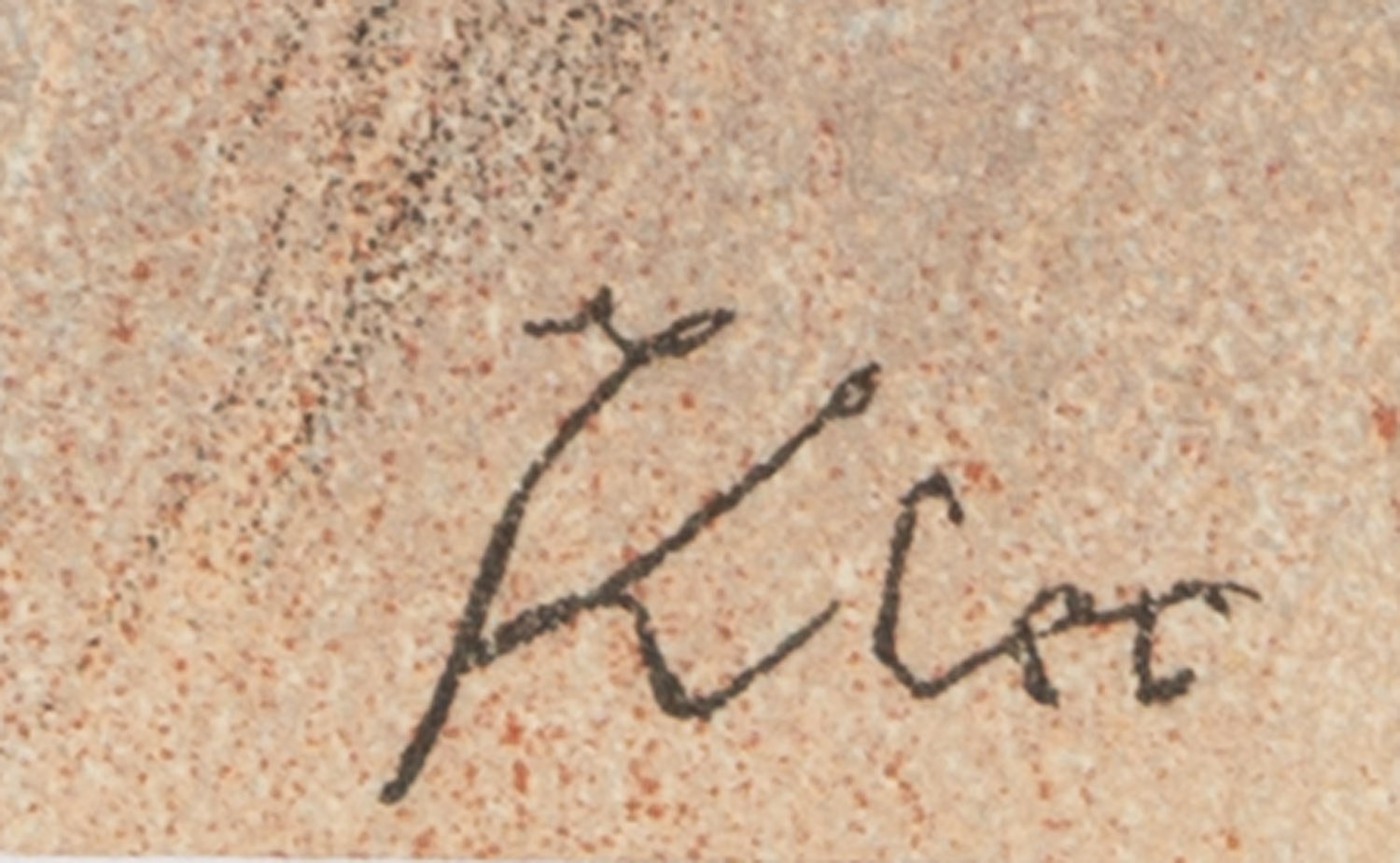
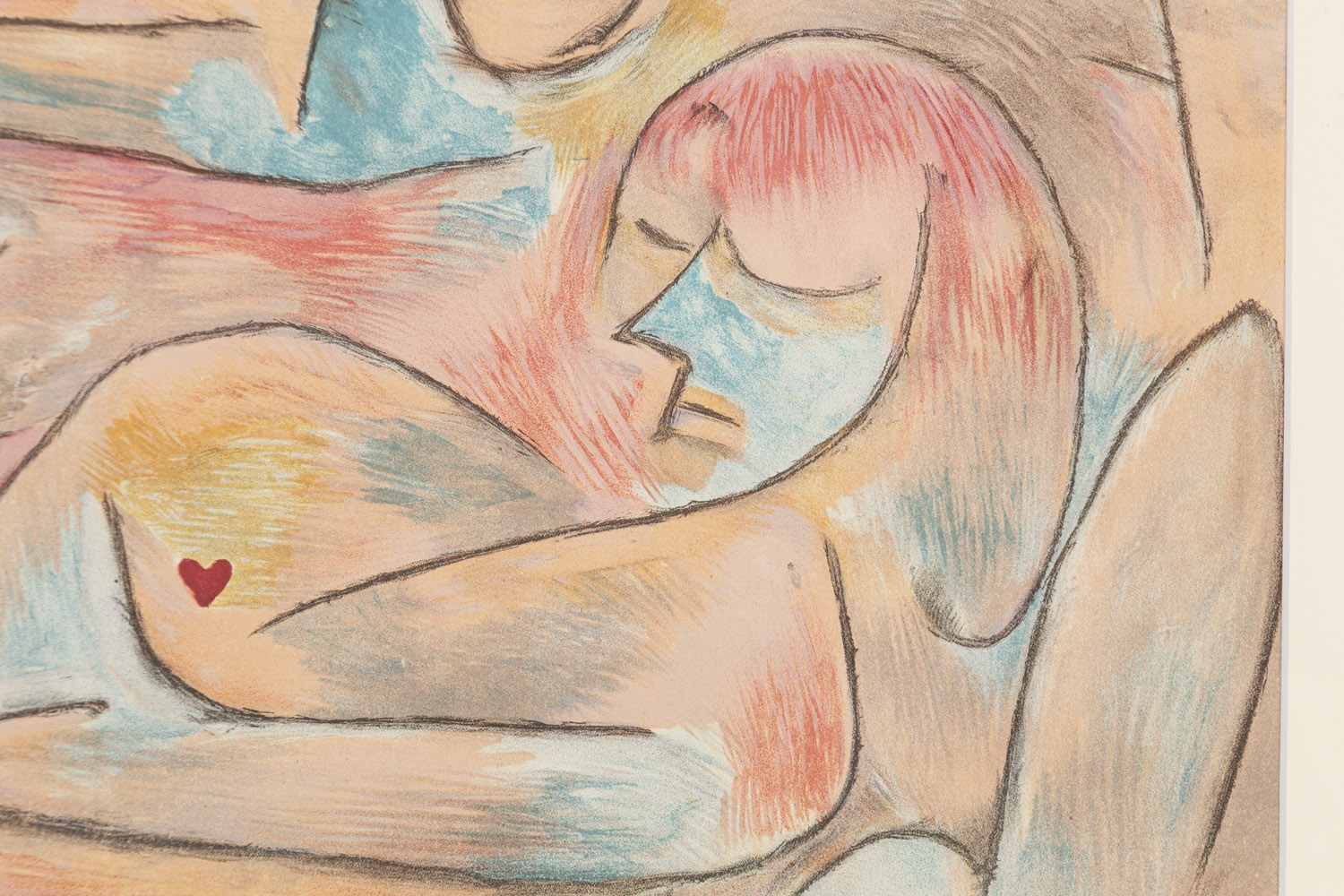
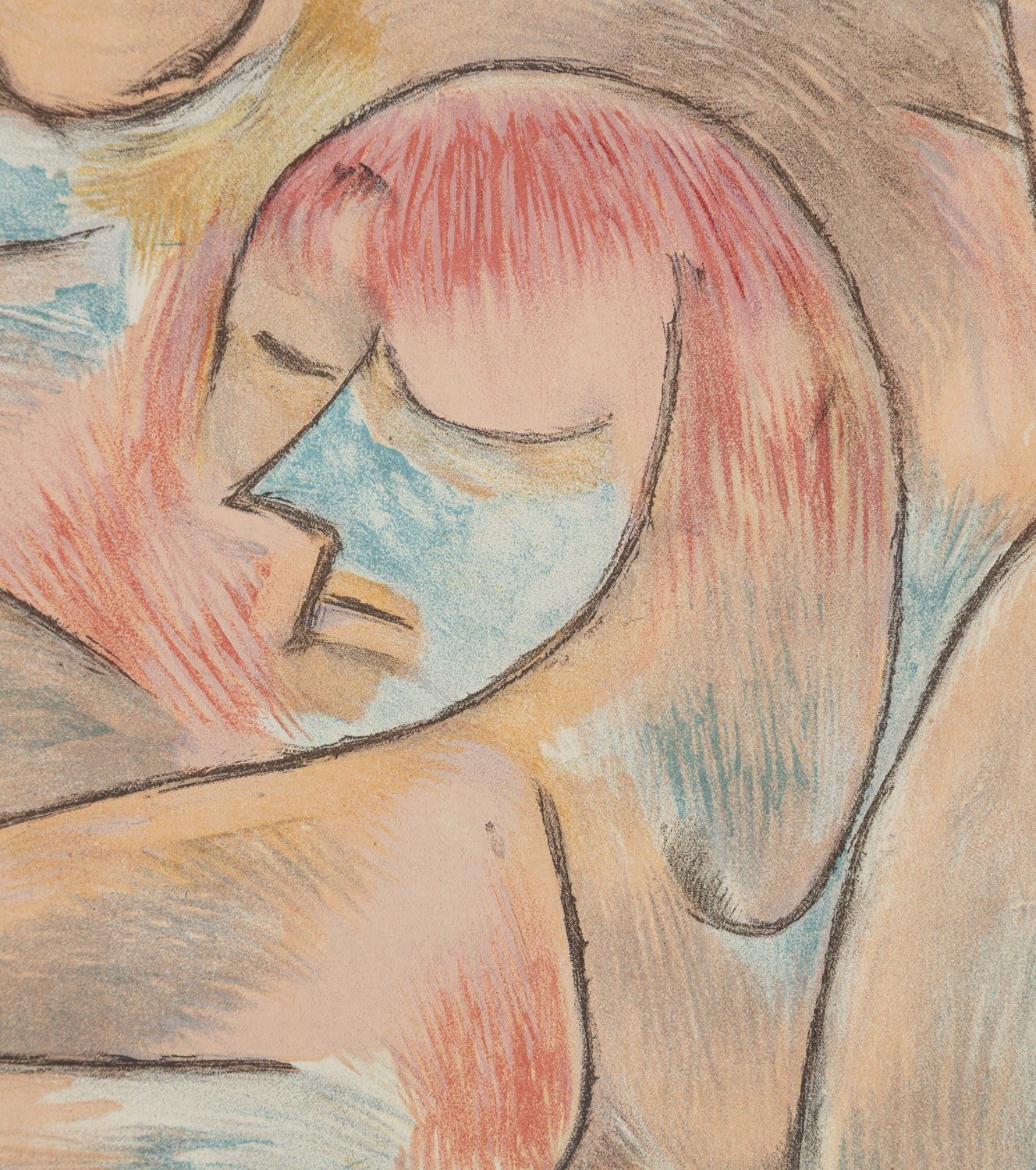
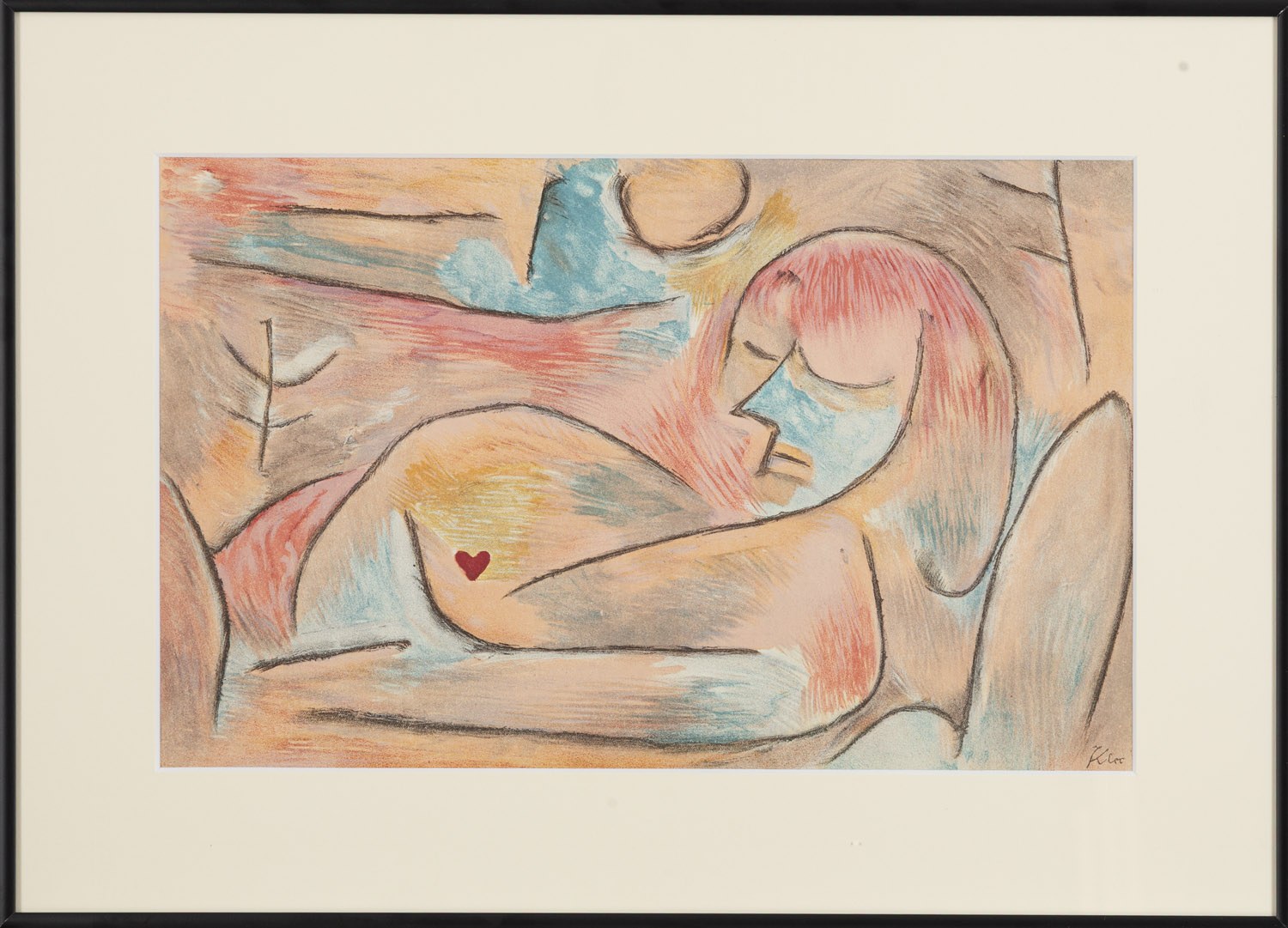
Dimensions: 22 x 35 cm (including passe-partout)
Publisher: Atelier Mourlot for Verve Teriade
Biography
Paul Klee was an artist of Swiss-German origin who played a key role in the development of 20th-century modern art. He studied at the Academy of Fine Arts in Munich, in the studio of Heinrich Knirra and Franz von Stuck. Klee loved to experiment, which made his work diverse and constantly evolving. He did not limit himself to selected techniques. He readily used oil, watercolor and ink techniques, often combining them with drawing. Klee was famous for his numerous inspirations from children's art and primitive art. His art was heavily influenced by music, which both his parents were professionally involved with, as well as his many travels, especially to Tunisia in 1914, which led him to explore color theory and changed his approach to form. Paul Klee also made a name for himself as an outstanding art theorist, whose essays and treatises had a significant impact on the art and culture of the time. Among his most highly regarded theoretical works are his notes on the analysis of form, color and composition dating from Klee's time at Bauhas. After the end of World War I, Paul Klee taught at the Bauhaus. From 1931 he taught at the Düsseldorf Academy. In 1933, after the Nazis came to power, Klee returned to Switzerland, where he continued his creative activities until the end of his life, despite the progressive disease of scleroderma. His works are valued around the world, and the largest collection of them (totaling more than 4,000 works) is held by the Paul Klee Museum in Brno.