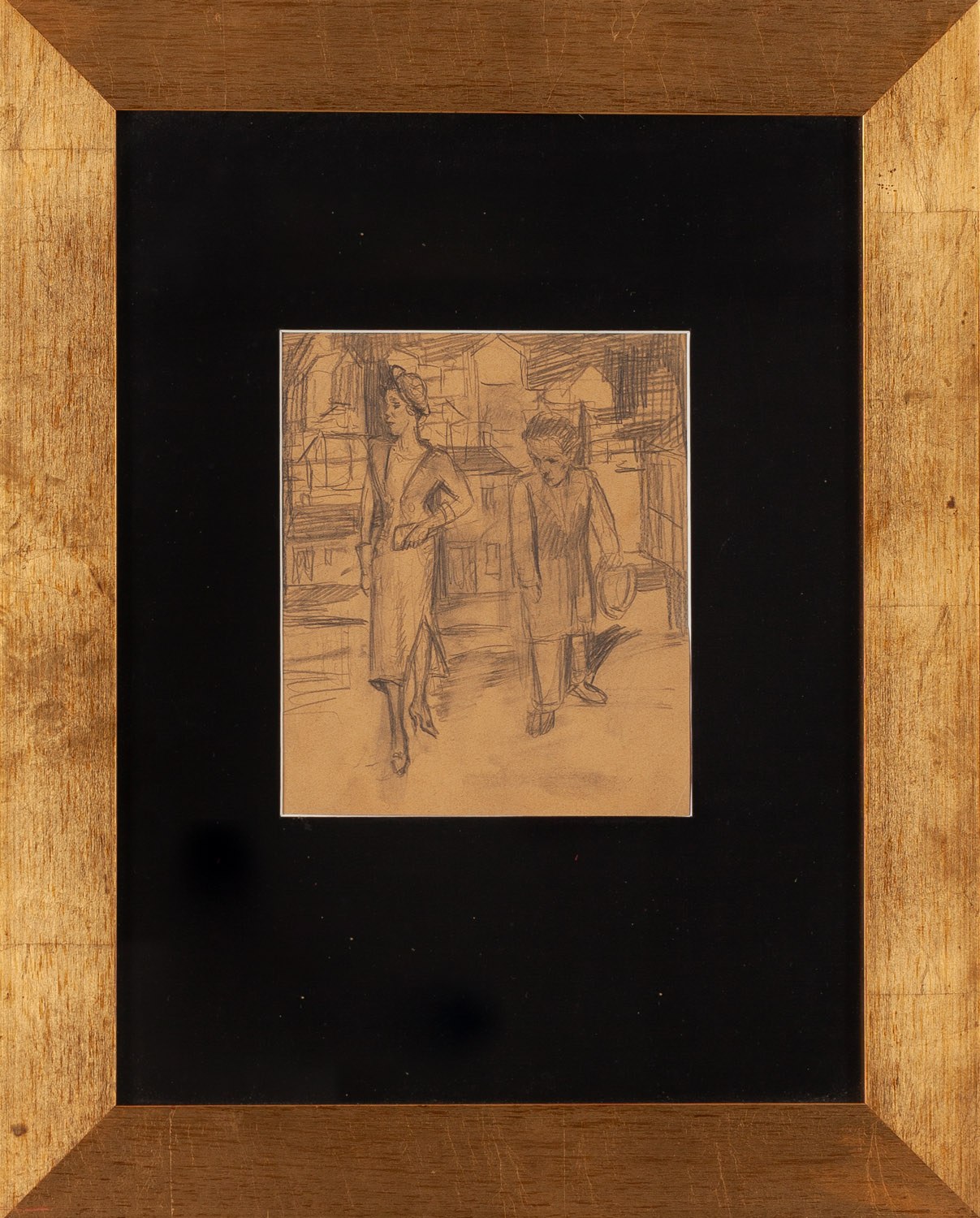
Dimensions: 18.5 x 15.5 cm
Origin
gift of Jerzy Ficowski (1924-2006) to Waclaw Jozef Zawadzki (1899-1978)
heir of Wacław Zawadzki
Literature
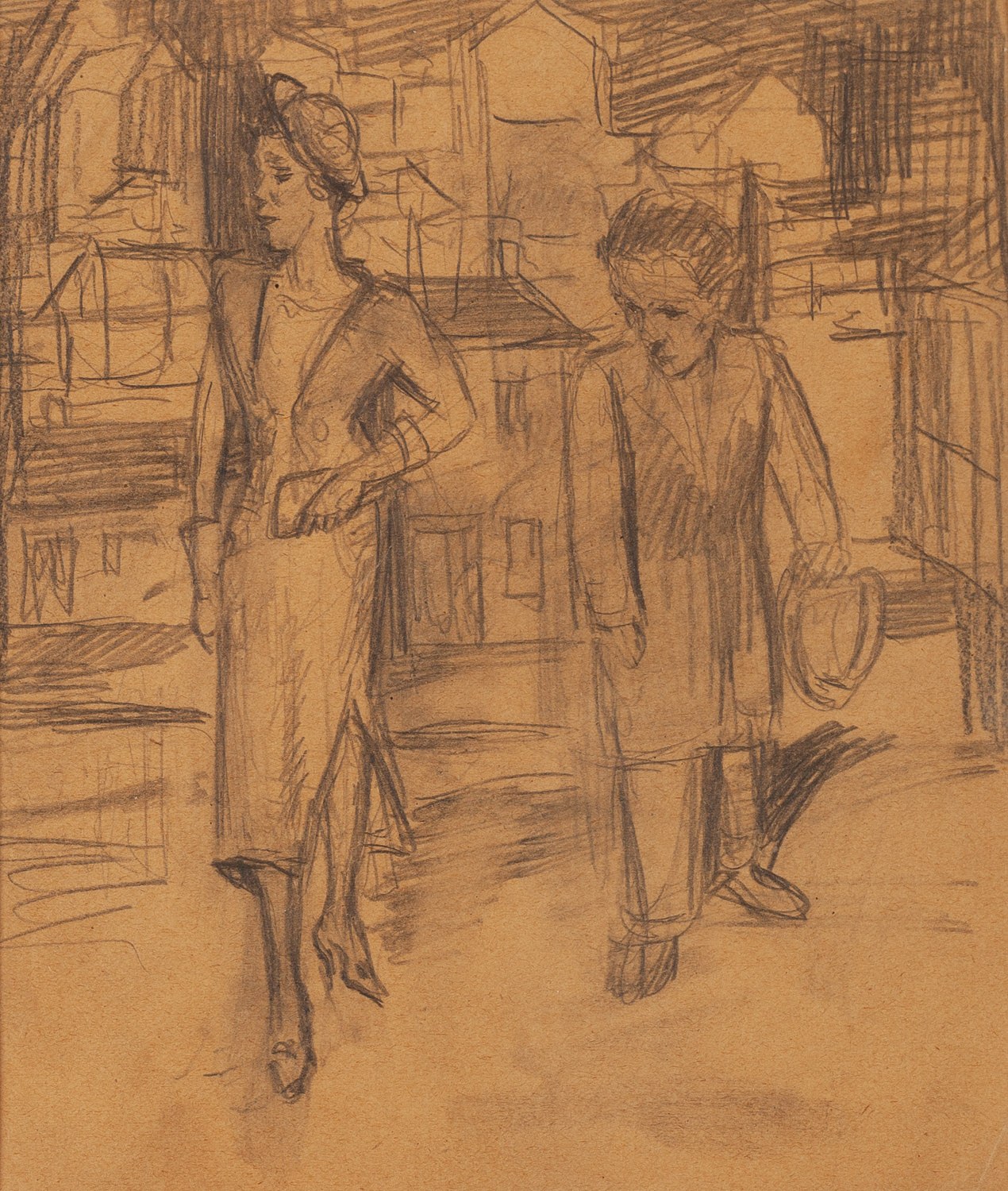
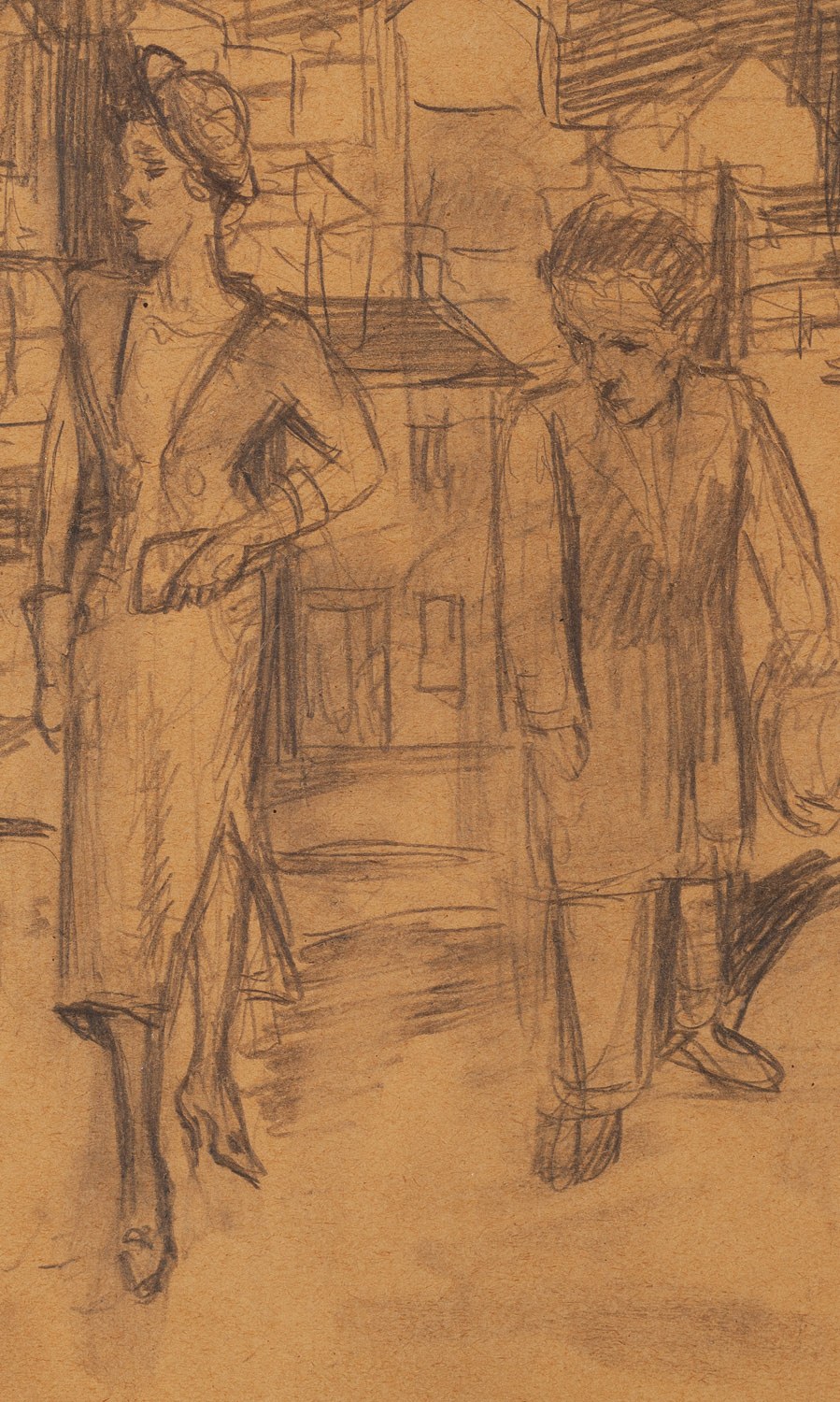
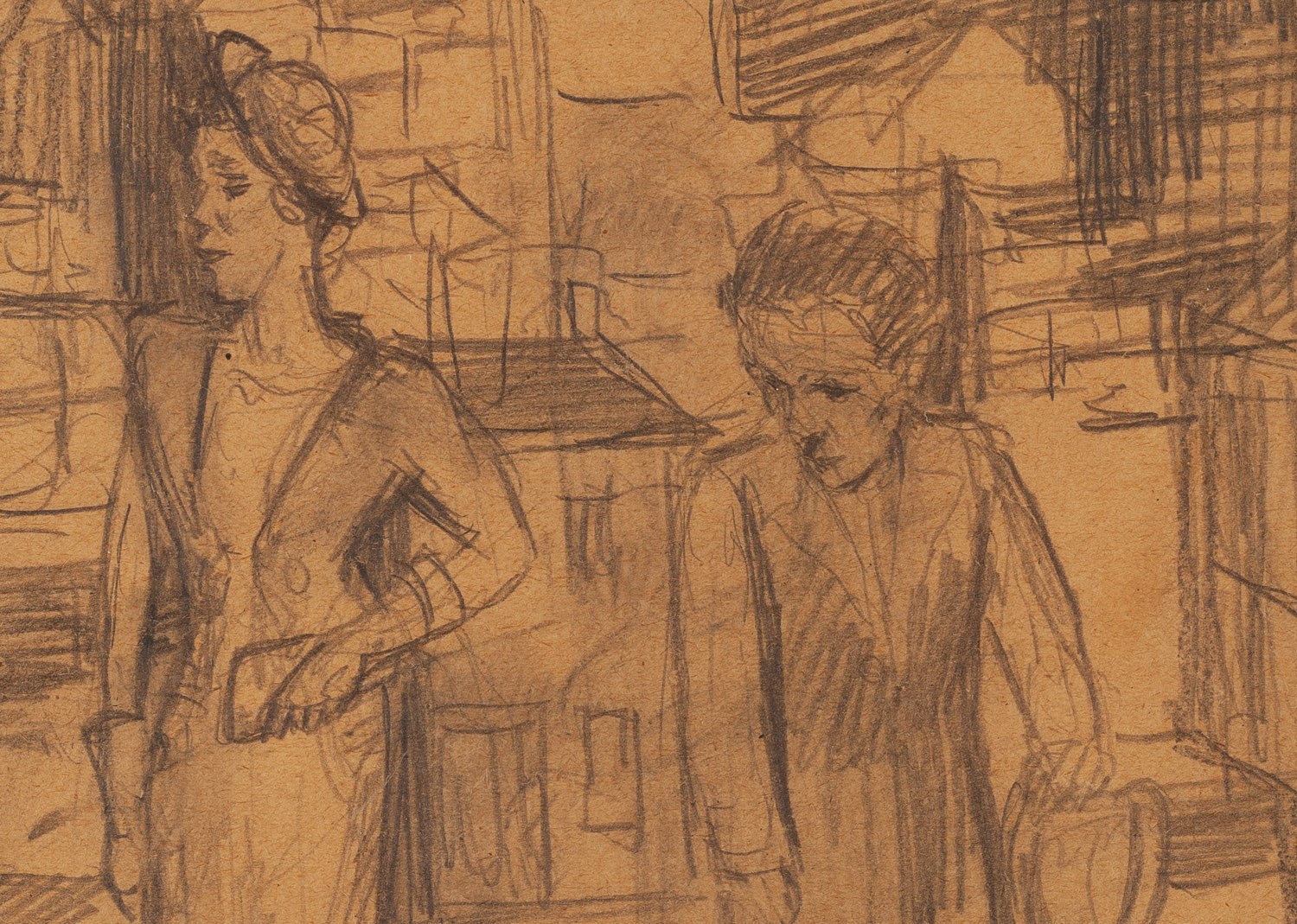
compare Bruno Schulz 1892-1942, Drawings and archives from the collection of the Adam Mickiewicz Museum of Literature in Warsaw, ed. Wojciech Chmurzyński, Warsaw 1992, there analogous drawings of similar subject matter, p. 135, il. 111 (On a walk, self-portrait with Miss Kuziv), p. 137, il. 113 (On a walk), p. 145, il. 121 (Street scene), p. 151, il. 128, (In front of the door)
Biography
Bruno Schulz was born on July 12, 1892 in Drohobych, to a family of assimilated Galician Jews. He is best known as a writer, author of Cinnamon Shops (1934) and Sanatorium Under the Sign of the Hourglass (1937), but he was also a painter, printmaker and draftsman. Beginning in 1924, he worked as a drawing teacher at a junior high school in Drohobych. Schulz's artwork - with its subject matter and special dreamlike mood - is connected with his writing; some drawings are illustrations to his own works. In 1920- 22, using the cliché-verre technique, he produced a series of more than twenty engravings of a specifically erotic nature collected in The Book of the Idol. He also created oil paintings, but these works, now lost, are mostly known only from old photographs. The only surviving canvas is Meeting (1920), a painting that recently appeared on the antiquarian market and later found its way into the collection of the Warsaw Museum of Literature. In the 1920s and 1930s, the artist showed his prints and paintings several times, including at exhibitions at Warsaw's Zachęta Gallery (1922), TPSP in Lviv (1922), Vilnius (1923), Lviv and Truskavets (1930), and TPSP in Krakow (1931).


![[Nieznany portret Bruno Schulza] Wolfgang BREUER (1895-1927), Portret młodego artysty Bruno Schulza z Drohobycza, 1919](https://img1.one.bid/img/8857/2673386_1w.webp?1761242244)
![[Pod wpływem Bruno Schulza] Wolfgang BREUER (1895-1927), Kobieta i dwaj mężczyźni w kawiarni, 1919](https://img1.one.bid/img/8857/2673387_1w.webp?1761242274)