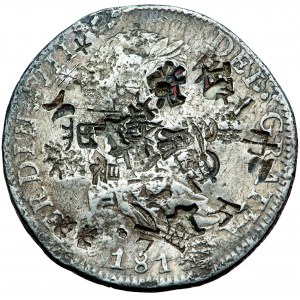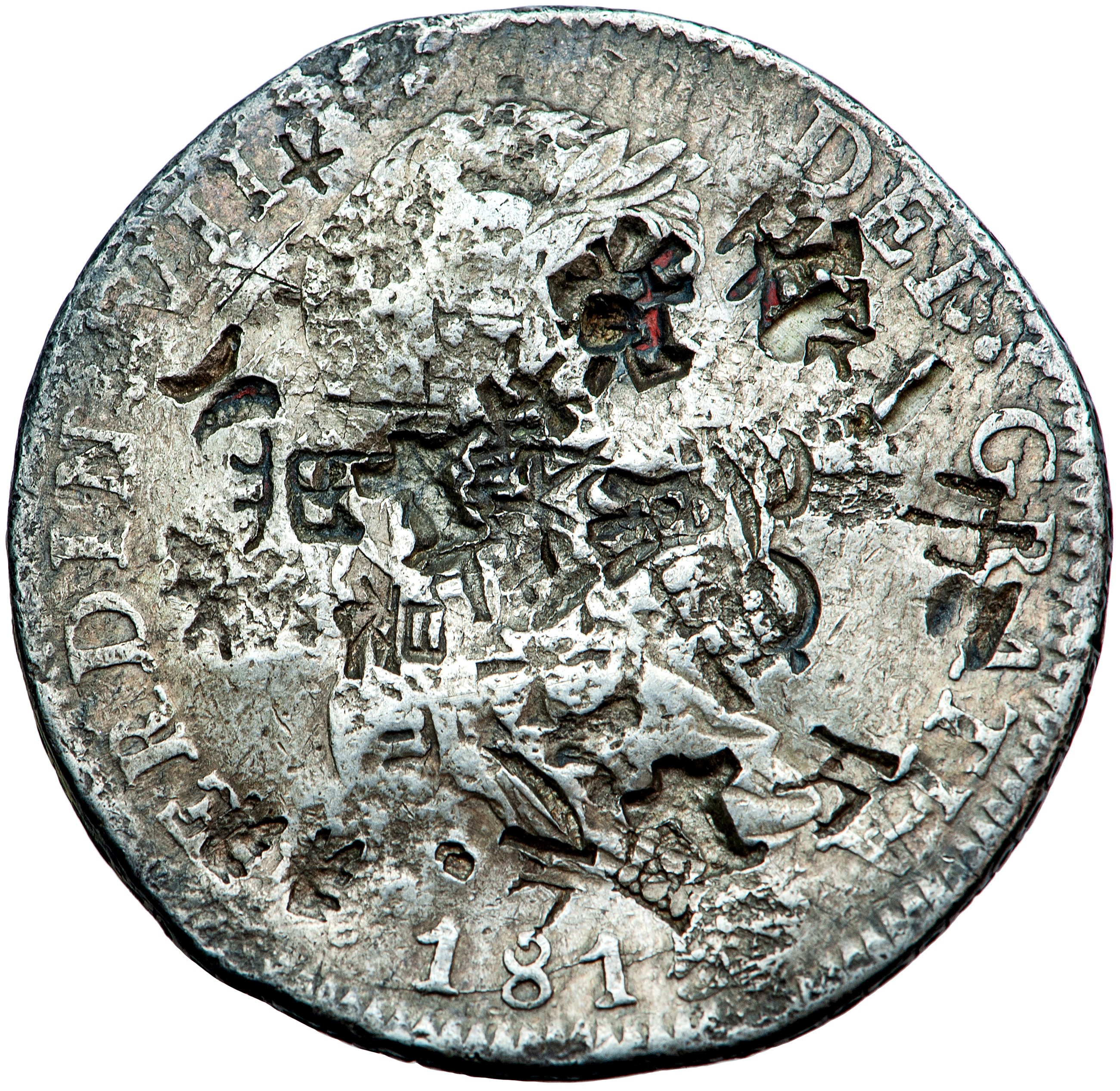
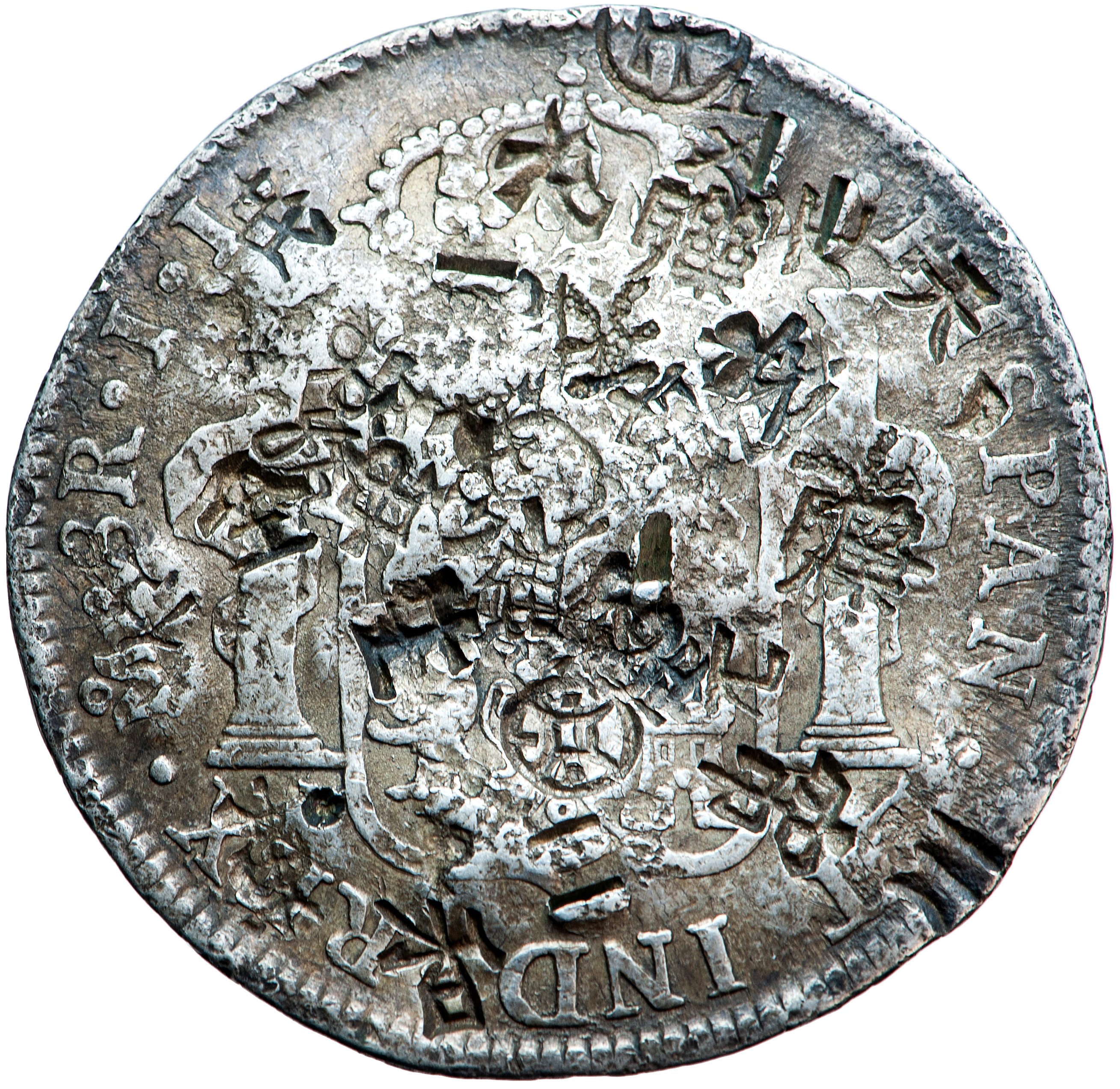
Spain-Mexico, Ferdinand VII, 8-real 1815 peso, men. Mexico (Ciudad México), with Chinese countermarks
Rv. signature I I I.
Silver, 26.78 g, 40.8 mm. Heiss 56.
Condition III, patina.
The Spanish 8-real peso, called the dollar in North America, became a world currency thanks to Mexican and Peruvian silver deposits and the Spanish colony of the Philippines, located on the shores of China. Beginning in 1565, so-called Manila galleons, taking advantage of cyclical changes in winds and currents, sailed the route from Acapulco to Manila with cargoes of silver, which was valued highest in the Far East - in exchange for porcelain, silk and spices. The goods imported from China, however, did not remain in America, but were re-exported from Veracruz to Europe, to Seville and Cadiz. Spanish and Mexican pesos-dollars were imported to China via this route. Chinese merchants valued silver in general, and these coins enjoyed their special trust. However, trust attracted counterfeiters, so publicly known appraisers checked the authenticity of the pieces and signed them with their countermarks - each their own. Hence, pieces after long circulation are sometimes covered with very numerous imprints of small stamps (called chop marks in American numismatics).