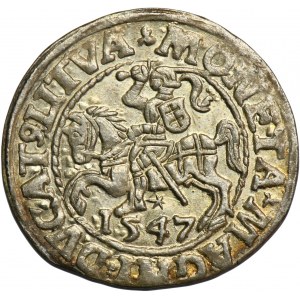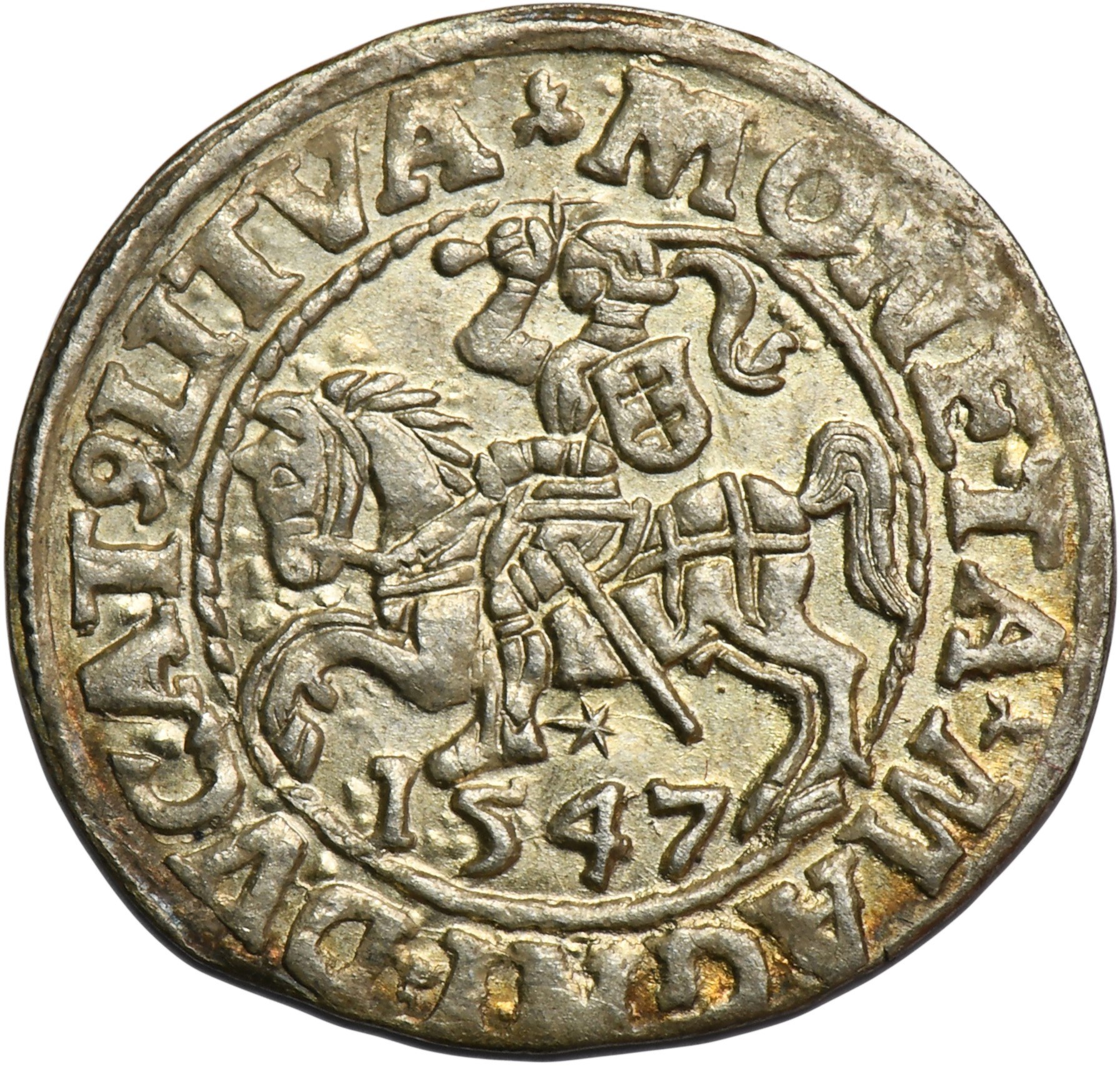
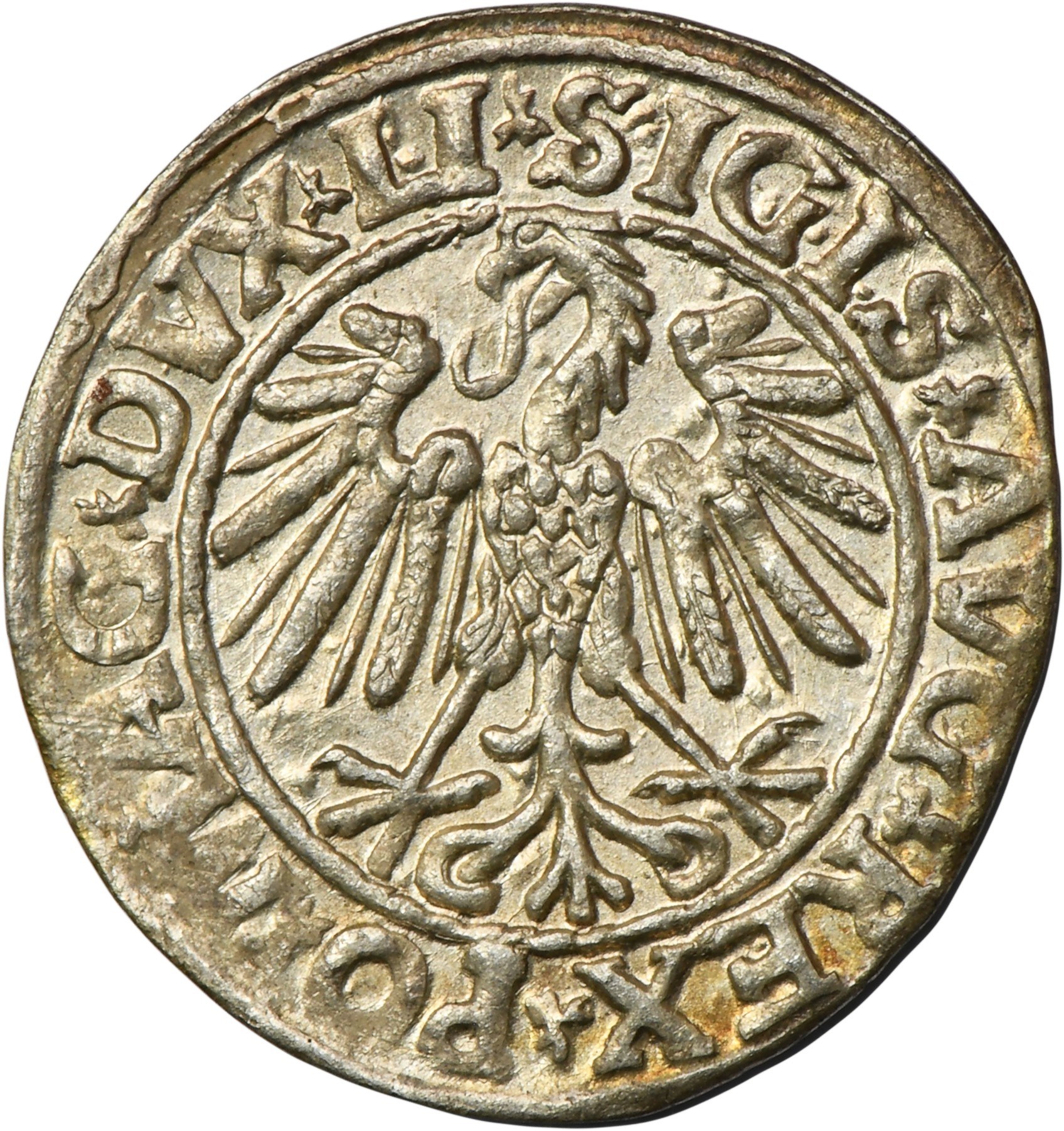
Inscription variation LI/LITVA.
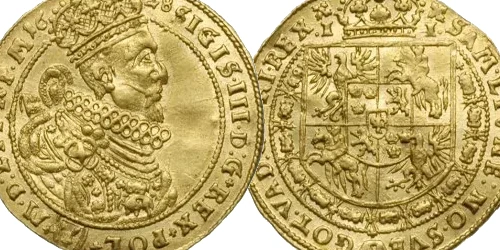
In addition to denars, shekels, half-pennies, pennies, troyaks, sixpences and ducats, during the reign of Sigismund Augustus new varieties of money appeared: obols, two-denarii, two-grosze, foursquares (4 pennies), half-pennies (30 pennies). The division between Crown and Lithuanian minting was in effect all the time: 4 Lithuanian pennies were equal to 5 Polish pennies. In addition, countersigned silver ducats and Spanish half-ducats appeared in monetary circulation, which was connected with the repayment of a debt by the Spanish ruler Philip II - the so-called "Neapolitan sums." During the reign of Sigismund Augustus, only the mints in Vilnius - where coins for the Lithuanian foot and the Polish foot were minted - and Gdansk worked. Sigismund Augustus' minting also included issues of a makeshift mint launched in August 1572 at Dalholm Castle, minting incomplete coins belonging to the Livonian monetary system. This was a one-time action to pay soldiers stationed in Parnava. Strictly speaking, these issues should be counted as part of the interregnum period (Sigismund Augustus died on July 7).
Lithuanian half-pennies during the reign of Sigismund Augustus were issued by the Vilnius mint between 1545 and 1565. In addition to dated pieces, varieties without a date are also known. Half-pennies were the basic denomination of the period. It is estimated that their production reached several million pieces per year. They were initially minted from sterling silver, weighed an average of 1.251 grams and contained 0.469 grams of pure bullion. The Mint Ordinance of 1558 lowered the standard of silver in half-pennies to V ½ a lav. They now weighed an average of 1.261 grams and contained 0.433 grams of pure silver. The drawing of Sigismund Augustus' half-pennies repeated the general iconographic scheme of the Lithuanian half-pennies of Sigismund the Old. The obverse featured the Pahonia and an otolithic inscription, while the reverse featured the White Eagle and an otolithic inscription. Unlike Sigismund the Old's half-progros, where the date was placed in the obverse inscription, here the date was placed in the field of the coin, under the Pogo.